RESULT PAGE

aromatic / methacrylate ester

View the report above. Use the comments below if you need follow-up discussion.

Result No.: 20260204104622631924800 Owner: YUUU Comments: 1
FTIR Analysis Report Moderate confidence

aromatic / methacrylate ester

Sample & Measurement Parameters

Report No. 20260204104622631924800
Date
Spectral Range (cm⁻¹) N/A
Baseline AsLS baseline correction
Library match 72%

Identification Result

72%

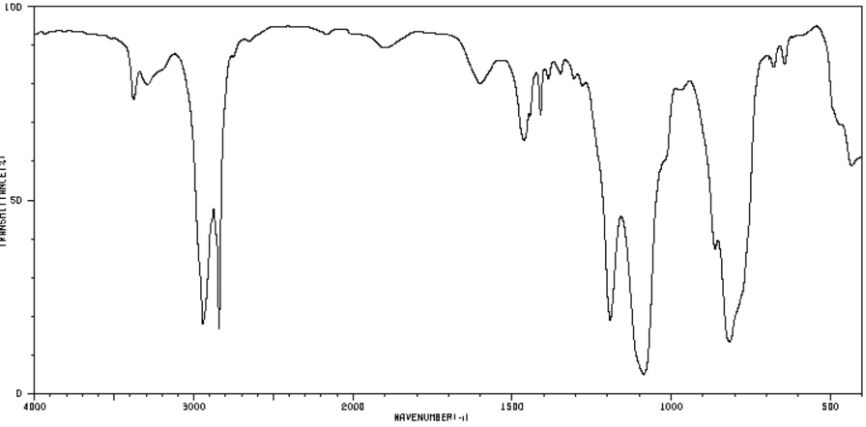
The FTIR spectrum is most consistent with an aliphatic methacrylate ester containing aromatic components. The reference library comparison returns 2-fluoro-7-nitro-9H-fluorene as the nearest match, but the top‑15 library consensus emphasizes aromatic and methacrylate features rather than a single pure compound FTIR In-Depth Interpretation was not selected for this task, so this section shows the library-search result only and no deep AI interpretation was run.

Detailed interpretation

  • Top library match: 2-fluoro-7-nitro-9H-fluorene #25501
  • Direct evidence citations attribute the 839 cm⁻¹ band to β‑phase PVDF and the 1092 cm⁻¹ band to Si–O stretching in Si₃N₄; those literature systems are incompatible with the methacrylate/ester direction and are considered inapplicable.
  • The top‑1 library candidate (2‑fluoro‑7‑nitro‑9H‑fluorene) contains nitro and fluorene functionalities for which no spectral evidence (e.g., NO₂ symmetric/asymmetric stretches, fluorene C–F) is observed, arguing against its identification as the sample identity.
  • The absence of a clear carbonyl band prevents definitive confirmation of an ester; a copolymer or blend with silicate/ siloxane components cannot be excluded given the silane candidates in the library.
  • The exact aromatic substitution pattern remains unknown; further structural features (e.g., aromatic C–H out‑of‑plane bends) are not clearly resolved.

Recommended next steps: Acquire a spectrum over the full mid‑IR range (4000‑400 cm⁻¹) to capture potential carbonyl (~1720 cm⁻¹) and aromatic ring modes (~1600, 1500 cm⁻¹). Consider complementary techniques such as ¹³C NMR or pyrolysis‑GC/MS to confirm methacrylate/acrylate moieties and identify aromatic building blocks. Compare with spectra of known methacrylate copolymers (e.g., poly(methyl methacrylate) or methacrylate‑functionalized siloxanes) to further narrow the composition.

Library Comparison

Library spectrum will appear here.

Library Search Results — Top 15 Candidates

Rank Match % Compound SMILES Spectrum No. Action
Loading library candidates...

Peak Analysis

★ = Literature-supported assignment
# Wavenumber (cm⁻¹) Absorbance Assignment Citation Assignment status
1 · 1092 1.00 - - -
2 · 839 0.44 - - -
3 · 1193 0.35 - - -
4 · 2929 0.35 - - -
5 · 2829 0.28 - - -

Appendix — Raw Spectrum

Raw sample spectrum
Generated by FTIR.fun — Report #20260204104622631924800
Discussion

Comments and follow-up evidence

Use this area to continue the interpretation, ask questions, or add extra verification evidence.

Submit Requirement Form