
Identity, conformity, PASS/FAIL and controlled workflow
Keep the customer's existing instrument software, SOP and quality system for the jobs they already perform well.
Instrument QC suites already handle routine identity and conformity testing. LIMS and QMS systems already manage specifications, approvals, deviations and CAPA. FTIR.fun focuses on the scientific investigation between the failure flag and the quality decision.
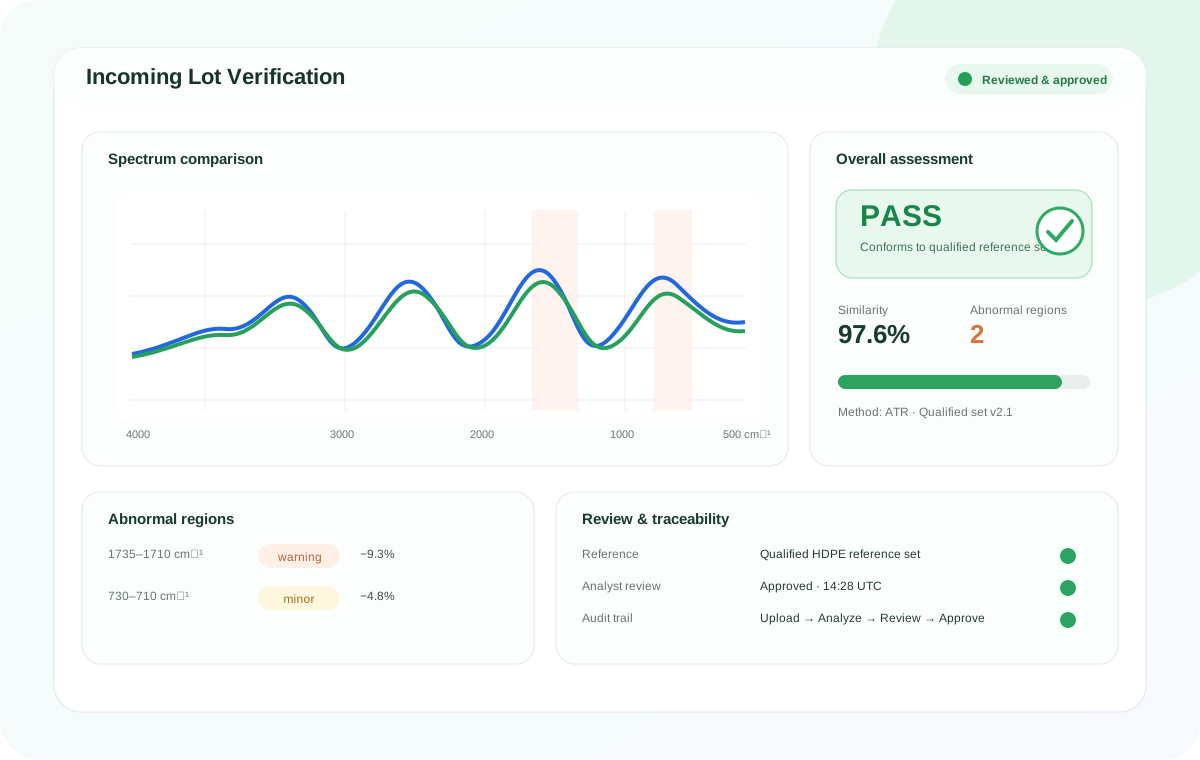
Start from qualified historical material, quantify the exception, locate the abnormal FTIR regions, identify changed bands, investigate the likely causes using spectral and literature evidence, and tell the analyst what confirmation will distinguish the remaining explanations.
Keep the customer's existing instrument software, SOP and quality system for the jobs they already perform well.
Determine which regions and bands changed, then evaluate material variation, contamination, degradation, supplier change, sampling, preparation, instrument effects and process history against the actual evidence.
The result is designed for analyst and QA review, with the underlying numerical findings and reasoning retained.
Follow the same five-step path for routine material consistency and for a deviation investigation.
Create the material context and establish the accepted historical spectra that define normal customer-specific variation. Preserve why each reference lot is qualified.
Upload the spectrum with the lot, supplier, sampling, preparation and other context that may matter to the investigation. Compare it with the qualified reference set, not a generic public spectrum used as a release specification.
Review the numerical consistency assessment and the wavenumber regions that drive it. Inspect shifts, new or missing bands, intensity changes and shape changes instead of relying on one similarity score.
Use the changed bands, sample context, customer history, reference spectra and literature evidence to evaluate the likely root causes and show which observations support or contradict each explanation.
Keep the qualified-reference version, method version, numerical findings, abnormal bands, cause analysis, evidence and recommended confirmation together. Export the reviewable result into the laboratory's existing deviation or quality record.
Use repeatable numerical comparison and the qualified-reference population to distinguish ordinary lot variation from a meaningful exception.
Identify the regions and bands that drive the exception and retain the actual spectral evidence for review.
Rank the root-cause explanations against the evidence and identify the orthogonal test, resampling, repeat measurement or process check that will separate them.
| QC need | Established approach | FTIR.fun difference |
|---|---|---|
| Instrument acquisition / qualification | Vendor software and validated laboratory procedures control the instrument and acquisition method. | Consumes the resulting spectrum; it does not replace the controlled acquisition environment. |
| Routine identity / conformity | Vendor packages already provide mature reference comparison, models and PASS/FAIL. | The main value begins when a sample does not behave like qualified history. |
| Deviation / OOS / CAPA | LIMS and QMS manage ownership, approvals, signatures, actions and disposition. | Return the spectroscopy-specific investigation: abnormal regions, changed bands, root-cause analysis, supporting evidence and confirmation plan. |
| Scientific evidence | Often assembled manually from historical files, analyst knowledge and literature. | Bring qualified customer history, reference spectra, peak assignments and relevant literature into the same investigation. |
| Historical reproducibility | Depends on how reference files, methods and reports are controlled across the current stack. | Retain source fingerprint, reference-set and method versions, numerical metrics, findings, evidence and review events with the result. |
The investigation record should preserve the data, method, evidence and reviewer-visible reasoning needed for the customer's intended use. The customer's validated system continues to control regulated records, approval, disposition and applicable electronic-record requirements.
Test the entire investigation: normal-versus-exception separation, responsible spectral regions, root-cause analysis, evidence, confirmation recommendation and an output that fits the customer's existing QA/QC process.