
Better FTIR answers, backed by evidence.
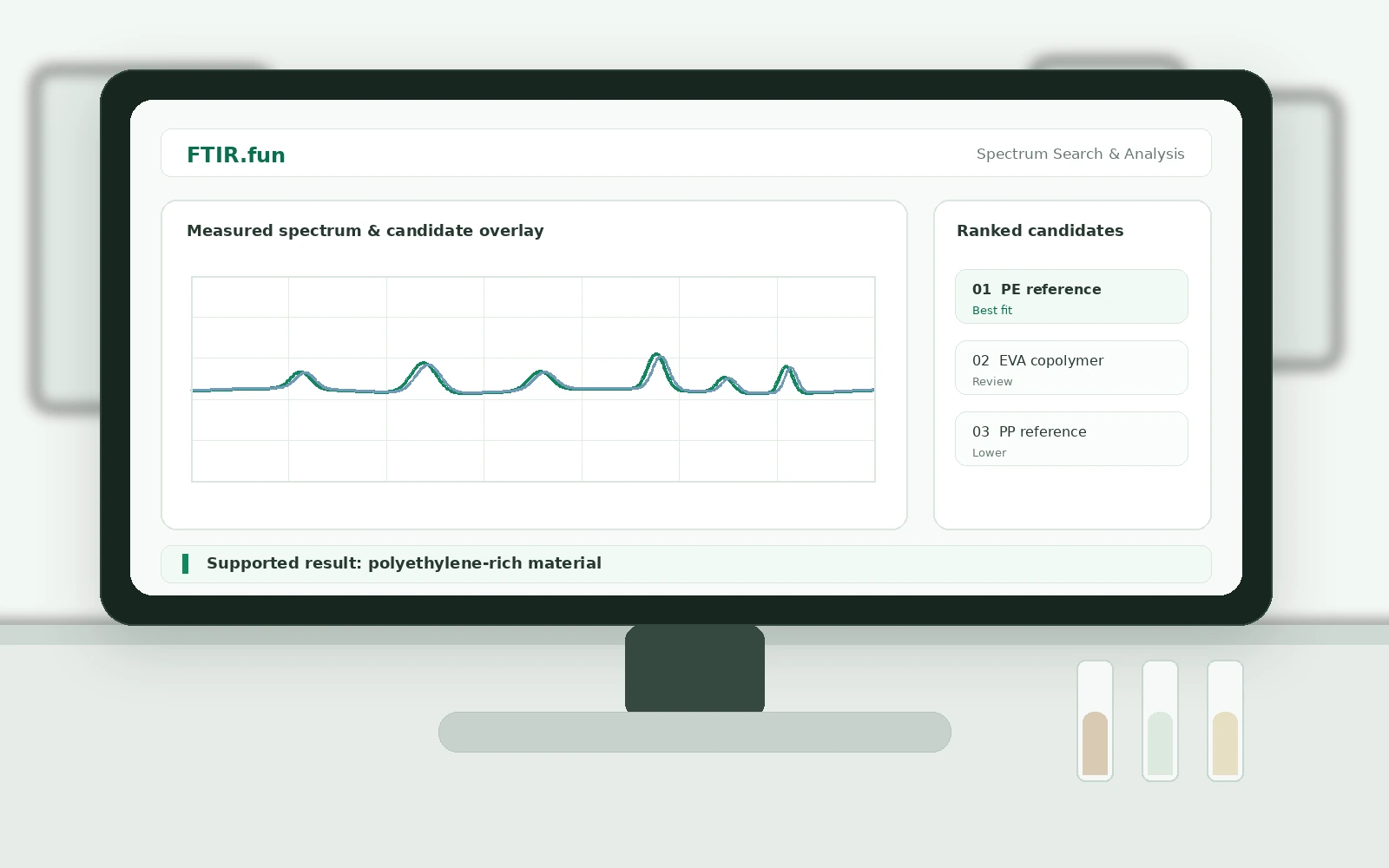
FTIR.fun is a practical FTIR spectrum search and analysis platform that combines reference-library retrieval, spectrum inspection, characteristic-peak interpretation, literature evidence, data tools and specialized analytical workflows.
Who maintains the technical content?
FTIR.fun Technical Editorial Team maintains the public FTIR reference, learning and interpretation content on this site.
The material combines curated reference data, deterministic spectral relationships and cited literature where available. AI may assist with analysis or drafting, but it is not presented as a human reviewer or as peer review.
Search, compare and interpret FTIR spectra.
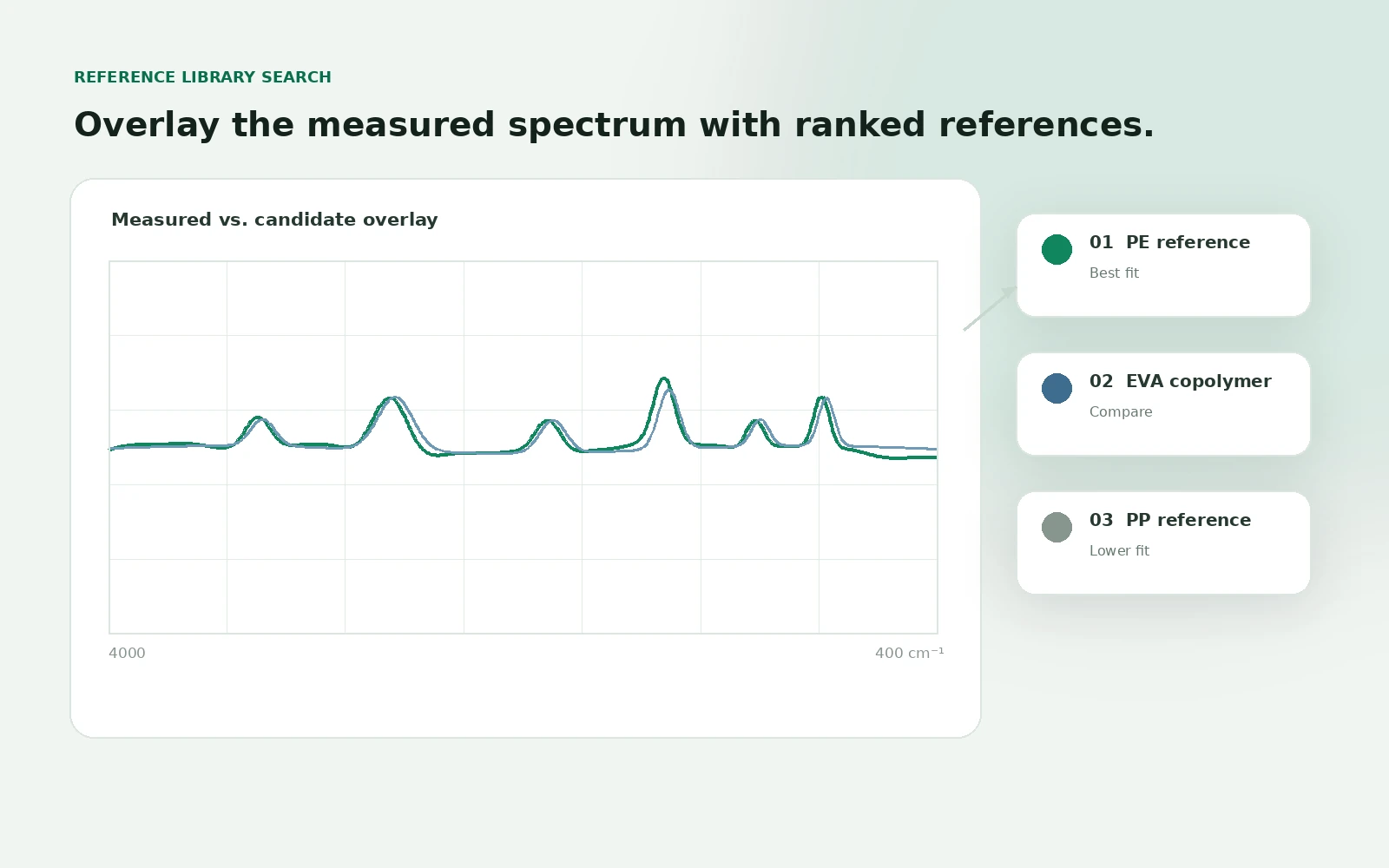
Search the reference library, analyze an unknown spectrum, inspect ranked candidates, review characteristic peaks and literature evidence, find known reference records, recover numerical data from spectrum images, and work with a range of FTIR file formats.
For grouped studies, routine QC and formulation work, dedicated tools are available for those tasks.
323,696+ Reference spectra
The FTIR.fun reference database is a continuously evolving resource intended to support scientific research, technical interpretation, and preliminary analytical evaluation.
Coverage includes polymers and rubbers, oils and fats, proteins, microorganisms, inorganic materials, pharmaceuticals, food materials, and additional organic and inorganic reference records.
Reference spectra are compiled from in-house measurements, user-licensed contributions, and factual data extracted from public-domain sources under applicable copyright law.
Look beyond a single similarity score.
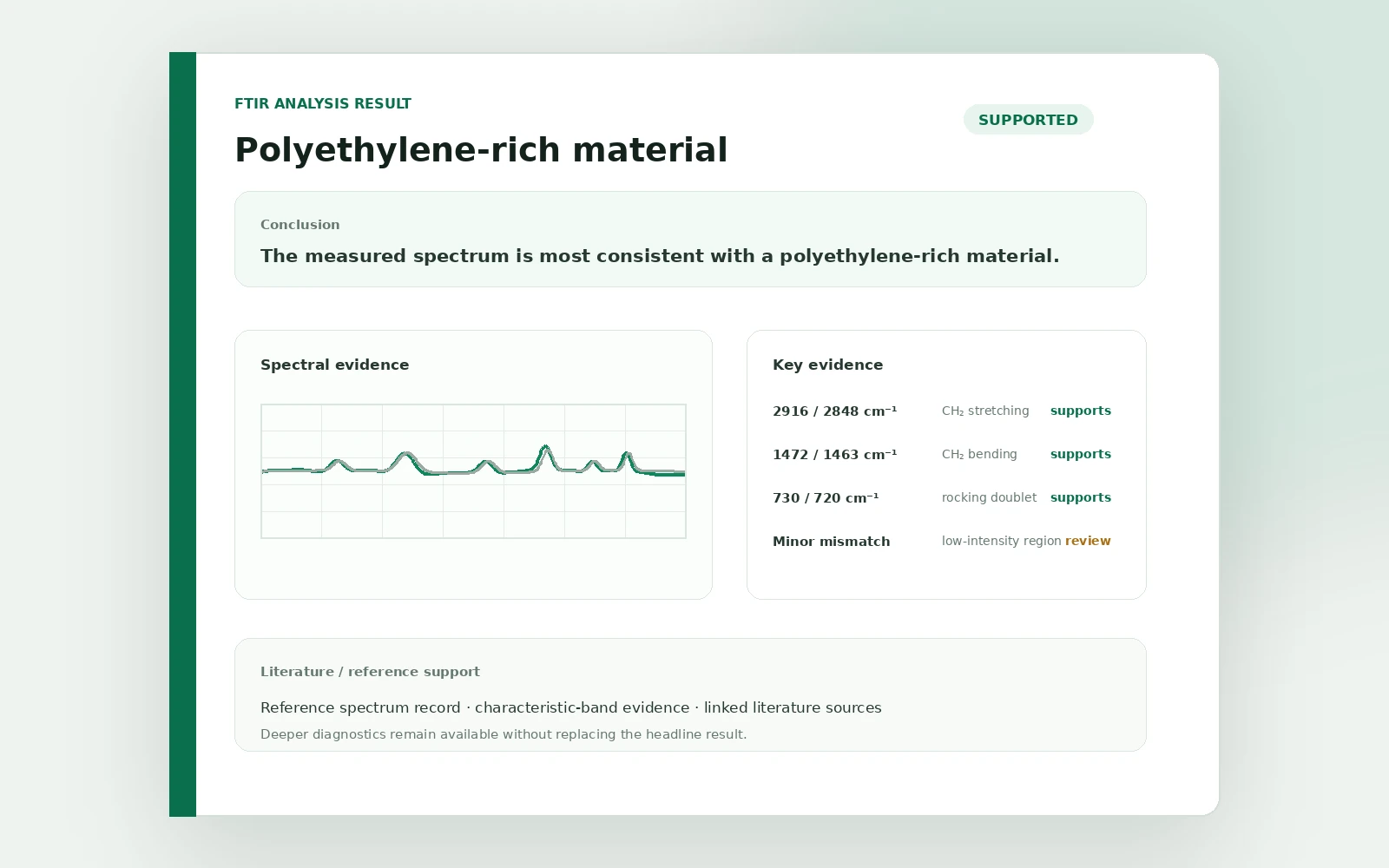
Where available, FTIR.fun shows candidate comparisons, important bands, literature support, conflicts and unresolved points alongside the analytical conclusion.
Use FTIR.fun from the browser, instrument computer or your own software.
Use the web app, the FTIR Launcher on supported instrument computers, the Gateway in restricted network environments, or REST API and MCP integration.
Launcher and Gateway still connect to FTIR.fun online; they do not provide fully offline analysis.
Explore instrument access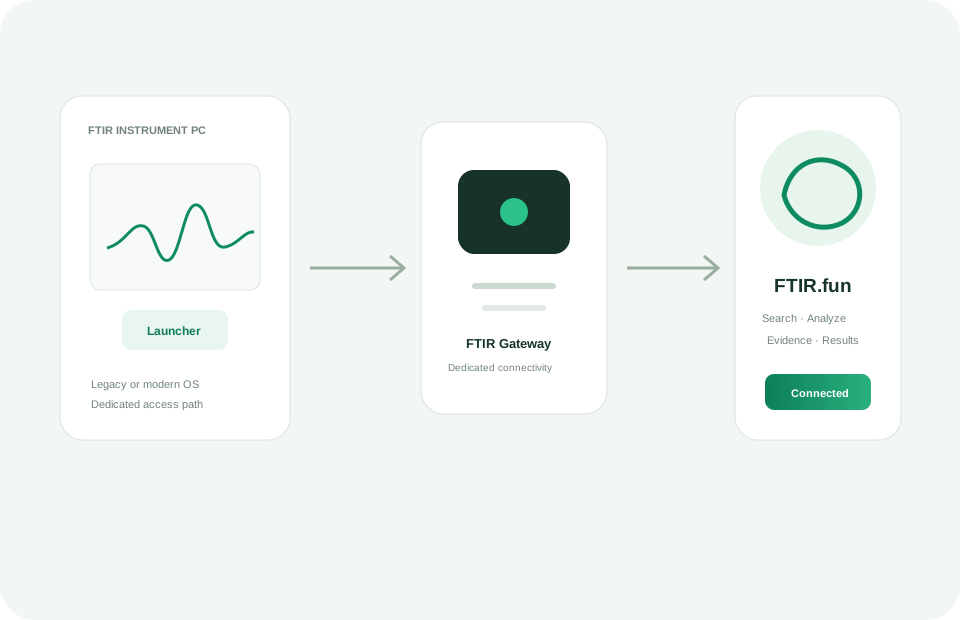
Choose the workspace that fits the analytical task.
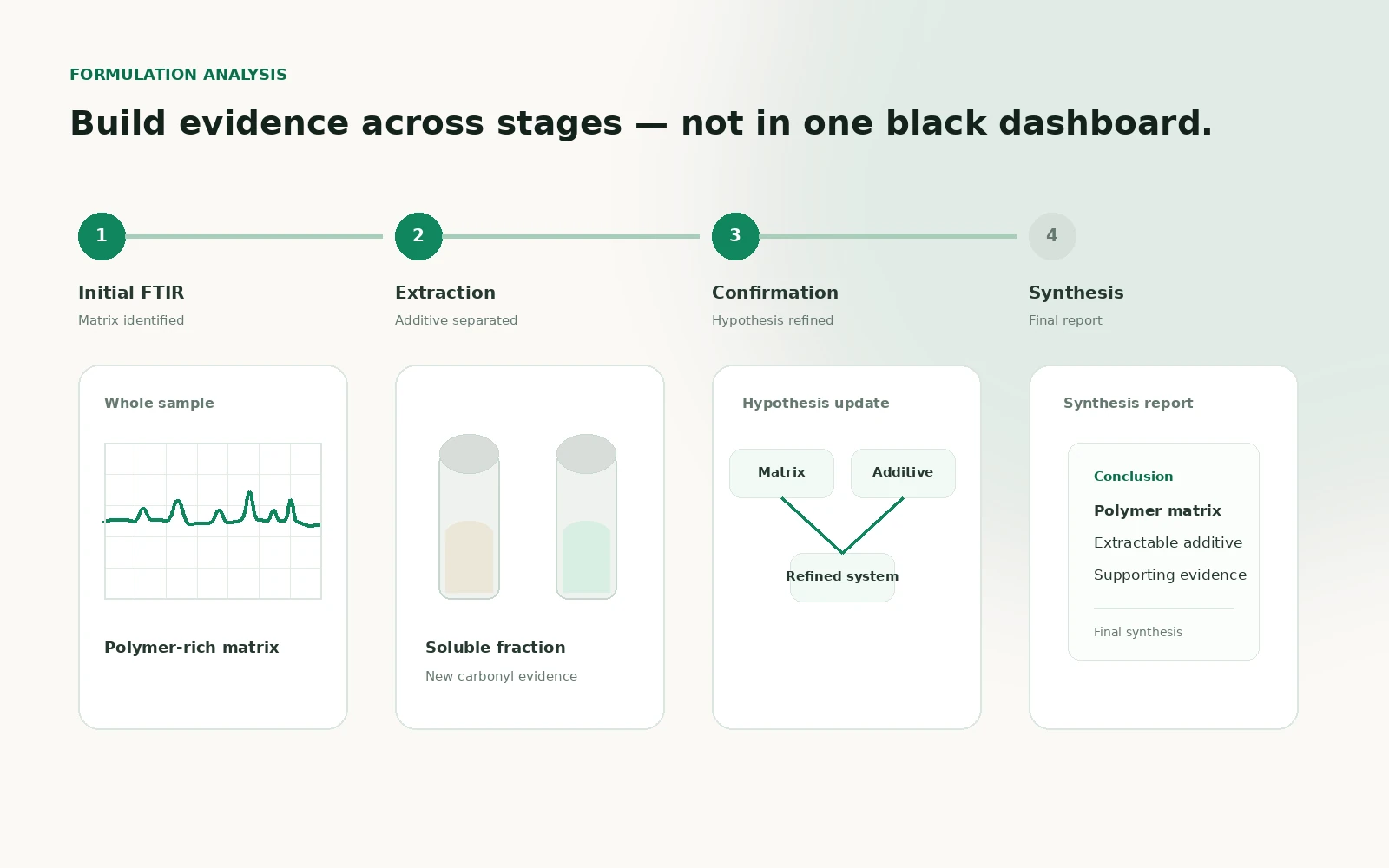
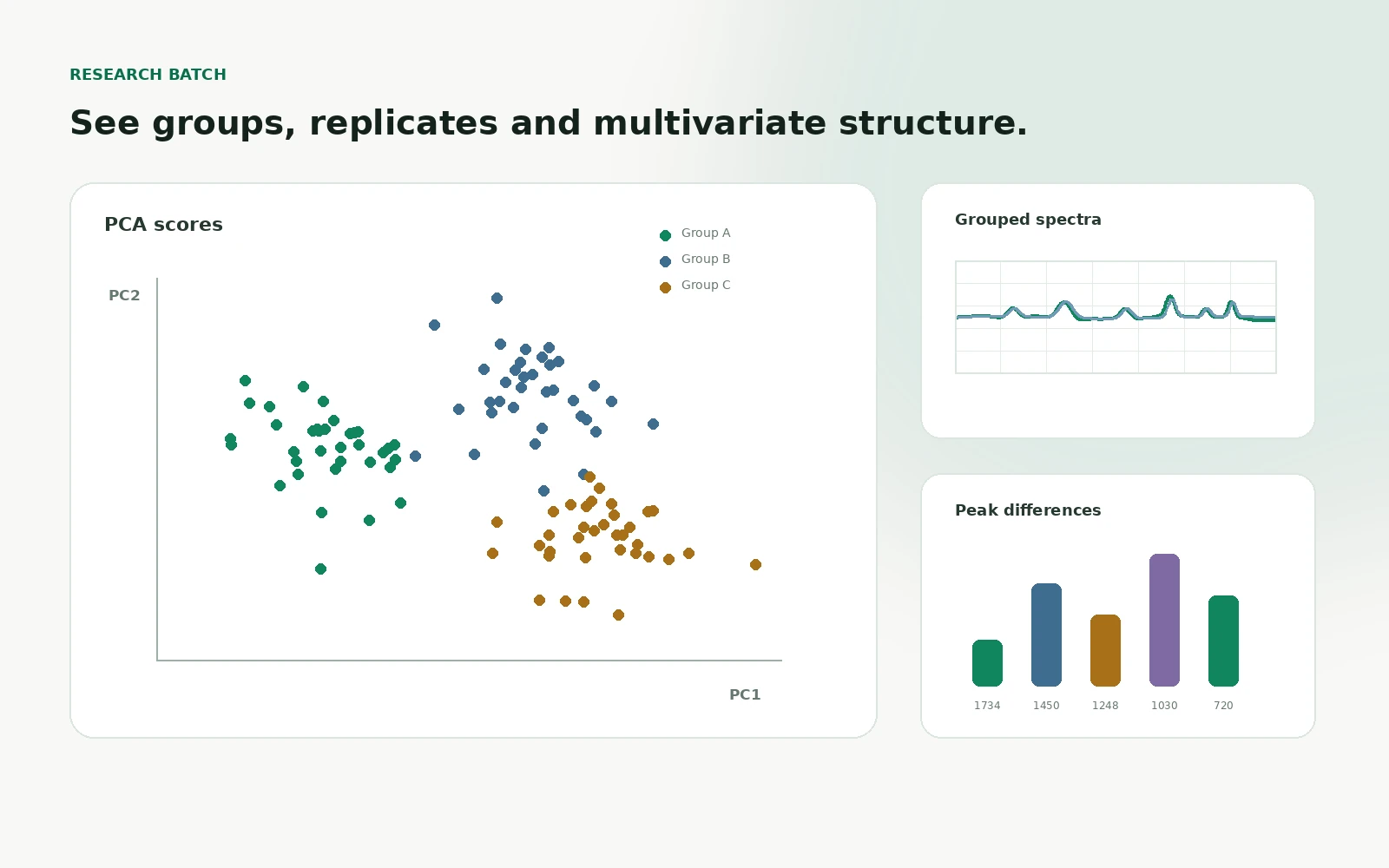
Research Batch is designed for grouped spectra and replicates. QC Consistency compares incoming samples with qualified reference baselines. Formulation Analysis follows evidence across staged experiments and evolving component hypotheses. Halal Origin Pre-screening compares samples with qualified porcine and non-porcine reference batches.
Free searches contribute publicly; paid searches stay private.
A free-user search adds the spectrum to the community reference library and may be used for FTIR.fun model training. The same spectrum content is eligible for one free search, each IP is limited to one public submission every 5 minutes, and truthful sample background is required. Unknown material details are acceptable when the known source or context is explained.
A paid-user search is private by default. Its spectrum is not added to the public library, is not used for model training, and is not shown to other users. Prior information remains available but is optional and is saved with the private task.
Find Spectrum is free; standard users receive the spectrum number, whether a match was found, and only a partial spectrum window (1000–1400 cm⁻¹) of the top match. Image → CSV is also separate: images and extracted curve/CSV data may improve curve recognition, but are not used as reference-library spectra.
Read the privacy policy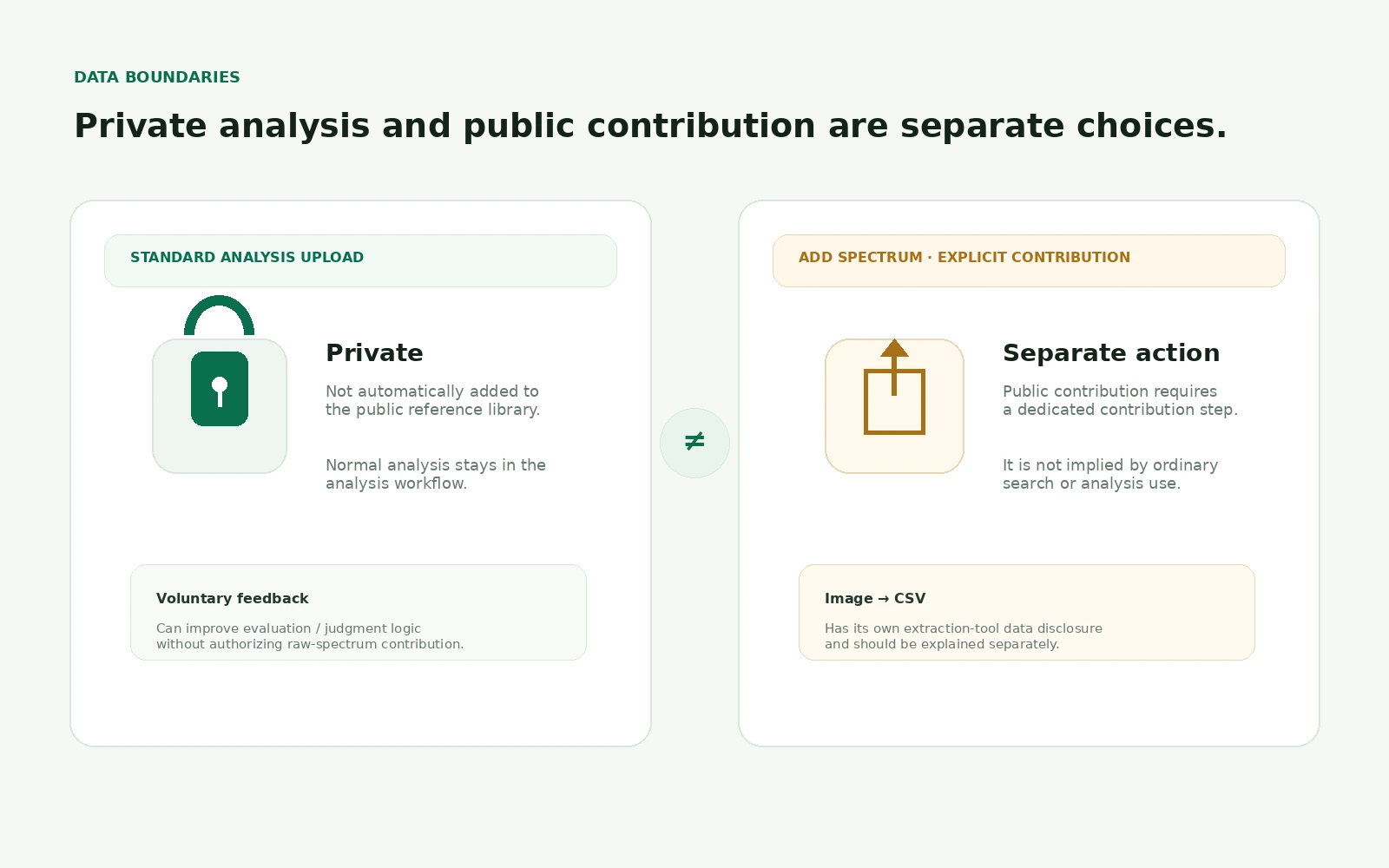
For research, laboratory and analytical work.
FTIR.fun is intended for users who need spectrum search, unknown-material analysis, reference records, QC comparison, research-series analysis, formulation investigation, evidence-supported interpretation or software integration.
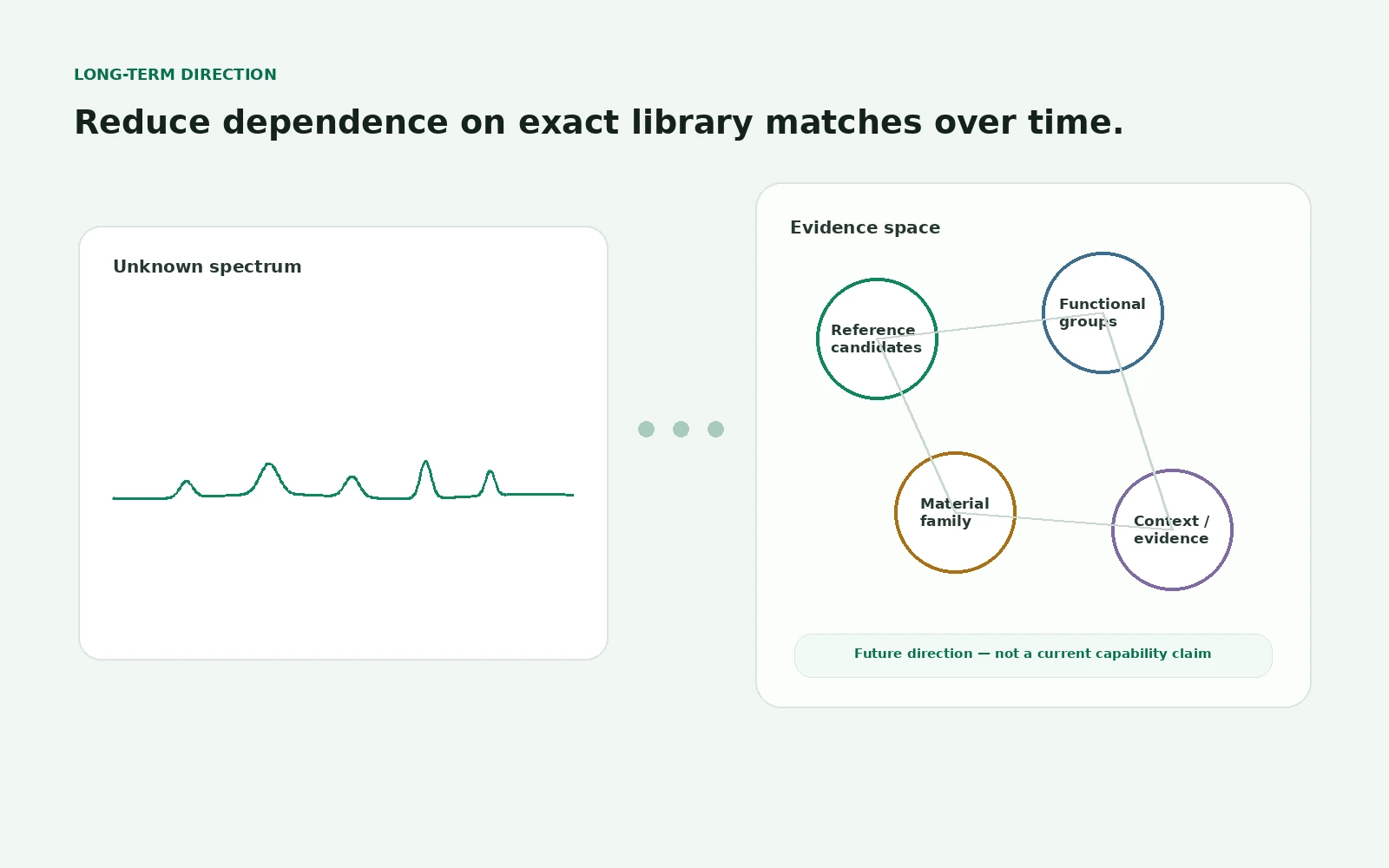
Improving analysis when the best match is not enough.
We continue to develop methods for unknown-material analysis that can use spectral evidence even when the reference library does not contain a close match.