
UKURASA WA MATOKEO
methyl-substituted heteroatom-containing organic material with C-O and possible N-H functionality
Tazama ripoti hapo juu. Tumia maoni hapa chini ikiwa unahitaji mjadala wa ufuatiliaji.
Ripoti ya Uchambuzi wa FTIR
methyl-substituted heteroatom-containing organic material with C-O and possible N-H functionality
Vigezo vya Sampuli na Kipimo
Ripoti Na.
20250505143412888309899
Tarehe
2025-05-06 01:09:14
Masafa ya Spektra (cm⁻¹)
[(650, 4000)]
Msingi
Marekebisho ya msingi ya AsLS
Uwiano wa maktaba
0%
Matokeo ya Utambulisho
0%Ushahidi wa FTIR hauungi mkono utambulisho thabiti wa sampuli kama 4-methylbenzene-1,3-diamine. Utafutaji wa maktaba kwa kweli hauna mechi, na wagombea wote wanaoongoza wameripotiwa kuwa na ufanano sifuri, na hakuna maandiko ya moja kwa moja au yanayohusiana yanayopunguza mgawo. Bendi zilizozingatiwa zinaendana zaidi na nyenzo ya kikaboni yenye methyl-substituted heteroatom inayoonyesha unyonyaji wa C-O na utendakazi unaowezekana wa N-H kuliko na kiwanja maalum kilichoitwa.
Tafsiri ya kina
- Mechi bora ya maktaba: 4-methylbenzene-1,3-diamine #69466 | match 0.0%
- Ushahidi wa FTIR hauungi mkono utambulisho thabiti wa sampuli kama 4-methylbenzene-1,3-diamine. Utafutaji wa maktaba kwa kweli hauna mechi, na wagombea wote wanaoongoza wameripotiwa kuwa na ufanano sifuri, na hakuna maandiko ya moja kwa moja au yanayohusiana yanayopunguza mgawo. Bendi zilizozingatiwa zinaendana zaidi na nyenzo ya kikaboni yenye methyl-substituted heteroatom inayoonyesha unyonyaji wa C-O na utendakazi unaowezekana wa N-H kuliko na kiwanja maalum kilichoitwa.
- Sampuli ina bendi ya 2927 cm-1 inayolingana na mwendo wa aliphatic C-H, kuunga mkono uingizwaji wa methyl au alkyl nyingine.
- Bendi za 1226 na 1057 cm-1 zinaunga mkono uwepo wa mwendo wa dhamana moja ya C-O au heteroatom inayohusiana.
- Unyonyaji wa 3277 cm-1 unaendana na mwendo wa N-H na/au O-H, hivyo utendakazi ulio na heteroatom unawezekana.
- Mwelekeo wa makubaliano ya maktaba ulioripotiwa katika kifurushi cha utafutaji unaelekea kwa kiasi kikubwa kwa kemia ya methyl / oksijeni heterocycle, ambayo inaendana zaidi na eneo la C-O lililozingatiwa kuliko madai maalum ya diamine yenye harufu nzuri.
- Unyonyaji uliozingatiwa kwa 3277 na 1632 cm-1 unaendana na mwendo wa N-H/O-H na kipengele cha eneo la bending au pete isiyojaa, lakini si maalum vya kutosha peke yake kwa mgawo wa kipekee.
- Bendi za 1226 na 1057 cm-1 zinaunga mkono mwendo wa dhamana moja ya C-O au heteroatom inayohusiana, ambayo inalingana vyema na mwelekeo mpana wa kikaboni unao na oksijeni kuliko diamine yenye harufu nzuri iliyofafanuliwa kwa ufupi pekee.
- Bendi ya 2927 cm-1 inaunga mkono mwendo wa aliphatic C-H, unaoendana na uingizwaji wa methyl.
- Kipengele cha 1528 cm-1 kinaweza kutokana na mitetemo ya pete yenye harufu nzuri au mgeuko wa N-H, lakini bila ushahidi wa kumbukumbu unaothibitisha, hauwezi kutofautisha kwa usalama kati ya amini zenye harufu nzuri, mifumo ya pete yenye oksijeni, au viumbe hai vingine vyenye heteroatom.
- Muundo wa maktaba ya 15 bora unajumuisha wagombea mchanganyiko wanaojumuisha amini zenye harufu nzuri, mifumo ya pete yenye oksijeni, misombo ya kabonili, misombo ya nitro, na poliamidi, ikionyesha urejeshaji dhaifu na usiolingana kwa kemikali badala ya mechi ya nyenzo moja inayoshikamana.
- Meji bora ya maktaba, 4-methylbenzene-1,3-diamine, haiungwa mkono na mechi ya wigo yenye maana kwa sababu ufanano ulioripotiwa ni 0.000.
- Seti ya kilele inayozingatiwa haitoi ushahidi wazi wa kutambua amini yenye harufu nzuri wa kutosha kuhesabia haki mgawo maalum wa diamine.
- Wagombea 15 bora ni tofauti kwa kemikali na wanajumuisha madarasa yasiyolingana, ambayo hupunguza ujasiri katika hitimisho lolote finyu la nyenzo.
- Bado haijulikani kama bendi ya 3277 cm-1 inatawaliwa na N-H, O-H, au unyonyaji mchanganyiko wa dhamana ya hidrojeni.
- Orodha ya sasa ya kilele ni nyembamba sana kutofautisha kwa uhakika kati ya amini yenye harufu nzuri, heterocycle ya oksijeni, iliyo na amidi, au nyenzo nyingine za kikaboni zenye heteroatom.
- Kwa sababu hakuna mechi ya kumbukumbu inayoungwa mkono na maandiko iliyopatikana, hitimisho la sasa linapaswa kuchukuliwa kama mwelekeo mpana wa nyenzo badala ya utambulisho maalum wa kiwanja.
Ulinganisho wa Maktaba
Wigo wa maktaba utaonekana hapa.
Matokeo ya Utafutaji wa Maktaba — Watahiniwa 15 Bora
| Cheo | Linganisha % | Kiwanja | SMILES | Nambari ya wigo | Kitendo |
|---|---|---|---|---|---|
| Inapakia wagombea wa maktaba... | |||||
Uchambuzi wa Kilele
★ = Kazi inayoungwa mkono na fasihiKiambatisho — Spectrum Ghafi

Majadiliano
Maoni na ushahidi wa ufuatiliaji
Tumia eneo hili kuendelea na ufafanuzi, kuuliza maswali, au kuongeza ushahidi wa ziada wa uthibitishaji.
The above shows the FTIR analysis results of a png file uploaded by a user (IP: 192.XX.XX.253). The original image is displayed below.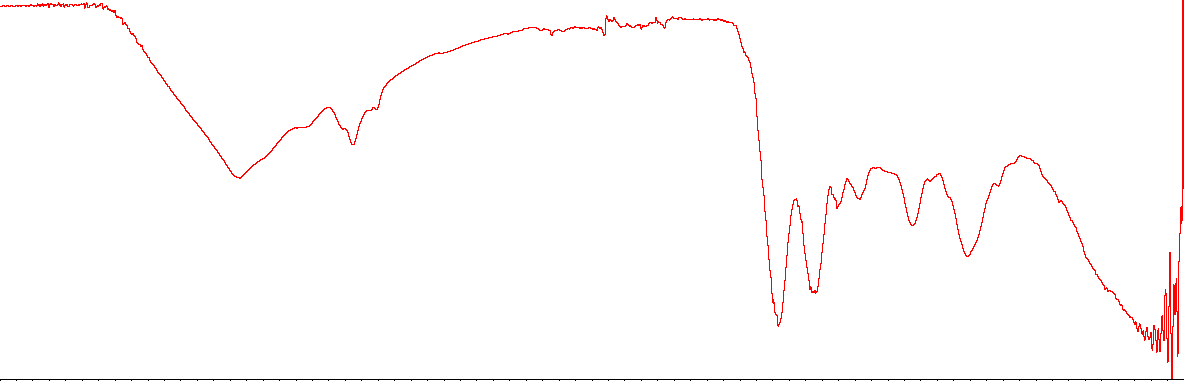 Switch result modes to compare curve similarity, characteristic peaks, or the fingerprint region. The system's conclusion may be inaccurate—refer to Spectrum No. 15532 through 'find spectrum' mode
en&2sample csv tem.csv
en&2