
aliphatic organic material with C-O stretching features, possibly an ester- or ether-containing compound
Visualizza il rapporto sopra. Usa i commenti qui sotto se hai bisogno di una discussione di follow-up.
aliphatic organic material with C-O stretching features, possibly an ester- or ether-containing compound
Parametri del campione e di misura
Risultato dell'identificazione
0%Il primo risultato della libreria è il cicloesancarbossilato di propan-2-ile, ma la qualità della corrispondenza è effettivamente assente e non è abbastanza forte per supportare l'identificazione di quel composto specifico. Lo spettro misurato è dominato da bande nella regione delle impronte digitali, specialmente 1034-1284 cm-1, che è coerente con lo stiramento C-O in un materiale organico alifatico contenente ossigeno. Tuttavia, l'elenco dei picchi attuale non include una chiara banda carbonilica di estere vicino alla regione prevista 1700-1750 cm-1, quindi un'assegnazione specifica di estere cicloesancarbossilato non è supportata in modo sicuro. Una direzione più ampia di un materiale organico alifatico contenente legami C-O è chimicamente più sicura sulla base delle prove attuali
Interpretazione dettagliata
- Miglior match della libreria: propan-2-yl cyclohexanecarboxylate #55760 | match 0.0%
- Il primo risultato della libreria è il cicloesancarbossilato di propan-2-ile, ma la qualità della corrispondenza è effettivamente assente e non è abbastanza forte per supportare l'identificazione di quel composto specifico. Lo spettro misurato è dominato da bande nella regione delle impronte digitali, specialmente 1034-1284 cm-1, che è coerente con lo stiramento C-O in un materiale organico alifatico contenente ossigeno. Tuttavia, l'elenco dei picchi attuale non include una chiara banda carbonilica di estere vicino alla regione prevista 1700-1750 cm-1, quindi un'assegnazione specifica di estere cicloesancarbossilato non è supportata in modo sicuro. Una direzione più ampia di un materiale organico alifatico contenente legami C-O è chimicamente più sicura sulla base delle prove attuali.
- Numerosi picchi forti nella regione delle impronte digitali tra 1034 e 1284 cm-1 supportano la presenza di stiramento C-O, comune in eteri ed esteri.
- Il campione manca di informazioni ampie O-H o N-H evidenti nell'elenco dei picchi fornito, quindi un semplice materiale alifatico ossigenato rimane più coerente di un'interpretazione ricca di alcoli o ammidi.
- Il primo candidato della libreria è un estere, e anche il secondo è un estere, il che fornisce un supporto di recupero limitato per considerare un composto alifatico ossigenato.
- Le bande osservate a 1034, 1057, 1086, 1094, 1117, 1191, 1209 e 1284 cm-1 formano un forte cluster nella regione delle impronte digitali tipico delle modalità di stiramento C-O e scheletriche correlate in composti organici contenenti ossigeno.
- Le bande a 669, 721 e 744 cm-1 sono compatibili con modalità di deformazione alifatica ad anello, catena o sostituite, ma non sono identificative in modo univoco per il candidato principale della libreria.
- La classifica della libreria è complessivamente debole: il primo candidato e gli altri candidati di alto livello hanno tutti una similarità riportata pari a zero, e il modello Top-15 è chimicamente incoerente, spaziando tra esteri, eterocicli azotati, ammidi e solventi alogenati.
- Un'assegnazione specifica al cicloesancarbossilato di propan-2-ile non è supportata perché la similarità riportata con la libreria è 0.000.
- Una stretta identificazione di estere è limitata dall'assenza, nell'elenco dei picchi fornito, di una caratteristica banda carbonilica forte di estere vicino a circa 1700-1750 cm-1.
- I candidati Top-15 della libreria sono internamente contraddittori, includendo possibilità di eterociclo azotato, ammide e solvente alogenato, quindi il modello di recupero non rafforza in modo coerente una specifica classe di struttura.
- Le prove attuali non distinguono con sicurezza tra un estere e un altro composto alifatico contenente ossigeno come un materiale ricco di etere.
- Senza informazioni dalla regione carbonilica, dalla regione di stiramento C-H o dal contesto del campione, la struttura molecolare e il modello di sostituzione rimangono incerti.
- Il confronto di bassa qualità con la libreria di riferimento impedisce una conclusione difendibile a livello di entità.
Confronto librerie
Risultati della ricerca in libreria — Top 15 candidati
| Classifica | Corrispondenza % | Composto | SMILES | Numero spettro | Azione |
|---|---|---|---|---|---|
| Caricamento candidati libreria... | |||||
Analisi dei picchi
★ = Assegnazione supportata da letteratura| # | Numero d'onda (cm⁻¹) | Assorbanza | Assegnazione | Citazione | Stato dell'assegnazione | |
|---|---|---|---|---|---|---|
| 1 | · | 721 | 1.00 | - | - | - |
| 2 | · | 744 | 0.29 | - | - | - |
| 3 | · | 1034 | 0.28 | - | - | - |
| 4 | · | 669 | 0.23 | - | - | - |
| 5 | · | 1086 | 0.20 | - | - | - |
| 6 | · | 1117 | 0.20 | - | - | - |
| 7 | · | 1094 | 0.19 | - | - | - |
| 8 | · | 1209 | 0.19 | - | - | - |
| 9 | · | 1284 | 0.17 | - | - | - |
| 10 | · | 1191 | 0.15 | - | - | - |
| 11 | · | 1386 | 0.15 | - | - | - |
| 12 | · | 1057 | 0.13 | - | - | - |
| 13 | · | 965 | 0.11 | - | - | - |
Appendice — Spettro grezzo

Commenti e prove di follow-up
Utilizza quest'area per continuare l'interpretazione, fare domande o aggiungere ulteriori prove di verifica.
The above shows the FTIR analysis results of a png file uploaded by a user (IP: 2403::). The original image is displayed below.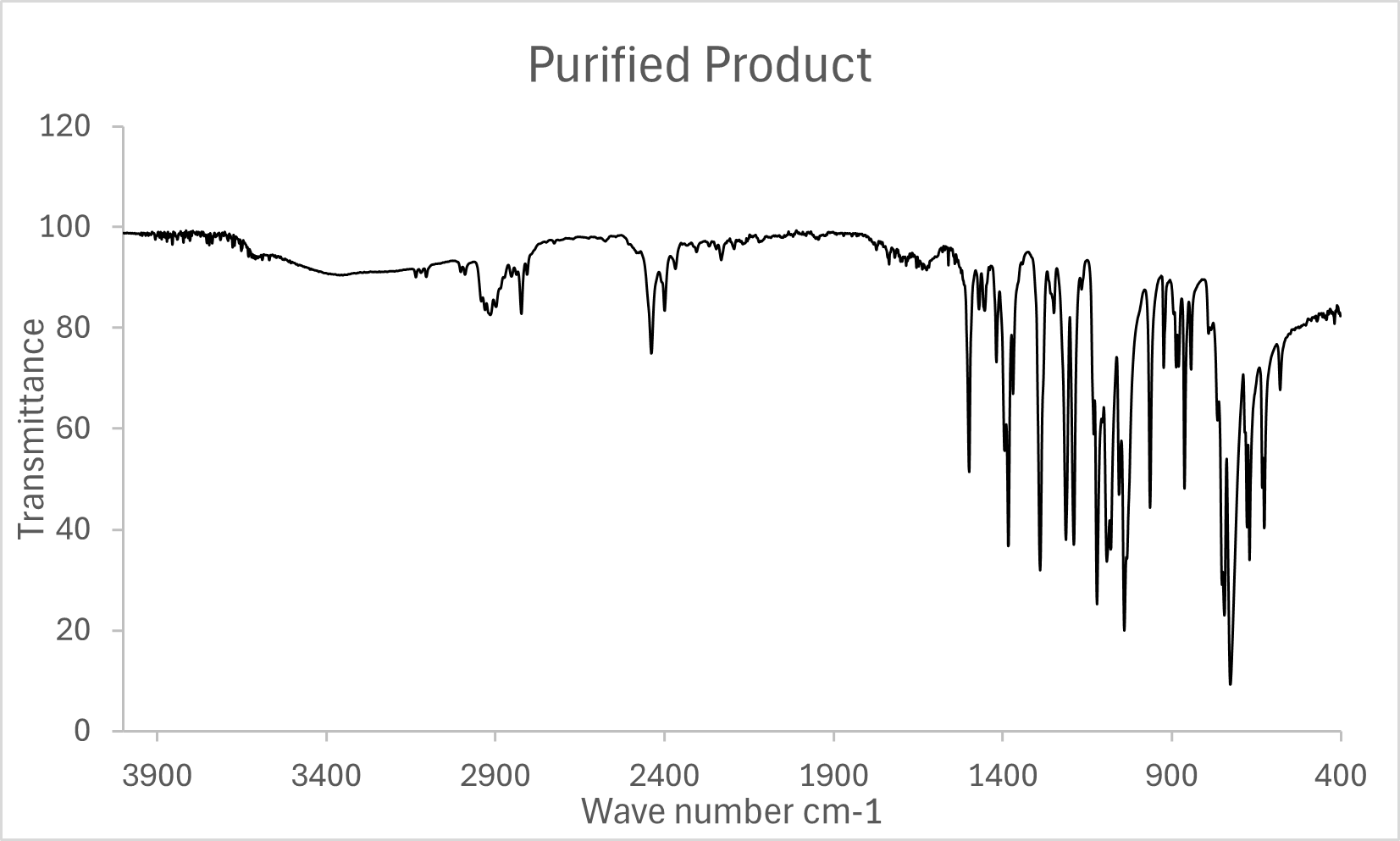 For such samples in the future, we will provide them in CSV format converted from raw files, making it easier for users to further analyze using our site’s range search technology and other tools. It also allows users to download the data for analysis and share their findings or suggestions.tem.csv
en&2