
aliphatic organic material with C-O stretching features, possibly an ester- or ether-containing compound
Consultez le rapport ci-dessus. Utilisez les commentaires ci-dessous si vous avez besoin d'une discussion de suivi.
aliphatic organic material with C-O stretching features, possibly an ester- or ether-containing compound
Paramètres d'échantillon et de mesure
Résultat d'identification
0%Le meilleur résultat de la bibliothèque est le cyclohexanecarboxylate de propan-2-yle, mais la qualité de la correspondance est effectivement absente et n'est pas assez forte pour soutenir l'identification de ce composé spécifique. Le spectre mesuré est dominé par des bandes dans la région des empreintes digitales, en particulier 1034-1284 cm-1, ce qui est cohérent avec l'élongation C-O dans un matériau organique aliphatique contenant de l'oxygène. Cependant, la liste des pics actuelle n'inclut pas de bande carbonyle d'ester claire près de la région attendue 1700-1750 cm-1, donc une attribution spécifique d'ester cyclohexanecarboxylate n'est pas solidement soutenue. Une direction plus large d'un matériau organique aliphatique contenant des liaisons C-O est chimiquement plus sûre sur la base des preuves actuelles.
Interprétation détaillée
- Meilleure correspondance de bibliothèque: cyclohexanecarboxylate de propan-2-yle #55760 | match 0.0%
- Le meilleur résultat de la bibliothèque est le cyclohexanecarboxylate de propan-2-yle, mais la qualité de la correspondance est effectivement absente et n'est pas assez forte pour soutenir l'identification de ce composé spécifique. Le spectre mesuré est dominé par des bandes dans la région des empreintes digitales, en particulier 1034-1284 cm-1, ce qui est cohérent avec l'élongation C-O dans un matériau organique aliphatique contenant de l'oxygène. Cependant, la liste des pics actuelle n'inclut pas de bande carbonyle d'ester claire près de la région attendue 1700-1750 cm-1, donc une attribution spécifique d'ester cyclohexanecarboxylate n'est pas solidement soutenue. Une direction plus large d'un matériau organique aliphatique contenant des liaisons C-O est chimiquement plus sûre sur la base des preuves actuelles.
- Plusieurs pics forts dans la région des empreintes digitales entre 1034 et 1284 cm-1 soutiennent la présence d'élongation C-O, ce qui est courant dans les éthers et les esters.
- L'échantillon manque d'informations larges O-H ou N-H évidentes dans la liste des pics fournie, donc un matériau aliphatique oxygéné simple reste plus cohérent qu'une interprétation riche en alcool ou en amide.
- Le meilleur candidat de la bibliothèque est un ester, et le deuxième candidat est également un ester, ce qui fournit un support de récupération limité pour considérer un composé aliphatique oxygéné.
- Les bandes observées à 1034, 1057, 1086, 1094, 1117, 1191, 1209 et 1284 cm-1 forment un groupe fort dans la région des empreintes digitales typique des modes d'élongation C-O et squelettiques associés dans les composés organiques contenant de l'oxygène.
- Les bandes à 669, 721 et 744 cm-1 sont compatibles avec les modes de déformation aliphatiques cycliques, en chaîne ou substitués, mais elles ne sont pas uniquement identifiantes pour le principal candidat de la bibliothèque.
- Le classement de la bibliothèque est globalement faible : le meilleur candidat et les autres candidats bien classés ont tous une similarité signalée de zéro, et le modèle des 15 premiers est chimiquement incohérent, couvrant des esters, des hétérocycles azotés, des amides et des solvants halogénés.
- Une attribution spécifique au cyclohexanecarboxylate de propan-2-yle n'est pas soutenue car la similarité signalée avec la bibliothèque est de 0,000.
- Une identification étroite d'ester est limitée par l'absence, dans la liste des pics fournie, d'une bande carbonyle d'ester forte caractéristique près d'environ 1700-1750 cm-1.
- Les 15 meilleurs candidats de la bibliothèque sont intérieurement contradictoires, incluant des possibilités d'hétérocycle azoté, d'amide et de solvant halogéné, donc le modèle de récupération ne renforce pas de manière cohérente une classe de structure spécifique.
- Les preuves actuelles ne distinguent pas avec confiance entre un ester et un autre composé aliphatique contenant de l'oxygène tel qu'un matériau riche en éther.
- Sans informations de la région carbonyle, de la région d'élongation C-H ou du contexte de l'échantillon, le squelette moléculaire et le modèle de substitution restent incertains.
- La comparaison de faible qualité avec la bibliothèque de référence empêche une conclusion défendable au niveau de l'entité.
Comparaison de bibliothèques
Résultats de recherche dans la bibliothèque — Top 15 des candidats
| Rang | Correspondance % | Composé | SMILES | N° de spectre | Action |
|---|---|---|---|---|---|
| Chargement des candidats de la bibliothèque... | |||||
Analyse des pics
★ = Attribution soutenue par la littérature| # | Nombre d'onde (cm⁻¹) | Absorbance | Attribution | Citation | État de l'attribution | |
|---|---|---|---|---|---|---|
| 1 | · | 721 | 1.00 | - | - | - |
| 2 | · | 744 | 0.29 | - | - | - |
| 3 | · | 1034 | 0.28 | - | - | - |
| 4 | · | 669 | 0.23 | - | - | - |
| 5 | · | 1086 | 0.20 | - | - | - |
| 6 | · | 1117 | 0.20 | - | - | - |
| 7 | · | 1094 | 0.19 | - | - | - |
| 8 | · | 1209 | 0.19 | - | - | - |
| 9 | · | 1284 | 0.17 | - | - | - |
| 10 | · | 1191 | 0.15 | - | - | - |
| 11 | · | 1386 | 0.15 | - | - | - |
| 12 | · | 1057 | 0.13 | - | - | - |
| 13 | · | 965 | 0.11 | - | - | - |
Annexe — Spectre brut

Commentaires et preuves de suivi
Utilisez cette zone pour poursuivre l'interprétation, poser des questions ou ajouter des preuves de vérification supplémentaires.
The above shows the FTIR analysis results of a png file uploaded by a user (IP: 2403::). The original image is displayed below.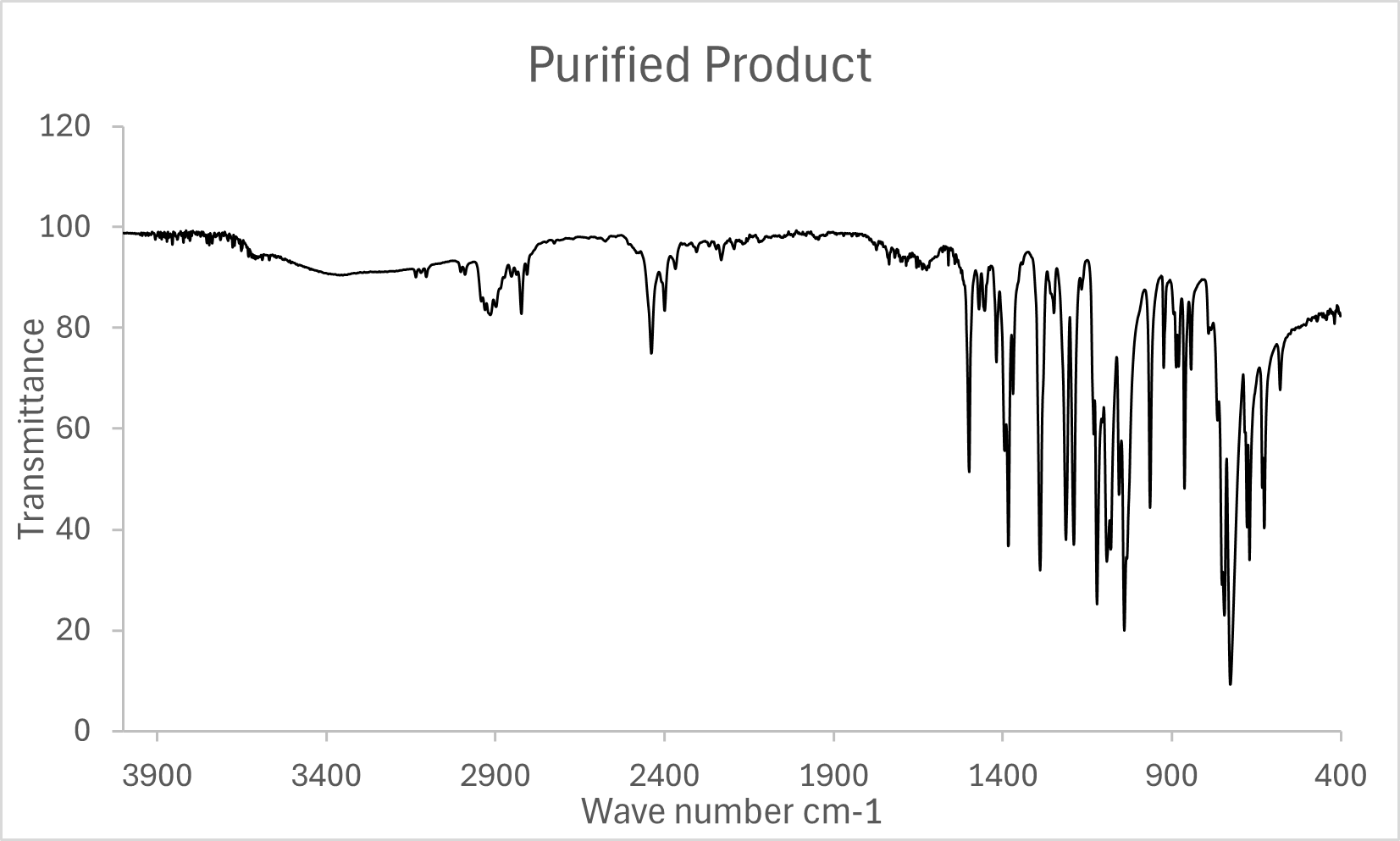 For such samples in the future, we will provide them in CSV format converted from raw files, making it easier for users to further analyze using our site’s range search technology and other tools. It also allows users to download the data for analysis and share their findings or suggestions.tem.csv
en&2