
aliphatic organic material with C-O stretching features, possibly an ester- or ether-containing compound
Consulte el informe que aparece arriba. Utilice los comentarios a continuación si requiere una discusión de seguimiento.
aliphatic organic material with C-O stretching features, possibly an ester- or ether-containing compound
Parámetros de muestra y medición
Resultado de Identificación
0%El primer resultado de la biblioteca es propan-2-il ciclohexanocarboxilato, pero la calidad de coincidencia es efectivamente nula y no es suficientemente fuerte para respaldar una identificación de ese compuesto específico. El espectro medido está dominado por bandas en la región de huella dactilar, especialmente 1034-1284 cm-1, lo que es consistente con estiramiento C-O en un material orgánico alifático que contiene oxígeno. Sin embargo, la lista de picos actual no incluye una banda carbonilo de éster clara cerca de la región esperada de 1700-1750 cm-1, por lo que una asignación específica de éster de ciclohexanocarboxilato no está respaldada de manera segura. Una dirección más amplia de un material orgánico alifático que contiene enlaces C-O es químicamente más segura con la evidencia actual.
Interpretación detallada
- Mejor coincidencia de biblioteca: propan-2-yl cyclohexanecarboxylate #55760 | match 0.0%
- El primer resultado de la biblioteca es propan-2-il ciclohexanocarboxilato, pero la calidad de coincidencia es efectivamente nula y no es suficientemente fuerte para respaldar una identificación de ese compuesto específico. El espectro medido está dominado por bandas en la región de huella dactilar, especialmente 1034-1284 cm-1, lo que es consistente con estiramiento C-O en un material orgánico alifático que contiene oxígeno. Sin embargo, la lista de picos actual no incluye una banda carbonilo de éster clara cerca de la región esperada de 1700-1750 cm-1, por lo que una asignación específica de éster de ciclohexanocarboxilato no está respaldada de manera segura. Una dirección más amplia de un material orgánico alifático que contiene enlaces C-O es químicamente más segura con la evidencia actual.
- Múltiples picos fuertes en la región de huella dactilar entre 1034 y 1284 cm-1 respaldan la presencia de estiramiento C-O, común en éteres y ésteres.
- La muestra carece de información amplia de O-H o N-H obvia en la lista de picos proporcionada, por lo que un material alifático oxigenado simple sigue siendo más consistente que una interpretación rica en alcohol o amida.
- El candidato principal de la biblioteca es un éster, y el segundo candidato también es un éster, lo que proporciona un soporte de recuperación limitado para considerar un compuesto alifático oxigenado.
- Las bandas observadas a 1034, 1057, 1086, 1094, 1117, 1191, 1209 y 1284 cm-1 forman un grupo fuerte en la región de huella dactilar típico de modos de estiramiento C-O y esqueléticos relacionados en compuestos orgánicos que contienen oxígeno.
- Las bandas a 669, 721 y 744 cm-1 son compatibles con modos de deformación alifática de anillo, cadena o sustituidos, pero no identifican de manera única al candidato principal de la biblioteca.
- La clasificación de la biblioteca es débil en general: el candidato principal y otros candidatos de alto rango tienen una similitud reportada de cero, y el patrón de los 15 principales es químicamente inconsistente, abarcando ésteres, heterociclos nitrogenados, amidas y disolventes halogenados.
- Una asignación específica a propan-2-il ciclohexanocarboxilato no está respaldada porque la similitud reportada de la biblioteca es 0.000.
- Una identificación estrecha de éster está limitada por la ausencia, en la lista de picos proporcionada, de una banda carbonilo de éster fuerte característica cerca de aproximadamente 1700-1750 cm-1.
- Los candidatos principales de la biblioteca (Top-15) son internamente contradictorios, incluyendo posibilidades de heterociclo nitrogenado, amida y disolvente halogenado, por lo que el patrón de recuperación no refuerza consistentemente una clase de estructura específica.
- La evidencia actual no distingue con confianza entre un éster y otro compuesto alifático que contiene oxígeno, como un material rico en éter.
- Sin información de la región carbonilo, la región de estiramiento C-H o el contexto de la muestra, el esqueleto molecular y el patrón de sustitución siguen siendo inciertos.
- La comparación de baja calidad con la biblioteca de referencia impide una conclusión defendible a nivel de entidad.
Comparación de bibliotecas
Resultados de Búsqueda en Biblioteca — Los 15 Principales Candidatos
| Rango | Coincidencia % | Compuesto | SMILES | N.º de espectro | Acción |
|---|---|---|---|---|---|
| Cargando candidatos de la biblioteca... | |||||
Análisis de picos
★ = Asignación respaldada por literatura| # | Número de onda (cm⁻¹) | Absorbancia | Asignación | Cita | Estado de asignación | |
|---|---|---|---|---|---|---|
| 1 | · | 721 | 1.00 | - | - | - |
| 2 | · | 744 | 0.29 | - | - | - |
| 3 | · | 1034 | 0.28 | - | - | - |
| 4 | · | 669 | 0.23 | - | - | - |
| 5 | · | 1086 | 0.20 | - | - | - |
| 6 | · | 1117 | 0.20 | - | - | - |
| 7 | · | 1094 | 0.19 | - | - | - |
| 8 | · | 1209 | 0.19 | - | - | - |
| 9 | · | 1284 | 0.17 | - | - | - |
| 10 | · | 1191 | 0.15 | - | - | - |
| 11 | · | 1386 | 0.15 | - | - | - |
| 12 | · | 1057 | 0.13 | - | - | - |
| 13 | · | 965 | 0.11 | - | - | - |
Apéndice — Espectro sin procesar

Comentarios y evidencia de seguimiento
Usa esta área para continuar la interpretación, hacer preguntas o agregar evidencia de verificación adicional.
The above shows the FTIR analysis results of a png file uploaded by a user (IP: 2403::). The original image is displayed below.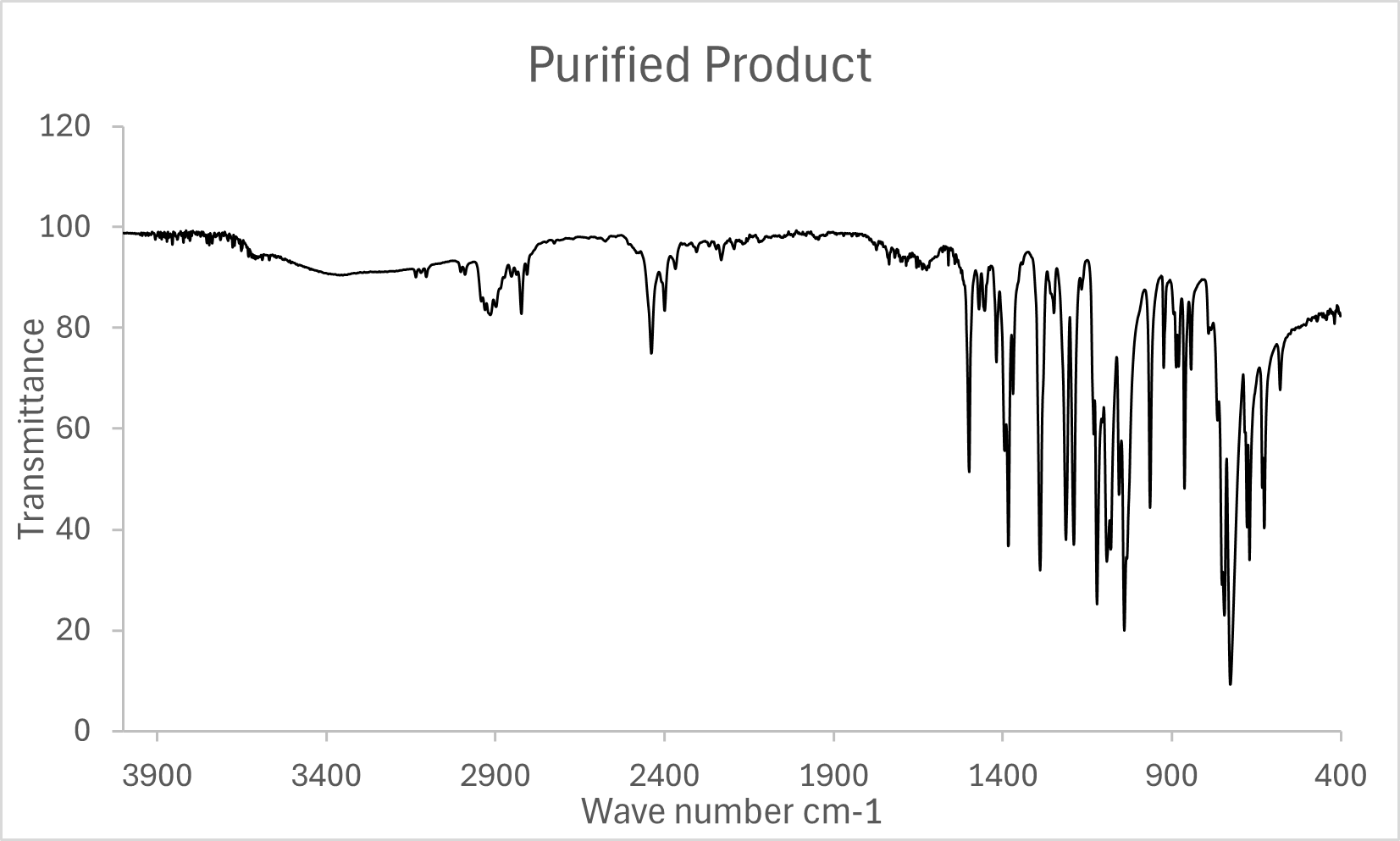 For such samples in the future, we will provide them in CSV format converted from raw files, making it easier for users to further analyze using our site’s range search technology and other tools. It also allows users to download the data for analysis and share their findings or suggestions.tem.csv
en&2