
aromatic / methacrylate polymer with ether, hydroxyl, and unsaturated groups
Zobacz raport powyżej. Użyj komentarzy poniżej, jeśli potrzebujesz dalszej dyskusji.
aromatic / methacrylate polymer with ether, hydroxyl, and unsaturated groups
Parametry próbki i pomiaru
Wynik identyfikacji
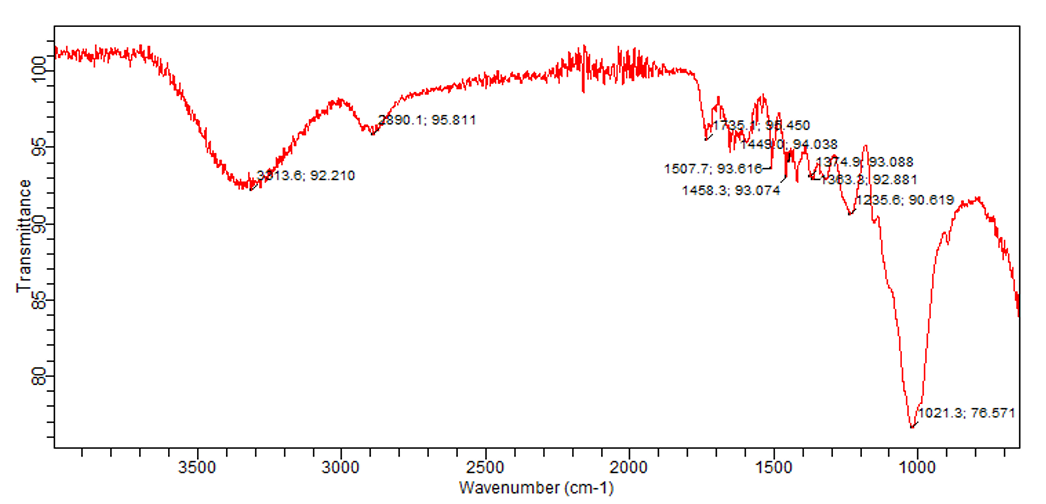
78%Widmo FTIR sugeruje materiał na bazie aromatycznej/metakrylanowej zawierający wiązania eterowe, grupy hydroksylowe, nienasycone wiązania węgiel-węgiel, łańcuchy alkilowe i ugrupowania karboksylanowe. Definitywna identyfikacja jako pojedynczego czystego związku nie jest poparta, ponieważ oczekiwana silna absorpcja karbonylowa estru (~1720 cm⁻¹) jest nieobecna, a charakterystyczne pasma rozciągania C–F najlepszego dopasowania bibliotecznego nie są obserwowane. Najbardziej uzasadnionym kierunkiem jest żywica lub oligomer polimeru bogatego w metakrylan o charakterze aromatycznym i funkcjonalnościach tlenowych, zgodny z konsensusem bibliotecznym, ale pozostający szerokim.
Szczegółowa interpretacja
- Najlepsze dopasowanie biblioteki: 2,2,3,3-Tetrafluoropropan-1-ol #65316
- Nie obserwuje się pasm charakterystycznych dla rozciągania C–F (1000–1400 cm⁻¹), co czyni najlepsze dopasowanie biblioteczne (2,2,3,3-tetrafluoropropan-1-ol) chemicznie mało prawdopodobnym.
- Oczekiwana silna absorpcja karbonylowa estru w okolicy 1720 cm⁻¹, kluczowy wskaźnik konwencjonalnych polimerów metakrylanowych, jest nieobecna w zestawie wyrazistych pików, co podważa prostą identyfikację homopolimeru metakrylanowego.
- Bez dodatkowych danych spektralnych dokładna równowaga między składnikami aromatycznymi, metakrylanowymi, eterowymi i siloksanowymi pozostaje nieokreślona.
Porównanie bibliotek
Wyniki wyszukiwania w bibliotece — 15 najlepszych kandydatów
| Ranga | Dopasowanie % | Związek | SMILES | Nr widma | Akcja |
|---|---|---|---|---|---|
| Ładowanie kandydatów biblioteki... | |||||
Analiza pików
★ = Przypisanie poparte literaturą| # | Liczba falowa (cm⁻¹) | Absorbancja | Przypisanie | Cytowanie | Status przypisania | |
|---|---|---|---|---|---|---|
| 1 | · | 1099 | 1.00 | - | - | - |
| 2 | · | 953 | 0.30 | - | - | - |
| 3 | · | 797 | 0.27 | Pasmo przy 797 cm-1 przypisuje się grupie karboksylowej. | - | Wysoka pewność |
| 4 | · | 3336 | 0.20 | Pasmo przy 3336 cm-1 przypisuje się rozciąganiu O-H. | - | Wysoka pewność |
| 5 | · | 1635 | 0.13 | Pasmo przy 1635 cm-1 przypisuje się metakrylanowi. | - | Wysoka pewność |
Załącznik — Spektrum surowe

Komentarze i dowody uzupełniające
Użyj tego obszaru, aby kontynuować interpretację, zadawać pytania lub dodać dodatkowe dowody weryfikacyjne.
raw image:
en&2