
முடிவு பக்கம்
aromatic / methoxy
மேலே உள்ள அறிக்கையைப் பார்க்கவும். தொடர் விவாதம் தேவைப்பட்டால் கீழே உள்ள கருத்துகளைப் பயன்படுத்தவும்.
FTIR பகுப்பாய்வு அறிக்கை
ஒட்டுமொத்த நம்பிக்கை
aromatic / methoxy
மாதிரி & அளவீட்டு அளவுருக்கள்
அறிக்கை எண்.
20260115084818565722866
தேதி
நிறமாலை வரம்பு (cm⁻¹)
N/A
அடிப்படைக் கோடு
AsLS அடிக்கோடு திருத்தம்
நூலக பொருத்தம்
77%
அடையாள முடிவு
77%மாதிரி ஒரு அரோமேட்டிக், மெத்தாக்ஸி கொண்ட சேர்மமாக சிறப்பாக வகைப்படுத்தப்படுகிறது. ஸ்பெக்ட்ரல் அம்சங்கள் ஆக்ஸிஜன் செயல்பாடுகளை கொண்ட மாற்றீடு செய்யப்பட்ட அரோமேட்டிக் அமைப்புடன் ஒத்துப்போகின்றன. நூலக தேடல் 2-பைரிடின்-4-இலைசல்பனைல்அசிட்டிக் அமிலத்தை முதல் பொருத்தமாக வழங்கியது, ஆனால் கார்பாக்சிலிக் அமிலத்திற்கு எதிர்பார்க்கப்படும் முக்கிய கார்போனைல் மற்றும் பரந்த O–H உறிஞ்சுதல்கள் இல்லை; எனவே அடையாளம் அரோமேட்டிக்/மெத்தாக்ஸி பொருளாக விரிவுபடுத்தப்பட்டுள்ளது.
விரிவான விளக்கம்
- சிறந்த நூலக பொருத்தம்: 2-பைரிடின்-4-இலைசல்பனைல்அசிட்டிக் அமிலம் #22510 | பொருத்தம் 87.6%
- மாதிரி ஒரு அரோமேட்டிக், மெத்தாக்ஸி கொண்ட சேர்மமாக சிறப்பாக வகைப்படுத்தப்படுகிறது. ஸ்பெக்ட்ரல் அம்சங்கள் ஆக்ஸிஜன் செயல்பாடுகளை கொண்ட மாற்றீடு செய்யப்பட்ட அரோமேட்டிக் அமைப்புடன் ஒத்துப்போகின்றன. நூலக தேடல் 2-பைரிடின்-4-இலைசல்பனைல்அசிட்டிக் அமிலத்தை முதல் பொருத்தமாக வழங்கியது, ஆனால் கார்பாக்சிலிக் அமிலத்திற்கு எதிர்பார்க்கப்படும் முக்கிய கார்போனைல் மற்றும் பரந்த O–H உறிஞ்சுதல்கள் இல்லை; எனவே அடையாளம் அரோமேட்டிக்/மெத்தாக்ஸி பொருளாக விரிவுபடுத்தப்பட்டுள்ளது.
- Trchová & Stejskal (2011) நேரடியாக 828 மற்றும் 1042 cm⁻¹ அலைவரிசைகளை சல்போனேட்டட் பாலியணிலினின் 1,4-டைசப்ஸ்டிட்யூட்டட் அரோமேட்டிக் C–H வெளி-தள சிதைவு மற்றும் HSO₃⁻ நீட்சி என ஒதுக்குகின்றனர் [7].
- D’Amico et al. (2021) பாலிஃபர்புரில் ஆல்கஹாலில் 1558 cm⁻¹ இல் அரோமேட்டிக் C=C வளைய நீட்சியைப் பதிவு செய்கின்றனர் [8], இது கவனிக்கப்பட்ட அலைவரிசையுடன் சரியாக பொருந்துகிறது.
- Gouda et al. (2022) கைட்டோசன் நானோஃபைபர்களில் 1334 cm⁻¹ அலைவரிசையை C–N நீட்சியுடன் இணைக்கின்றனர் [3].
- Armenta et al. (2004) ஆஸ்பார்டேம்/அசிசல்பேம்-K இல் 945 cm⁻¹ அருகில் உள்ள அலைவரிசையை கார்பாக்சிலிக் அமில C–O–H வளைவுக்கு ஒதுக்குகின்றனர் [6].
- 1558 cm⁻¹ அலைவரிசை வெளியிடப்பட்ட பாலிஃபர்புரில் ஆல்கஹால் அலைவரிசை அட்டவணையுடன் [8] நேரடி பொருத்தத்தின் அடிப்படையில் அரோமேட்டிக் வளைய C=C நீட்சிக்கு ஒதுக்கப்பட்டுள்ளது; இது அரோமேட்டிக் கட்டமைப்பின் மிக வலுவான குறிகாட்டியாகும்.
- 828 மற்றும் 1042 cm⁻¹ இல் உள்ள மிதமான-தீவிர உச்சிகள் Trchová & Stejskal (2011) சல்போனேட்டட் அரோமேட்டிக் வளையங்களுக்கான ஒதுக்கீட்டு அட்டவணையுடன் துல்லியமாக ஒத்துப்போகின்றன: 828 cm⁻¹ அலைவரிசை 1,4-டைசப்ஸ்டிட்யூட்டட் வளையங்களின் γ(C–H) மற்றும் குயினாய்டு வளைய சிதைவுக்கும், 1042 cm⁻¹ அலைவரிசை சல்போனேட்டட் அரோமேட்டிக் வளையத்தில் உள்ள HSO₃⁻ குழுவிற்கும் ஒதுக்கப்பட்டுள்ளது [7]. இது சல்போனேட்டட் அல்லது வலுவான எலக்ட்ரோஃபிலிக் மாற்றீடு செய்யப்பட்ட அரோமேட்டிக் பகுதி இருப்பதைக் காட்டுகிறது.
- 1334 cm⁻¹ அலைவரிசை C–N ஒற்றைப் பிணைப்பு நீட்சியாக ஒதுக்கப்பட்டுள்ளது, இது கைட்டோசன் நானோஃபைபர்களில் நேரடி இலக்கிய ஆதாரத்தால் [3] ஆதரிக்கப்படுகிறது; பைரிடின் அல்லது அரோமேட்டிக் அமீன் கட்டமைப்பு இந்த அம்சத்தை விளக்கும் மேலும் நைட்ரஜன் கொண்ட நூலக வேட்பாளர்களுடன் ஒத்துப்போகிறது.
- 942 cm⁻¹ இல் உள்ள பலவீனமான உறிஞ்சுதல் தற்காலிகமாக கார்பாக்சில் O–H வெளி-தள வளைவுக்கு ஒதுக்கப்பட்டுள்ளது, அசிசல்பேம்-K க்காக [6] பதிவு செய்யப்பட்டது; இது கார்பாக்சிலிக் அமிலம் அல்லது கார்பாக்சிலேட் குழுவைக் குறிக்கலாம், இருப்பினும் 1700 cm⁻¹ அருகில் C=O அலைவரிசை இல்லாதது அமிலக் குழு சிறியதாகவோ, ஹைட்ரஜன்-பிணைப்பு கொண்டதாகவோ அல்லது உப்பாகவோ இருப்பதைக் காட்டுகிறது.
- 655 cm⁻¹ இல் உள்ள குறைந்த-அலை எண் அலைவரிசை தெளிவற்றதாக உள்ளது; இலக்கிய ஒதுக்கீடுகள் உலோக-ஆக்ஸிஜன் [5] முதல் C–O வெளி-தள வளைவு வரை உள்ளன, ஆனால் வரையறுக்கப்பட்ட தரவு காரணமாக எந்த ஒதுக்கீட்டிற்கும் தனித்துவமான ஆதரவு இல்லை.
- முக்கிய உச்சி ஒதுக்கீடுகள்: 655: நேரடி குறிப்பு: வளையம்; வளைய 6m | தரம்: ஸ்பெக்ட்ரம் விளிம்புகள் துண்டிக்கப்பட்ட அல்லது அடிப்படை-மாற்றப்பட்டதாகத் தெரிகிறது; 828: தொடர்புடைய இலக்கியம்: சல்போனேட்டட் அரோமேட்டிக் வளையம் மற்றும் 1,4-டைசப்ஸ்டிட்யூட்டட் வளைய சிதைவு | நேரடி குறிப்பு: வளையம்; வளைய 6m | தரம்: ஸ்பெக்ட்ரம் விளிம்புகள் துண்டிக்கப்பட்ட அல்லது அடிப்படை-மாற்றப்பட்டதாகத் தெரிகிறது; 1334: நேரடி குறிப்பு: வளையம்; வளைய 6m | தரம்: ஸ்பெக்ட்ரம் விளிம்புகள் துண்டிக்கப்பட்ட அல்லது அடிப்படை-மாற்றப்பட்டதாகத் தெரிகிறது; 1042: தொடர்புடைய இலக்கியம்: சல்போனேட்டட் அரோமேட்டிக் வளையம் மற்றும் 1,4-டைசப்ஸ்டிட்யூட்டட் வளைய சிதைவு | நேரடி குறிப்பு: வளையம்; வளைய 6m | தரம்: ஸ்பெக்ட்ரம் விளிம்புகள் துண்டிக்கப்பட்ட அல்லது அடிப்படை-மாற்றப்பட்டதாகத் தெரிகிறது.
- 1700–1750 cm⁻¹ பகுதியில் வலுவான கார்போனைல் நீட்சி அலைவரிசை காணப்படவில்லை, இது இலவச கார்பாக்சிலிக் அமிலம், எஸ்டர் அல்லது கீட்டோனுக்கு தேவையானதாகும்; இது நூலக முதல் வேட்பாளரான 2-பைரிடின்-4-இலைசல்பனைல்அசிட்டிக் அமிலத்தை அதன் நடுநிலை வடிவத்தில் எதிர்க்கிறது.
- கார்பாக்சிலிக் அமிலத்திற்கு எதிர்பார்க்கப்படும் பரந்த O–H நீட்சி (~2500–3300 cm⁻¹) துண்டிக்கப்பட்ட ஸ்பெக்ட்ரமில் தெளிவாக உருவாகவில்லை, மேலும் கார்பாக்சிலிக் அமிலத்தை ஒதுக்குவதற்கு எச்சரிக்கையாக இருக்கிறது.
- மிகவும் குறிப்பிட்ட நூலக வேட்பாளரான 2-பைரிடின்-4-இலைசல்பனைல்அசிட்டிக் அமிலத்தில் உறுதிப்படுத்தும் C=O மற்றும் O–H அலைவரிசைகள் இல்லை, S-O; விளக்கம் பரந்த அரோமேட்டிக்/மெத்தாக்ஸி மட்டத்திலேயே இருக்க வேண்டும்.
- 828 மற்றும் 1042 cm⁻¹ இல் சல்போனேட்டட் அரோமேட்டிக் வளைய விளக்கம் ஒப்பீட்டு இலக்கிய அமைப்பிலிருந்து (பாலியணிலின் வழிப்பொருட்கள்) வந்தது, மேலும் மாதிரி உண்மையில் சல்போனேட்டட் இல்லையென்றால் செயல்பாட்டை அதிகமாக ஊகிக்கலாம்; இந்த அலைவரிசைகள் மாற்றாக ஆல்காக்ஸி அல்லது பிற வளைய-மாற்றீடு செய்யப்பட்ட அரோமேட்டிக்களிலிருந்து எழலாம்.
- 942 cm⁻¹ கார்பாக்சில் ஒதுக்கீடு நம்பத்தகுந்ததாக இருந்தாலும், துணை C=O நீட்சி இல்லாததால் குறைந்த உறுதியானது; வளைய மூச்சு அல்லது C–O போன்ற மாற்று ஒதுக்கீடுகள் சாத்தியமாகும்.
- ஆறு உச்சிகள் மட்டுமே கிடைக்கின்றன, மேலும் குறைந்த-அலை எண் துண்டிப்பு முக்கியமான கைரேகை முறைகளை மறைக்கக்கூடும், இவை அரோமேட்டிக் மாற்றீட்டு வடிவங்களை சிறப்பாக வேறுபடுத்த உதவும்.
நூலக ஒப்பீடு
நூலக நிறமாலை இங்கே தோன்றும்.
நூலக தேடல் முடிவுகள் — முதல் 15 வேட்பாளர்கள்
| தரவரிசை | பொருத்தம் % | கூட்டு | SMILES | ஸ்பெக்ட்ரம் எண். | செயல் |
|---|---|---|---|---|---|
| நூலக வேட்பாளர்களை ஏற்றுகிறது... | |||||
உச்ச பகுப்பாய்வு
★ = இலக்கிய ஆதரவு ஒதுக்கீடு| # | அலை எண் (cm⁻¹) | உறிஞ்சுதிறன் | நியமனம் | மேற்கோள் | நியமிப்பு நிலை | |
|---|---|---|---|---|---|---|
| 1 | · | 655 | 1.00 | 655 cm-1 இல் உள்ள அலைவரிசை உலோக ஆக்ஸிஜனுக்கு [5] ஒதுக்கப்பட்டுள்ளது. | - | - |
| 2 | · | 828 | 0.76 | 828 cm-1 இல் உள்ள அலைவரிசை சல்போனேட்டட் அரோமேட்டிக் வளையம் மற்றும் 1,4-டைசப்ஸ்டிட்யூட்டட் வளைய சிதைவுக்கு [7] ஒதுக்கப்பட்டுள்ளது. | - | உயர் நம்பிக்கை |
| 3 | · | 1334 | 0.41 | 1334 cm-1 இல் உள்ள அலைவரிசை C-N ஒற்றைப் பிணைப்புக்கு [3] ஒதுக்கப்பட்டுள்ளது. | - | குறைந்த நம்பிக்கை |
| 4 | · | 1042 | 0.41 | 1042 cm-1 இல் உள்ள அலைவரிசை சல்போனேட்டட் அரோமேட்டிக் வளையம் மற்றும் 1,4-டைசப்ஸ்டிட்யூட்டட் வளைய சிதைவுக்கு [7] ஒதுக்கப்பட்டுள்ளது. | - | உயர் நம்பிக்கை |
| 5 | · | 942 | 0.36 | 942 cm-1 இல் உள்ள அலைவரிசை கார்பாக்சிலுக்கு [6] ஒதுக்கப்பட்டுள்ளது. | - | குறைந்த நம்பிக்கை |
| 6 | · | 1558 | 0.23 | 1558 cm-1 இல் உள்ள அலைவரிசை அரோமேட்டிக் C=C வளைய நீட்சிக்கு [8] ஒதுக்கப்பட்டுள்ளது. | - | உயர் நம்பிக்கை |
இணைப்பு — மூல ஸ்பெக்ட்ரம்

விவாதம்
கருத்துகள் மற்றும் பின்தொடர் ஆதாரங்கள்
இந்தப் பகுதியைப் பயன்படுத்தி விளக்கத்தைத் தொடரவும், கேள்விகள் கேட்கவும் அல்லது கூடுதல் சரிபார்ப்பு ஆதாரங்களைச் சேர்க்கவும்.
raw image: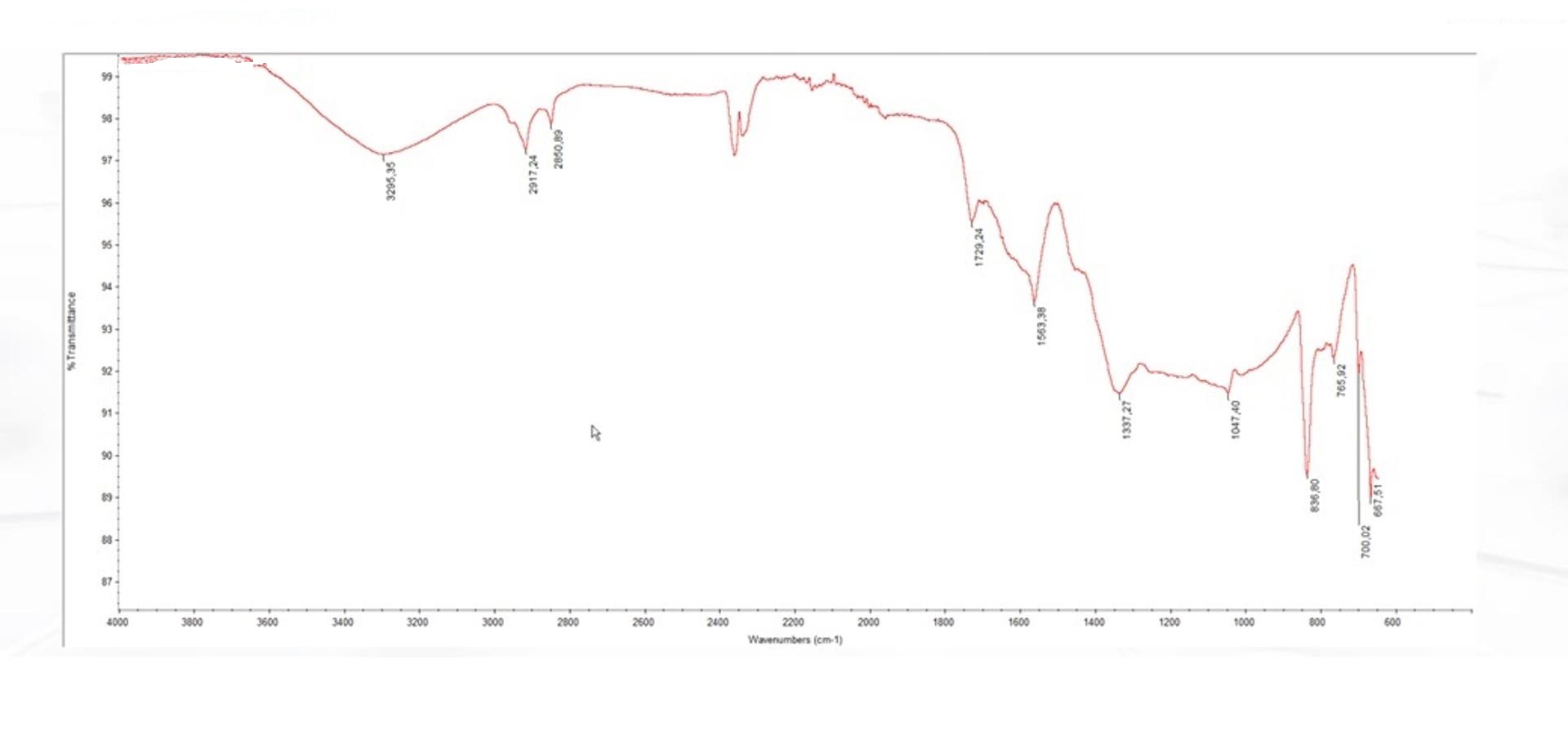 tem.csv
en&2