
aromatic / amide-containing organic material with hydroxyl groups
Oglejte si poročilo zgoraj. Uporabite komentarje spodaj, če potrebujete nadaljnjo razpravo.
aromatic / amide-containing organic material with hydroxyl groups
Parametri vzorca in meritve
Rezultat identifikacije
36%Vzorec kaže tri dobro ločene infrardeče vrvice pri 3284, 1373 in 1012 cm⁻¹, ki skupaj nakazujejo organski material z N-H/O-H, metilnimi in alkoholnimi C-O funkcionalnostmi. Iskanje po knjižnici je vrnilo triklorofosfan kot najbližje ujemanje z zelo nizko podobnostjo (0,00), soglasje prvih 15 kandidatov pa kaže na aromatske in amidne značilnosti, skladne z opazovanim spektralnim vzorcem. Dokazi ne podpirajo specifične molekularne identitete; namesto tega so podatki najbolje opisani kot aromatska amidna/hidroksilna snov, verjetno majhna molekula ali zmes, ne pa anorganska fosforjeva spojina, ki jo predlaga najboljši zadetek.
Podrobna interpretacija
- Najboljši zadetek knjižnice: trichlorophosphane #14759
- Najboljši zadetek iz knjižnice, triklorofosfan (PCl₃), je kemično nezdružljiv z opazovanim spektrom: zahteval bi močne P–Cl absorbecije blizu 500 cm⁻¹ in ne bi imel N–H/O–H raztezanj nad 3000 cm⁻¹. Zadetek s knjižnično podobnostjo nič dodatno nasprotuje zanesljivi identifikaciji te spojine.
- Dodelitev fosfata za 1012 cm⁻¹ [1] je v nasprotju z odsotnostjo značilnih estrov fosfata (npr. P=O raztezanje blizu 1250–1150 cm⁻¹ in P–O–C okoli 1050–970 cm⁻¹), ki bi jih pričakovali, če bi bil prisoten organofosfat.
- Vrvice pri 3284 cm⁻¹ ni mogoče nedvoumno ločiti na čisti N–H ali O–H; obe funkcionalni skupini lahko sobivata, njuna široka prekrivajoča profila pa preprečujeta dokončno razlikovanje samo z FTIR.
- Ker je knjižnično ujemanje na ravni podobnosti 0,00, je ime najboljšega kandidata »triklorofosfan« nezanesljivo; prava kemična identiteta ostaja neznana in lahko zajema vrsto aromatskih amidnih/aminskih ali hidroksilnih spojin.
Primerjava knjižnic
Rezultati iskanja po knjižnici — najboljših 15 kandidatov
| Uvrstitev | Ujemanje % | Spojina | SMILES | Št. spektra | {'index': 16, 'corrected': 'Samo na podlagi ujemanja s knjižnico, razvrščenega po podobnosti.'} |
|---|---|---|---|---|---|
| Nalaganje kandidatov knjižnice... | |||||
Analiza vrhov
★ = Dodelitev, podprta z literaturo| # | Valovno število (cm⁻¹) | {'index': 12, 'corrected': 'Dodeljena skupina'} | Dodelitev | {'index': 33, 'corrected': 'Kontakt'} | {'index': 21, 'corrected': 'ŠTEVILKA CAS'} | |
|---|---|---|---|---|---|---|
| 1 | · | 1012 | 1.00 | Vrvica pri 1012 cm⁻¹ je dodeljena alkoholnemu C-O raztezanju (1012 cm⁻¹). | - | Zmerna zaupnost |
| 2 | · | 1373 | 0.10 | Vrvica pri 1373 cm⁻¹ je dodeljena dežnikasti deformaciji CH₃ (1373 cm⁻¹). | - | Visoka zaupnost |
| 3 | · | 3284 | 0.10 | Vrvica pri 3284 cm⁻¹ je dodeljena amidu. | - | Zmerna zaupnost |
Dodatek – neobdelan spekter

Komentarji in nadaljnji dokazi
Uporabite to področje za nadaljevanje interpretacije, postavljanje vprašanj ali dodajanje dodatnih dokazov za preverjanje.
The above shows the FTIR analysis results of a PDF file uploaded by a user from Malaysia. The original image and extracted CSV file are displayed below.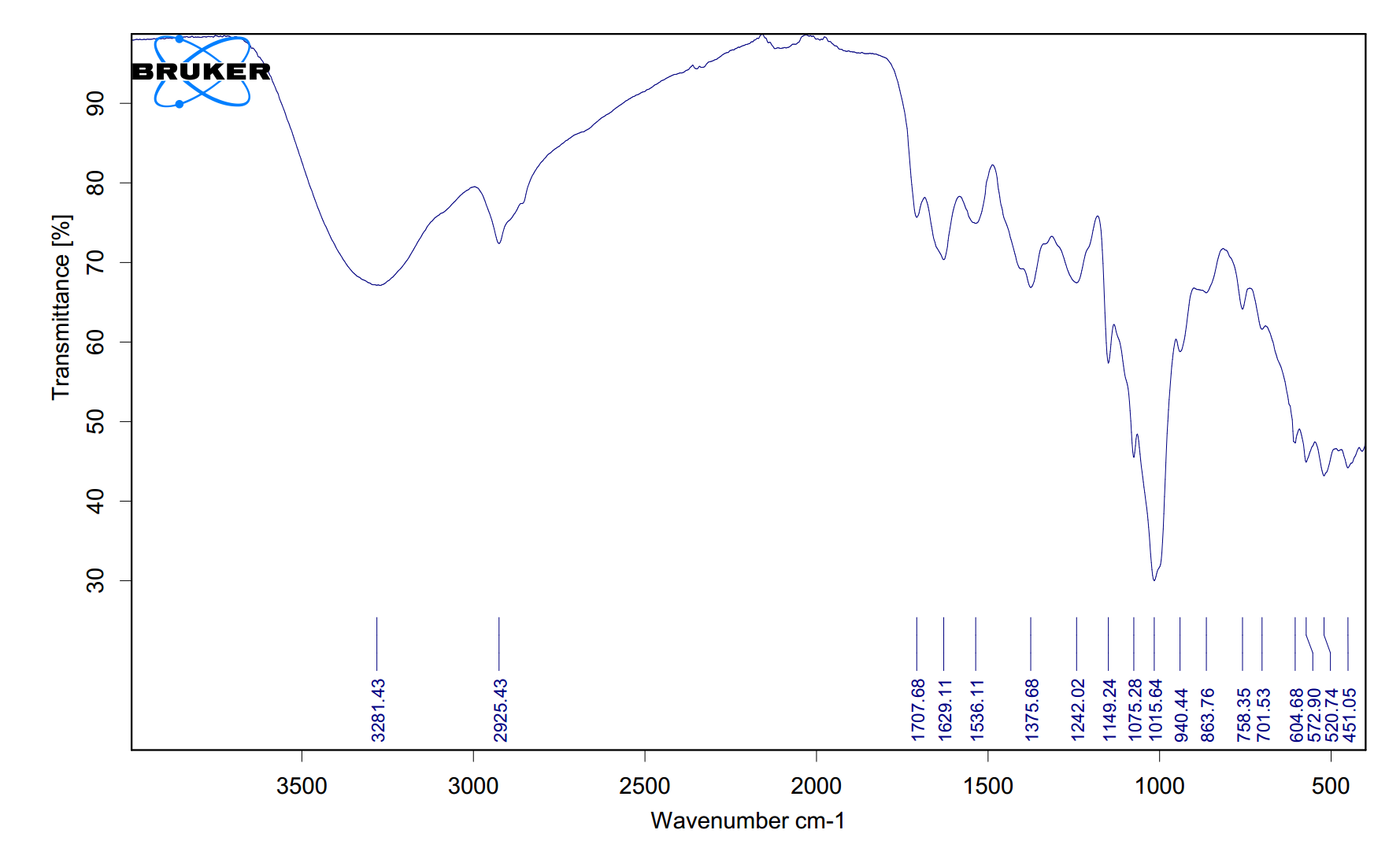 tem.csv
en&2