
aromatic / amide-containing organic material with hydroxyl groups
Vizualizați raportul de mai sus. Utilizați comentariile de mai jos dacă aveți nevoie de o discuție ulterioară.
aromatic / amide-containing organic material with hydroxyl groups
Parametrii Probei și Măsurătorii
Rezultatul identificării
36%Eșantionul prezintă trei benzi infraroșii bine rezolvate la 3284, 1373 și 1012 cm⁻¹, care indică colectiv un material organic care conține funcționalități N-H/O-H, metil și C-O alcoolic. Căutarea în bibliotecă a returnat triclorofosfanul ca cea mai apropiată potrivire cu o similaritate extrem de scăzută (0,00), iar consensul bibliotecii Top-15 indică caracteristici aromatice și amidice, în concordanță cu modelul spectral observat. Dovezile nu susțin o identitate moleculară specifică; în schimb, datele sunt cel mai bine descrise ca o substanță aromatică care conține amidă/hidroxil, probabil o moleculă mică sau un amestec, mai degrabă decât compusul anorganic de fosfor sugerat de cel mai bun rezultat
Interpretare detaliată
- Cea mai bună potrivire din bibliotecă: trichlorophosphane #14759 | potrivire 0.0%
- Eșantionul prezintă trei benzi infraroșii bine rezolvate la 3284, 1373 și 1012 cm⁻¹, care indică colectiv un material organic care conține funcționalități N-H/O-H, metil și C-O alcoolic. Căutarea în bibliotecă a returnat triclorofosfanul ca cea mai apropiată potrivire cu o similaritate extrem de scăzută (0,00), iar consensul bibliotecii Top-15 indică caracteristici aromatice și amidice, în concordanță cu modelul spectral observat. Dovezile nu susțin o identitate moleculară specifică; în schimb, datele sunt cel mai bine descrise ca o substanță aromatică care conține amidă/hidroxil, probabil o moleculă mică sau un amestec, mai degrabă decât compusul anorganic de fosfor sugerat de cel mai bun rezultat.
- Dovezile directe pentru N–H la 3284 cm⁻¹ [2] și consensul bibliotecii privind grupările funcționale amidice din Top‑15 candidați susțin împreună prezența speciilor care conțin amidă.
- Întinderea C–O alcoolică la 1012 cm⁻¹ este confirmată de literatura de specialitate privind materialele fenolice, unde aceeași absorbție este observată și atribuită explicit C–O al grupelor metilol.
- Atribuirea deformației umbrella CH₃ este întărită de o potrivire directă a vârfului din literatura de specialitate la 1372–1374 cm⁻¹ într-o moleculă organică conexă, oferind încredere în prezența substituenților metil.
- Absorbția largă la 3284 cm⁻¹ se încadrează în regiunea caracteristică pentru vibrațiile de întindere N-H și O-H. Literatura directă atribuie această bandă N-H în sistemele de hidrogel [2], în timp ce rapoartele conexe o asociază cu O-H în 4‑hidroxibenzonitril și biomasă fungică, indicând că atât contribuțiile amidice, cât și cele hidroxilice sunt plauzibile.
- Un vârf ascuțit la 1373 cm⁻¹ este atribuit deformației umbrella CH₃, așa cum este atribuit explicit într-un studiu al complecșilor de cupru (Tunc et al. 2018). Deși literatura de specialitate citează, de asemenea, îndoirea CH a celulozei și hemicelulozei la această poziție [3], absența altor benzi marcante ale polizaharidelor (de exemplu, întinderi C–O puternice suprapuse peste 1100 cm⁻¹) face ca atribuirea deformației metilului să fie mai consistentă cu profilul spectral general.
- Banda la 1012 cm⁻¹ este cel mai bine interpretată ca o vibrație de întindere C–O alcoolică, potrivindu-se cu o atribuire publicată în spuma fenol-formaldehidă (Pintus et al. 2021). O atribuire a fosfatului [1] este mai puțin probabilă deoarece eșantionului îi lipsesc absorbțiile însoțitoare P=O sau P–O–C tipice organofosfaților.
- Atribuiri majore ale vârfurilor includ 1012: Literatură conexă: Întindere C-O alcoolică (1012 cm⁻¹) | Referință directă: alkyl c h; oxygen; 1373: Literatură conexă: Deformație umbrella CH3 (1373 cm⁻¹) | Referință directă: alkyl c h; oxygen; 3284: Literatură conexă: Întindere O-H (3284 cm⁻¹) | Referință directă: alkyl c h; oxygen.
- Cel mai bun rezultat din bibliotecă, triclorofosfanul (PCl₃), este chimic incompatibil cu spectrul observat: ar necesita absorbții P–Cl puternice în apropiere de 500 cm⁻¹ și ar lipsi orice întindere N–H/O–H peste 3000 cm⁻¹. Potrivirea cu similaritate zero din bibliotecă contrazice și mai mult o identificare fiabilă ca acest compus.
- Atribuirea fosfatului pentru 1012 cm⁻¹ [1] intră în conflict cu absența benzilor caracteristice ale esterilor fosfatici (de exemplu, întinderea P=O în apropiere de 1250–1150 cm⁻¹ și P–O–C în jurul a 1050–970 cm⁻¹) care ar fi de așteptat dacă ar fi prezent un organofosfat.
- Banda de la 3284 cm⁻¹ nu poate fi rezolvată fără ambiguitate în N–H sau O–H pur; ambele grupări funcționale pot coexista, iar profilele lor largi suprapuse împiedică o distincție definitivă utilizând doar FTIR.
- Deoarece potrivirea din bibliotecă este la nivelul de similaritate 0,00, numele candidatului Top‑1 „triclorofosfan” este nesigur; adevărata identitate chimică rămâne necunoscută și ar putea include o gamă de compuși aromatici care conțin amidă/amină sau hidroxil.
Comparație bibliotecă
Rezultatele căutării în bibliotecă — Top 15 Candidați
| Rang | Potrivire % | Compus | SMILES | Nr. spectru | Acțiune |
|---|---|---|---|---|---|
| Se încarcă candidații din bibliotecă... | |||||
Analiza vârfurilor
★ = Atribuire susținută de literatură| # | Număr de undă (cm⁻¹) | Absorbanța | Atribuire | Citație | Starea atribuirii | |
|---|---|---|---|---|---|---|
| 1 | · | 1012 | 1.00 | Banda la 1012 cm⁻¹ este atribuită întinderii C-O alcoolice (1012 cm⁻¹)[S3]. | - | Încredere moderată |
| 2 | · | 1373 | 0.10 | Banda la 1373 cm⁻¹ este atribuită deformației umbrella CH3 (1373 cm⁻¹)[S4][S5]. | - | Încredere ridicată |
| 3 | · | 3284 | 0.10 | Banda la 3284 cm⁻¹ este atribuită amidei[RC579]. | - | Încredere moderată |
Anexă — Spectru brut

Comentarii și dovezi ulterioare
Utilizați această zonă pentru a continua interpretarea, a pune întrebări sau a adăuga dovezi suplimentare de verificare.
The above shows the FTIR analysis results of a PDF file uploaded by a user from Malaysia. The original image and extracted CSV file are displayed below.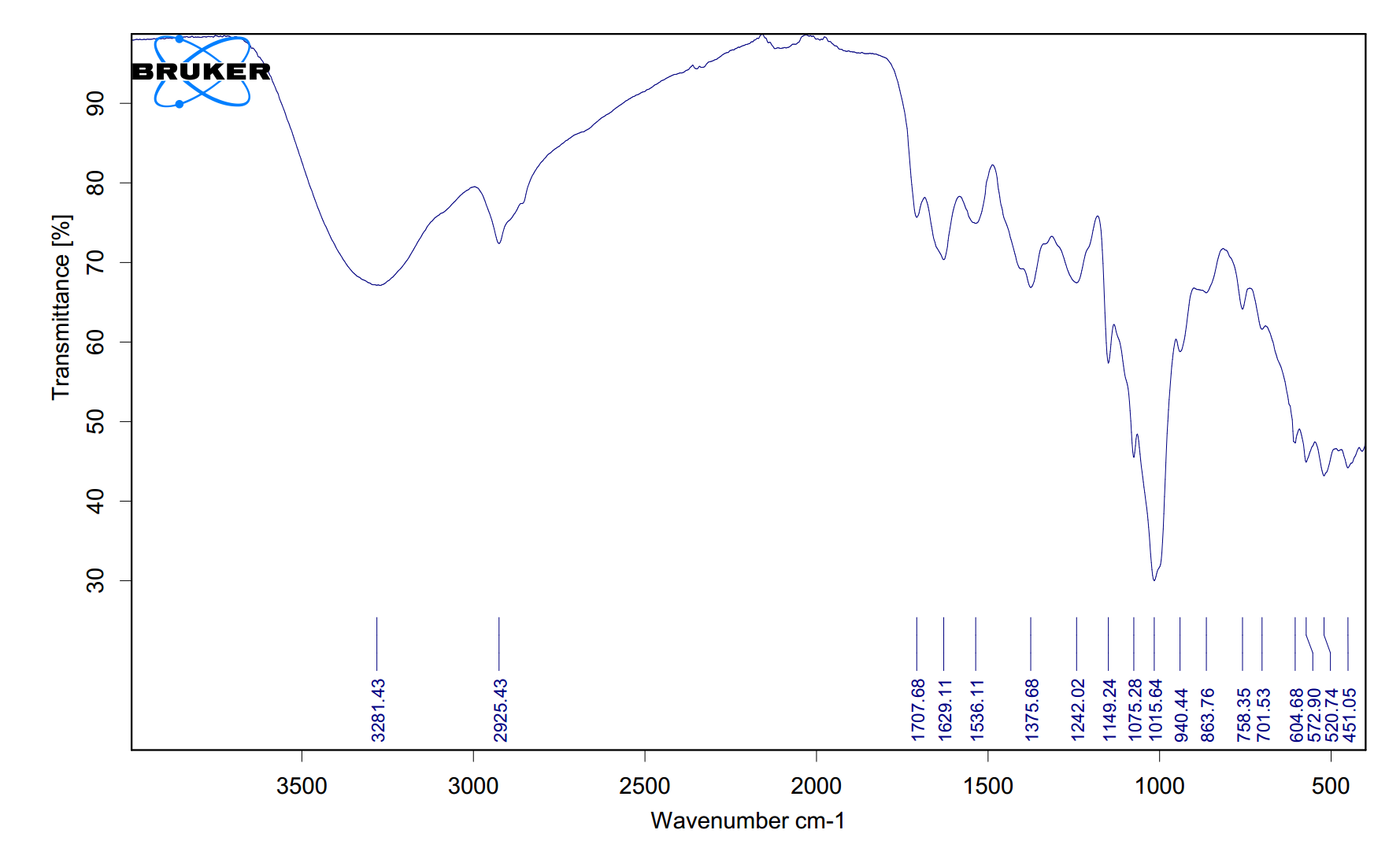 tem.csv
en&2