
aromatic ether/phenol-like material with carbonyl functionality
Жогорудагы баяндаманы көрүңүз. Кийинки талкуу керек болсо, төмөндөгү комментарийлерди колдонуңуз.
aromatic ether/phenol-like material with carbonyl functionality
Үлгү жана өлчөө параметрлери
Иденттештирүү натыйжасы
29%FTIR спектри ароматтык эфир же фенолдук органикалык материалдын карбонил компоненти менен ырааттуу үлгүсүн көрсөтөт. Ароматтык C–H тегиздик деформациялары, эфир C–O–C созулушу, Ph–OH созулушуна таандык тилке жана 1751 см⁻¹ айырмаланган карбонил толкуну жарым-жартылай кычкылдандырылган ароматтык структураны, мисалы, лигнин фрагменти, ароматтык эфир же ушул сыяктуу өзгөртүлгөн фенолдук кошулманы көрсөтөт. Китепкана издөөсү төмөн ишенимдүү дал келүүлөрдү гана кайтарды; эң жакшы дал келүү (trideuterio-(trideuteriomethylsulfinyl)methane) байкалган толкундарга химиялык жактан шайкеш келбейт, бул түз китепкана аныктоосунан эмес, тилке интерпретациясына негизделген жыйынтыкты бекемдейт.
Чоо-жайын чечмелөө
- Эң жакшы китепкана дал келүүсү: trideuterio-(trideuteriomethylsulfinyl)methane #17854 | match 0.0%
- FTIR спектри ароматтык эфир же фенолдук органикалык материалдын карбонил компоненти менен ырааттуу үлгүсүн көрсөтөт. Ароматтык C–H тегиздик деформациялары, эфир C–O–C созулушу, Ph–OH созулушуна таандык тилке жана 1751 см⁻¹ айырмаланган карбонил толкуну жарым-жартылай кычкылдандырылган ароматтык структураны, мисалы, лигнин фрагменти, ароматтык эфир же ушул сыяктуу өзгөртүлгөн фенолдук кошулманы көрсөтөт. Китепкана издөөсү төмөн ишенимдүү дал келүүлөрдү гана кайтарды; эң жакшы дал келүү (trideuterio-(trideuteriomethylsulfinyl)methane) байкалган толкундарга химиялык жактан шайкеш келбейт, бул түз китепкана аныктоосунан эмес, тилке интерпретациясына негизделген жыйынтыкты бекемдейт.
- Түздөн-түз адабият тапшырмалары алкокси C–O (1038 см⁻¹) [3], C–O бир байланышы (1125 см⁻¹) [2] жана карбонил (1751 см⁻¹) [5] бар экенин колдойт, алардын баары сунушталган ароматтык эфир/фенол багытына шайкеш келет.
- 1038 см⁻¹ тилкеси эфир тобунун C–O–C асимметриялык созулушуна шайкеш келет, ал ароматтык эфир байланышына мүнөздүү.
- 1077 жана 1125 см⁻¹ толкундар ароматтык C–H тегиздик деформациясына жана экинчилик спирттерде/эфирлерде C–O деформациясына туура келет, бул кычкылтек менен алмаштырылган ароматтык шакекти көрсөтөт.
- 1179 см⁻¹ тилкеси Ph–OH созулуу аймагында (1180–1260 см⁻¹) жайгашкан жана фенолдук гидроксилдин C–O созулушуна байланыштуу болушу мүмкүн.
- 1751 см⁻¹ интенсивдүү тилкеси карбонил (C=O) созулуу термелүүсүнөн келип чыгат, ал көбүнчө кычкылдандырылган ароматтык матрицаларда кездешүүчү эфир, карбон кислотасы же кетон функционалдуулугуна шайкеш келет.
- Негизги чоку ыйгаруулары төмөнкүлөрдү камтыйт: 1077: Байланыштуу адабият: ароматтык C-H деформациясы жана C-O созулуу үлгүсү (ароматтык эфир/фенол сымал) | Түз шилтеме: алкил C-H; C-O бир байланыш; 1179: Байланыштуу адабият: ароматтык C-H деформациясы жана C-O созулуу үлгүсү (ароматтык эфир/фенол сымал) | Түз шилтеме: алкил C-H; C-O бир байланыш; 1751: Байланыштуу адабият: ыйгарылбаган карбонил аймагы (1751 см-1) | Түз шилтеме: алкил C-H; C-O бир байланыш; 1038: Байланыштуу адабият: ароматтык C-H деформациясы жана C-O созулуу үлгүсү (ароматтык эфир/фенол сымал) | Түз шилтеме: алкил C-H; C-O бир байланыш.
- Эң жакын спектралдык китепкана дал келүүсү, trideuterio-(trideuteriomethylsulfinyl)methane, алифаттык жана сульфоксид мүнөзүн көрсөтөт, ал байкалган ароматтык жана эфир толкундарын түшүндүрбөйт; ошондуктан бул төмөн ишенимдүү дал келүү үлгүнү көрсөтпөйт.
- 1751 см⁻¹ карбонил тилкеси кошумча далилдерсиз эфирге, кислотага же кетонго бир мааниде ыйгарыла албайт.
- Так ароматтык алмаштыруу үлгүсү жана фенолдук компоненттин так табияты чектелген тилке спецификасы жана жогорку ишенимдүү китепкана дал келүүсүнүн жоктугунан улам чечилбей калууда.
- Жалпы багыт текшерилген маалымат базасын аныктоонун ордуна тилке интерпретациясына негизделген.
Китепкана салыштыруу
Китепкана издөө жыйынтыктары — мыкты 15 талапкер
| Рейтинг | Дал келүү % | Кошмо | SMILES | Спектр № | Аракет |
|---|---|---|---|---|---|
| Китепкана талапкерлери жүктөлүүдө... | |||||
Чокуларды талдоо
★ = Адабият менен тастыкталган дайындоо| # | Толкун саны (cm⁻¹) | Абсорбция | Байланыштыруу | Цитата | Белгилөө статусу | |
|---|---|---|---|---|---|---|
| 1 | · | 1077 | 1.00 | 1077 см-1 тилкеси ароматтык C-H деформациясына жана C-O созулуу үлгүсүнө (ароматтык эфир/фенол сыяктуу) [6][7][9] ыйгарылган. | - | Орточо ишеним |
| 2 | · | 1179 | 0.28 | 1179 см-1 тилкеси C-O бир байланышына [11] ыйгарылган. | - | Төмөн ишеним |
| 3 | · | 1751 | 0.24 | 1751 см-1 тилкеси карбонилге [12] ыйгарылган. | - | Орточо ишеним |
| 4 | · | 1038 | 0.24 | 1038 см-1 тилкеси ароматтык C-H деформациясына жана C-O созулуу үлгүсүнө (ароматтык эфир/фенол сыяктуу) [6][7][9] ыйгарылган. | - | Орточо ишеним |
| 5 | · | 1125 | 0.19 | 1125 см-1 тилкеси ароматтык C-H деформациясына жана C-O созулуу үлгүсүнө (ароматтык эфир/фенол сыяктуу) [6][7][9] ыйгарылган. | - | Орточо ишеним |
Кошумча — Чийки спектр

Комментарийлер жана кошумча далилдер
Бул аймакты интерпретацияны улантуу, суроо берүү же кошумча текшерүү далилдерин кошуу үчүн колдонуңуз.
The above shows the FTIR analysis results of a PDF file uploaded by a user from Malaysia. The original image and extracted CSV file are displayed below.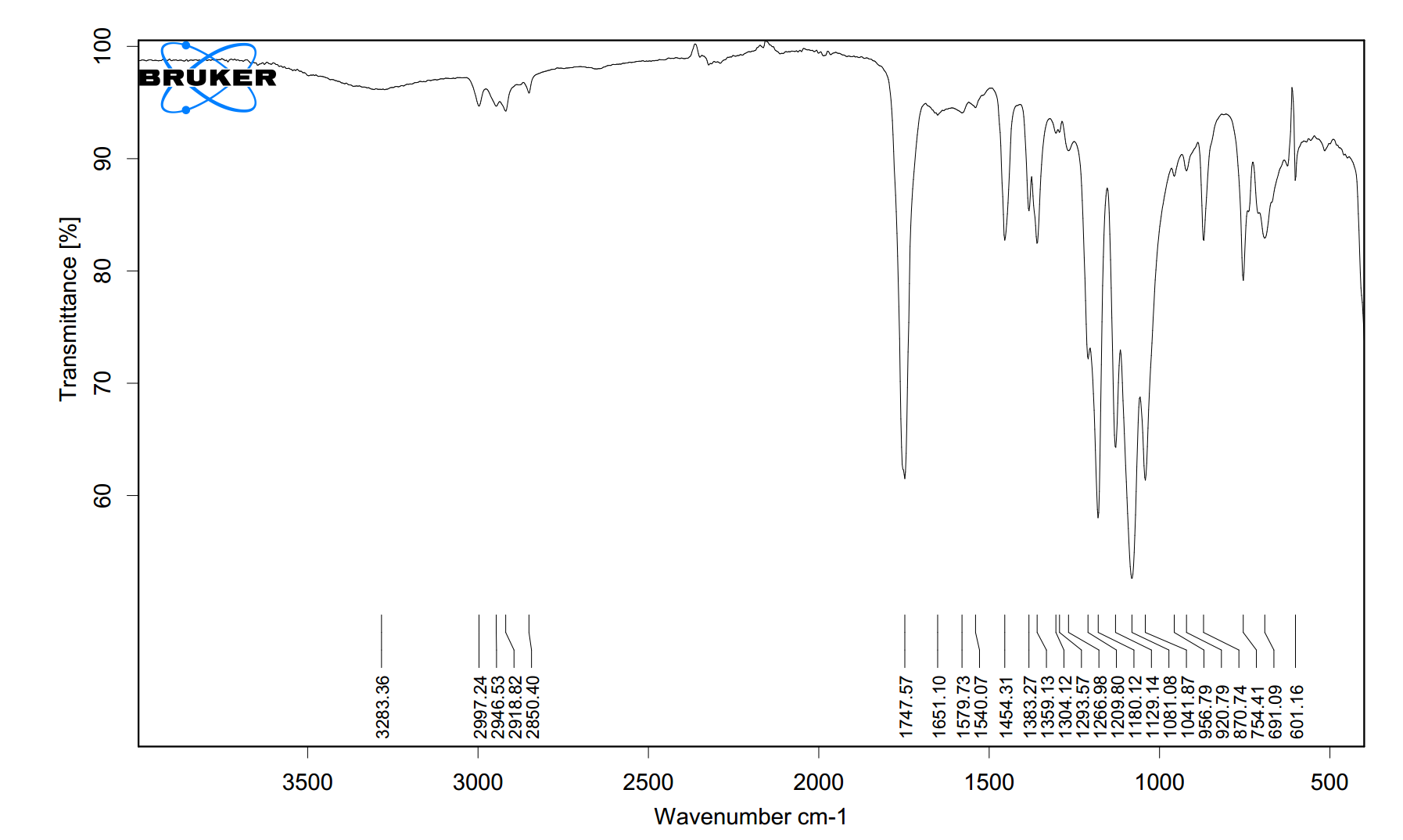 tem.csv
en&2