
結果ページ
carbonyl-containing ester material, plausibly an acrylate- or polyester-type composition
上記のレポートをご覧ください。フォローアップの議論が必要な場合は、以下のコメントをご利用ください。
FTIR分析レポート
carbonyl-containing ester material, plausibly an acrylate- or polyester-type composition
サンプルおよび測定パラメータ
レポート番号
20250722000900659368613
日付
2025-07-23 02:14:16
スペクトル範囲 (cm⁻¹)
[(650, 4000)]
ベースライン
AsLSベースライン補正
ライブラリマッチ
0%
同定結果
0%スペクトルはカルボニル含有エステル材料と最も一致しており、ライブラリはポリ(エチルアクリレート)を最も近い名前付き候補としています。しかし、全体的な一致強度は非常に弱く、確固たる材料の同定を正当化する直接的な参考文献や関連文献のサポートはありません。観測されたバンドは、広範なエステル含有有機組成を支持しており、おそらくアクリレートまたはポリエステル様の方向性ですが、現在の証拠はポリ(エチルアクリレート)を具体的に確認するには十分ではありません。
詳細な解釈
- トップライブラリ一致: ポリ(エチルアクリレート) #347 | 一致度 0.0%
- スペクトルはカルボニル含有エステル材料と最も一致しており、ライブラリはポリ(エチルアクリレート)を最も近い名前付き候補としています。しかし、全体的な一致強度は非常に弱く、確固たる材料の同定を正当化する直接的な参考文献や関連文献のサポートはありません。観測されたバンドは、広範なエステル含有有機組成を支持しており、おそらくアクリレートまたはポリエステル様の方向性ですが、現在の証拠はポリ(エチルアクリレート)を具体的に確認するには十分ではありません。
- 1719-1727 cm⁻¹はエステル様領域のカルボニル基の存在を示唆します。
- 1113 cm⁻¹はエステルのC-O伸縮と一致します。
- 2844 cm⁻¹は脂肪族炭化水素の含有と適合します。
- 主要なライブラリ名には、ポリ(エチルアクリレート)、ポリ(1,4-ブチレンアジペート)、アクリルポリマー、その他のエステル含有化合物が含まれており、繰り返し発生するエステル/カルボニルパターンを示しています。
- 1719-1727 cm⁻¹の強いバンドペアは、エステル様のカルボニル伸縮領域の特徴です。
- 1113 cm⁻¹のバンドは、エステル含有材料に期待されるC-O伸縮を支持します。
- 2844および2740 cm⁻¹のバンドは、有機エステル骨格と一致する脂肪族C-H伸縮を示します。
- トップ15のライブラリパターンは、エステル、カルボニル、アクリレートポリマー、ポリエステルのエントリが支配的であり、エステル豊富な材料の方向性を広く支持します。
- ポリ(エチルアクリレート)がトップのライブラリ名ですが、リストされた類似度はすべて実質的に識別力がなく、そのため検索はそのポリマーを他のエステル含有候補から確実に区別しません。
- ライブラリの信頼性は低く、候補間で意味のある分離はありません。
- 特定のポリマーまたは低分子の同一性を支持する関連文献の一致は見つかりませんでした。
- 限られたピークセットでは、ポリ(エチルアクリレート)を他のエステル含有材料から確実に識別するために必要な特徴的なバンドが提供されません。
- サンプルが具体的にポリ(エチルアクリレート)、別のアクリルポリマー、ポリエステル、または低分子量のエステル含有物質であるかは不明のままです。
- 2740 cm⁻¹の特徴は、より強力な裏付けバンドがない場合、それだけで独自の構造を定義するには十分ではありません。
- アクリレートポリマーを他のエステル豊富な材料から分離するには、追加の特徴的なフィンガープリント領域情報が必要です。
ライブラリ比較
ライブラリスペクトルがここに表示されます。
ライブラリ検索結果 — 上位15候補
| 順位 | マッチ % | 化合物 | SMILES | スペクトル番号 | 操作 |
|---|---|---|---|---|---|
| ライブラリ候補を読み込み中... | |||||
ピーク分析
★ = 文献に基づく割り当て付録 — 生スペクトル

議論
コメントとフォローアップ証拠
このエリアを使用して、解釈を続けたり、質問したり、追加の検証証拠を追加したりしてください。
The above shows the FTIR analysis results of a doc file uploaded by a user from CANADA. The original image and extracted CSV file are displayed below.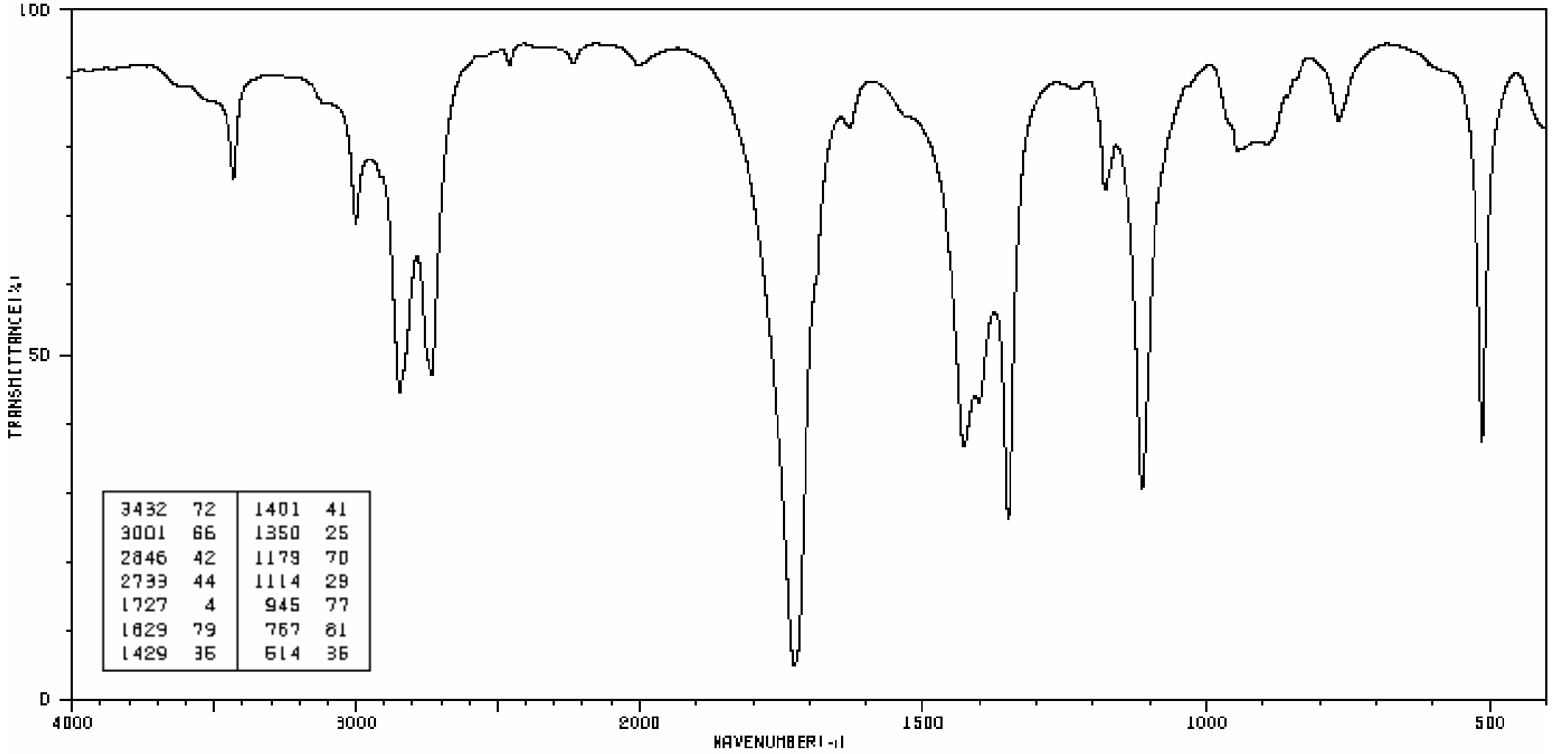 tem.csv
en&2