
carbonyl-containing ester material, plausibly an acrylate- or polyester-type composition
Consultez le rapport ci-dessus. Utilisez les commentaires ci-dessous si vous avez besoin d'une discussion de suivi.
carbonyl-containing ester material, plausibly an acrylate- or polyester-type composition
Paramètres d'échantillon et de mesure
Résultat d'identification
0%Le spectre est le plus cohérent avec un matériau ester contenant un carbonyle, la bibliothèque plaçant Poly(ethyl acrylate) comme le candidat nommé le plus proche. Cependant, la force de correspondance globale est très faible et il n'y a pas de référence directe ou de support de littérature connexe pour justifier une attribution ferme du matériau. Les bandes observées soutiennent une large composition organique contenant des esters, plausiblement dans une direction de type acrylate ou polyester, mais les preuves actuelles ne suffisent pas à confirmer spécifiquement Poly(ethyl acrylate).
Interprétation détaillée
- Meilleure correspondance de bibliothèque: Poly(ethyl acrylate) #347 | correspondance 0.0%
- Le spectre est le plus cohérent avec un matériau ester contenant un carbonyle, la bibliothèque plaçant Poly(ethyl acrylate) comme le candidat nommé le plus proche. Cependant, la force de correspondance globale est très faible et il n'y a pas de référence directe ou de support de littérature connexe pour justifier une attribution ferme du matériau. Les bandes observées soutiennent une large composition organique contenant des esters, plausiblement dans une direction de type acrylate ou polyester, mais les preuves actuelles ne suffisent pas à confirmer spécifiquement Poly(ethyl acrylate).
- 1719-1727 cm⁻¹ soutient la présence d'un groupe carbonyle dans une région de type ester.
- 1113 cm⁻¹ est cohérent avec l'étirement C-O d'ester.
- 2844 cm⁻¹ est compatible avec une teneur en hydrocarbures aliphatiques.
- Les principaux noms de bibliothèque incluent Poly(ethyl acrylate), Poly(1,4-butylene adipate), polymère acrylique et d'autres composés contenant des esters, indiquant un motif ester/carbonyle récurrent.
- Une paire de bandes fortes à 1719-1727 cm⁻¹ est caractéristique d'une région d'étirement carbonyle de type ester.
- La bande à 1113 cm⁻¹ soutient l'étirement C-O attendu dans les matériaux contenant des esters.
- Les bandes à 2844 et 2740 cm⁻¹ indiquent un étirement C-H aliphatique, cohérent avec une structure d'ester organique.
- Le modèle de bibliothèque Top-15 est dominé par les entrées d'ester, carbonyle, polymère acrylique et polyester, ce qui soutient globalement une direction de matériau riche en esters.
- Bien que Poly(ethyl acrylate) soit le nom de bibliothèque principal, toutes les similitudes listées sont effectivement non discriminantes, donc S-O la récupération ne distingue pas de manière sécurisée ce polymère des autres candidats contenant des esters.
- La confiance dans la bibliothèque est faible, sans séparation significative entre les candidats.
- Aucune correspondance de littérature connexe n'a été récupérée pour soutenir une identité polymère ou petite molécule spécifique.
- L'ensemble de pics limité ne fournit pas de bandes distinctives nécessaires pour identifier de manière sécurisée le Poly(ethyl acrylate) par rapport à d'autres matériaux contenant des esters.
- Il reste incertain si l'échantillon est spécifiquement du Poly(ethyl acrylate), un autre polymère acrylique, un polyester ou une substance à faible poids moléculaire contenant des esters.
- La caractéristique à 2740 cm⁻¹ n'est pas suffisante en elle-même pour définir une structure unique en l'absence de bandes de corroboration plus fortes.
- Des informations supplémentaires sur la région d'empreinte digitale caractéristique seraient nécessaires pour séparer les polymères acryliques des autres matériaux riches en esters.
Comparaison de bibliothèques
Résultats de recherche dans la bibliothèque — Top 15 des candidats
| Rang | Correspondance % | Composé | SMILES | N° de spectre | Action |
|---|---|---|---|---|---|
| Chargement des candidats de la bibliothèque... | |||||
Analyse des pics
★ = Attribution soutenue par la littératureAnnexe — Spectre brut

Commentaires et preuves de suivi
Utilisez cette zone pour poursuivre l'interprétation, poser des questions ou ajouter des preuves de vérification supplémentaires.
The above shows the FTIR analysis results of a doc file uploaded by a user from CANADA. The original image and extracted CSV file are displayed below.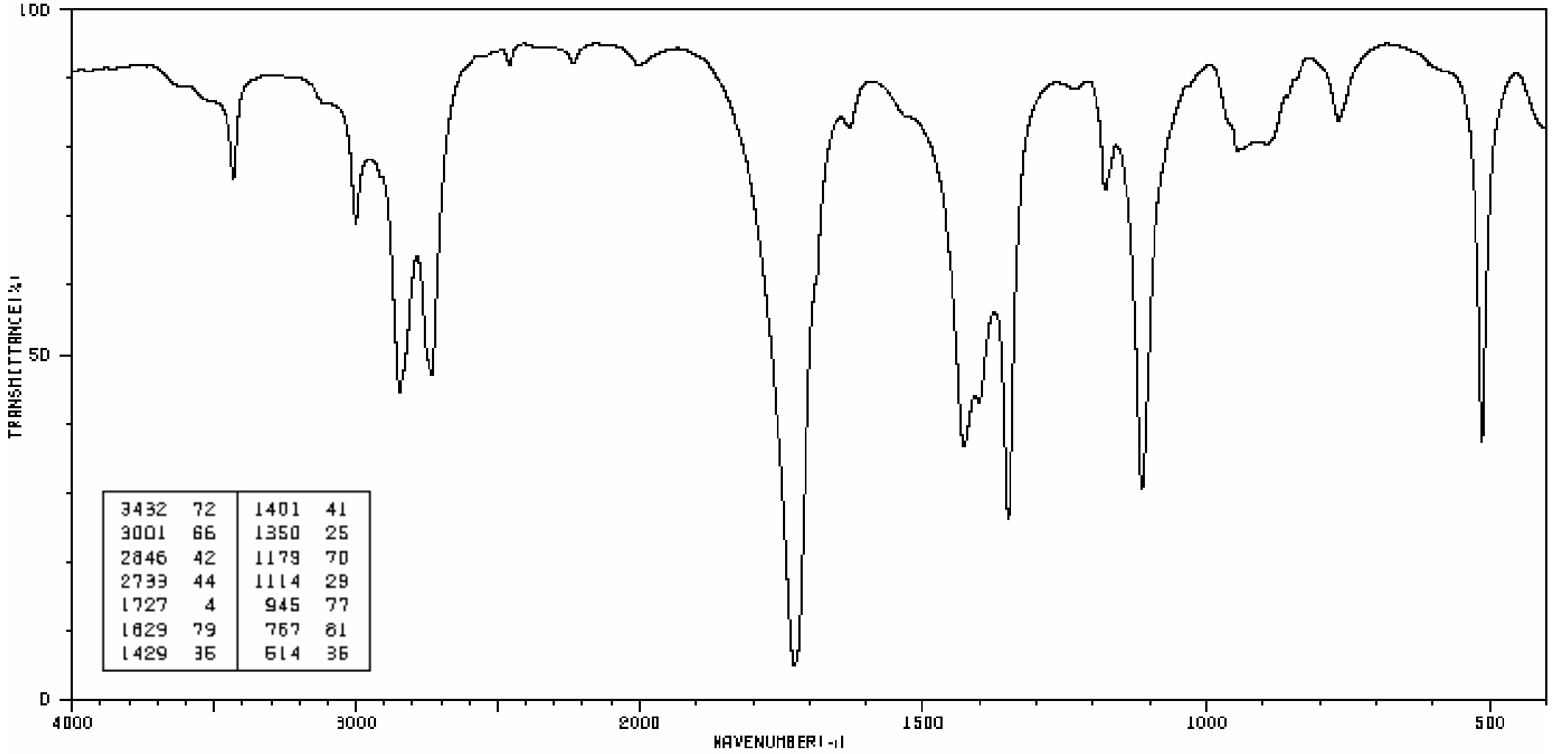 tem.csv
en&2