
weakly matched aromatic organic material with limited evidence for a substituted benzene-type compound
Shikoni raportin e mësipërm. Përdorni komentet më poshtë nëse keni nevojë për diskutim të mëtejshëm.
weakly matched aromatic organic material with limited evidence for a substituted benzene-type compound
Parametrat e kampionit dhe matjes
Rezultati i identifikimit
0%Dëshmia aktuale e FTIR është shumë e kufizuar për të mbështetur një identifikim të sigurt të përbërjes. Megjithëse hyrja më e afërt e bibliotekës është 1-Chloro-2-iodobenzene, besimi i përputhjes është në mënyrë efektive i munguar dhe nuk ka mbështetje të drejtpërdrejtë ose të lidhur nga literatura që konfirmon atë caktim. Brezat e vëzhguar rreth 1595, 1396 dhe 1032 cm-1 interpretohen më sigurt si tregues të një materiali organik me karakter aromatik të mundshëm dhe një brez të rajonit të gjurmëve gishtash në përputhje me struktura aromatike të zëvendësuara ose që përmbajnë C-O/C-X, por ata nuk krijojnë në mënyrë unike një benzen të halogjenuar. Prandaj, përfundimi më i mbështetur kimikisht është një material organik aromatik me përputhje të dobët, mundësisht një përbërje e tipit benzen të zëvendësuar, dhe jo një substancë e emërtuar e konfirmuar.
Interpretim i detajuar
- Përputhja kryesore e bibliotekës: 1-Chloro-2-iodobenzene #113 | match 0.0%
- Treguesi më i fortë i mostrës është brezi në 1595 cm-1, i cili është i pajtueshëm me dridhjet e unazës aromatike.
- Goditja kryesore e bibliotekës, 1-Chloro-2-iodobenzene, është të paktën në përputhje në një nivel të gjerë me një material organik aromatik.
- Disa kandidatë të renditur lart përmbajnë unaza aromatike ose motive aromatike të zëvendësuara, gjë që është në përputhje me karakteristikën e vëzhguar në 1595 cm-1.
- Një brez afër 1595 cm-1 është në përputhje me një dridhje shtrirjeje të unazës aromatike dhe mbështet karakterin e mundshëm të tipit benzen.
- Brezi 1032 cm-1 bie në një rajon të mbushur me njerëz të gjurmëve gishtash që mund të ndodhë në përbërje aromatike të zëvendësuara, materiale që përmbajnë C-O, ose disa struktura organike të halogjenuara/tip eteri, pra nuk është identifikues unik në vetvete.
- Karakteristika 1396 cm-1 është jo-specifike dhe nuk dallon në vetvete midis kandidatëve kryesorë të bibliotekës.
- Modeli i bibliotekës Top-15 është i përzier kimikisht, duke përfshirë halogjenë aromatikë, alkoole aromatike, përbërje nitrile/alkool, komponime acetale/tip eteri, një kopolimer vinyl klorur/vinil acetat dhe material poliether, gjë që tregon se nuk ka një drejtim koherent të bibliotekës me besueshmëri të lartë për këtë mostër.
- Të gjitha ngjashmëritë e bibliotekës së listuara janë 0.000, kështu që goditja më e afërt nuk është një përputhje spektrale kuptimplote.
- Nuk ka caktime grupi mbështetës ose maja karakteristike mbështetëse që lidhin mostrën në mënyrë specifike me 1-Chloro-2-iodobenzene.
- Majat e vëzhguara nuk tregojnë një grup të veçantë brezash që do të konfirmonin në mënyrë të sigurt caktimet e aril klorurit, aril jodurit, alkoolit, nitrilit, esterit ose polimerit midis kandidatëve konkurrues.
- Dëshmia e rajonit të gjurmëve gishtash është shumë e rrallë për të dalluar midis mundësive aromatike të zëvendësuara, organike të oksigjenuara ose organike të tjera me molekula të vogla.
- Çdo caktim i halogjenit mbetet spekulativ sepse mbështetja karakteristike për C-Cl ose C-I nuk është vendosur nga lista aktuale e majave.
- Të dhënat aktuale nuk tregojnë breza të mjaftueshëm karakteristikë për të ndarë një molekulë të vogël diskrete nga materiali organik i mundshëm i përzier ose i papastër.
Krahasimi i Bibliotekës
Rezultatet e Kërkimit në Bibliotekë — 15 Kandidatët Kryesorë
| Renditja | Përputhje % | Përbërës | SMILES | Nr. i spektrit | Veprimi |
|---|---|---|---|---|---|
| Duke ngarkuar kandidatët e bibliotekës... | |||||
Analiza e Pikut
★ = Caktimi i mbështetur nga literaturaShtojca — Spektri i Papërpunuar

Komente dhe prova vijuese
Përdorni këtë zonë për të vazhduar interpretimin, për të bërë pyetje ose për të shtuar prova shtesë verifikimi.
The above shows the FTIR analysis results of a DOC file uploaded by a user from UK . The original image is displayed below.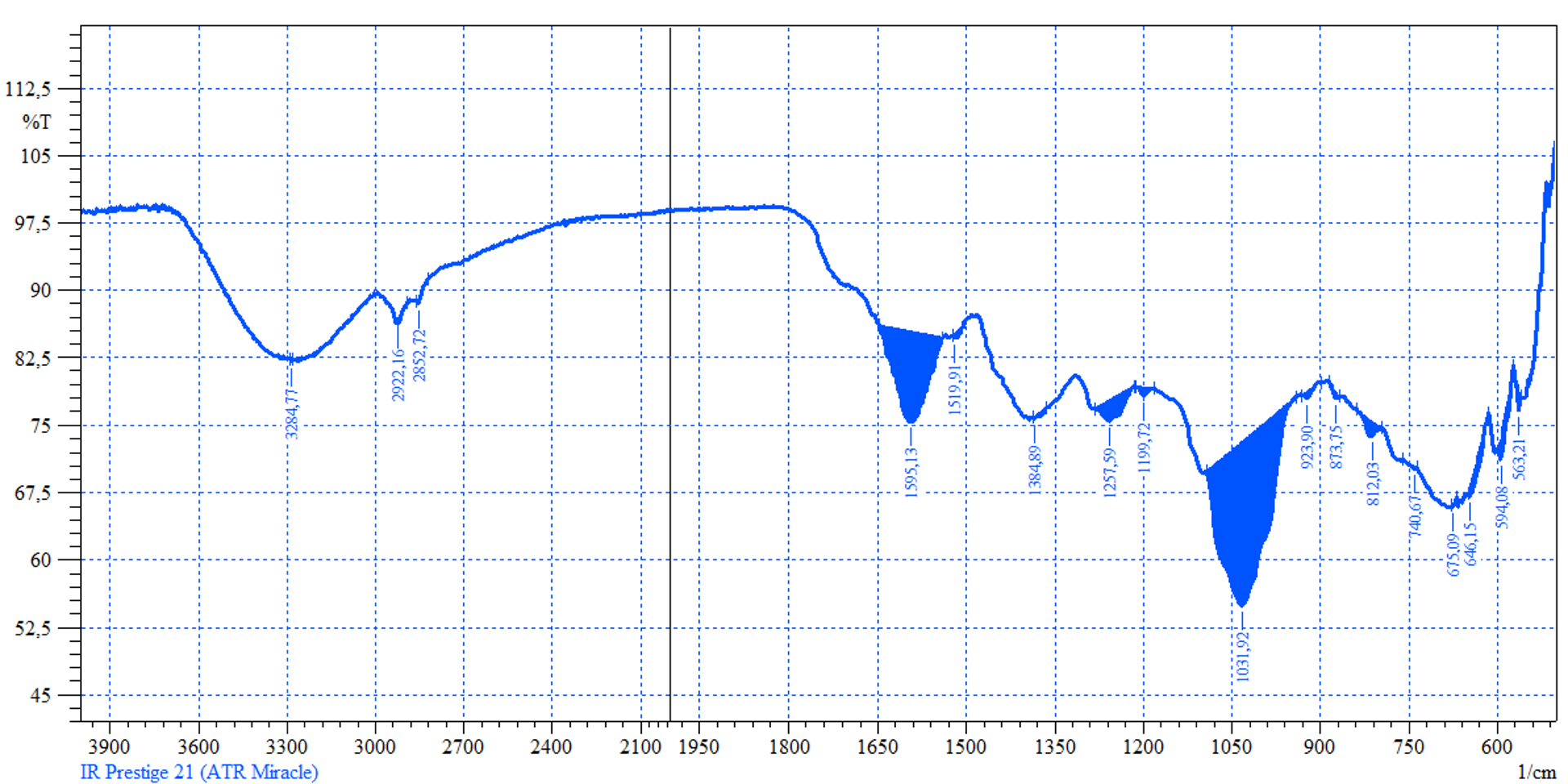 Extracted CSV file:tem.csv
en&2