
weakly matched aromatic organic material with limited evidence for a substituted benzene-type compound
Sehen Sie sich den Bericht oben an. Nutzen Sie die Kommentare unten, wenn Sie eine Folgediskussion benötigen.
weakly matched aromatic organic material with limited evidence for a substituted benzene-type compound
Proben- und Messparameter
Identifikationsergebnis
0%Die aktuellen FTIR-Beweise sind zu begrenzt, um eine sichere Verbindungsidentifikation zu unterstützen. Obwohl der nächste Bibliothekseintrag 1-Chloro-2-iodobenzene ist, ist die Übereinstimmungssicherheit praktisch nicht vorhanden, und es gibt keine direkte oder verwandte Literaturunterstützung, die diese Zuordnung bestätigt. Die beobachteten Banden bei etwa 1595, 1396 und 1032 cm-1 werden sicherer als Hinweis auf ein organisches Material mit möglichem aromatischem Charakter und einer Fingerprint-Region-Bande interpretiert, die mit substituierten aromatischen oder C-O/C-X-haltigen Strukturen konsistent ist, aber sie etablieren nicht eindeutig ein halogeniertes Benzol. Die chemisch am besten unterstützbare Schlussfolgerung ist daher ein schwach übereinstimmendes aromatisches organisches Material, möglicherweise eine substituierte Benzolverbindung, und keine bestätigte benannte Substanz.
Detailinterpretation
- Beste Bibliotheksübereinstimmung: 1-Chloro-2-iodobenzene #113 | Übereinstimmung 0.0%
- Der stärkste Hinweis der Probe ist die Bande bei 1595 cm-1, die mit aromatischen Ringschwingungen kompatibel ist.
- Der beste Bibliothekstreffer, 1-Chloro-2-iodobenzene, ist zumindest auf breiter Ebene mit einem aromatischen organischen Material konsistent.
- Mehrere hochrangige Kandidaten enthalten aromatische Ringe oder substituierte aromatische Motive, was mit dem beobachteten Merkmal bei 1595 cm-1 kompatibel ist.
- Eine Bande nahe 1595 cm-1 ist mit einer aromatischen Ringschwingung konsistent und unterstützt einen möglichen Benzoltyp-Charakter.
- Die Bande bei 1032 cm-1 fällt in einen überfüllten Fingerprint-Bereich, der in substituierten aromatischen Verbindungen, C-O-haltigen Materialien oder einigen halogenierten/etherartigen organischen Strukturen auftreten kann, daher ist sie allein nicht eindeutig identifizierend.
- Das Merkmal bei 1396 cm-1 ist unspezifisch und unterscheidet allein nicht zwischen den führenden Bibliothekskandidaten.
- Das Top-15-Bibliotheksmuster ist chemisch gemischt und umfasst aromatische Halogenide, aromatische Alkohole, Nitril-/Alkoholverbindungen, Acetal-/Ether-ähnliche Verbindungen, ein Vinylchlorid-/Vinylacetat-Copolymer und Polyethermaterial, was auf keine kohärente, hochvertrauenswürdige Bibliotheksrichtung für diese Probe hinweist.
- Alle aufgeführten Bibliotheksähnlichkeiten sind 0.000, daher ist der nächste Treffer kein sinnvoller spektraler Match.
- Es gibt keine unterstützenden Gruppenzuordnungen oder charakteristischen unterstützenden Peaks, die die Probe spezifisch mit 1-Chloro-2-iodobenzene verbinden.
- Die beobachteten Peaks zeigen kein markantes Bandenset, das Arylchlorid, Aryliodid, Alkohol, Nitril, Ester oder Polymerzuordnungen unter den konkurrierenden Kandidaten sicher bestätigen würde.
- Die Fingerprint-Region-Beweise sind zu spärlich, um zwischen substituierten aromatischen, sauerstoffhaltigen organischen oder anderen kleinmolekularen organischen Möglichkeiten zu unterscheiden.
- Jede Halogenzuordnung bleibt spekulativ, da charakteristische Unterstützung für C-Cl oder C-I aus der vorliegenden Peakliste nicht etabliert ist.
- Die aktuellen Daten zeigen nicht genügend charakteristische Banden, um ein diskretes kleines Molekül von möglichem gemischten oder unreinen organischen Material zu trennen.
Bibliotheksvergleich
Bibliothekssuchergebnisse – Top 15 Kandidaten
| Rang | Übereinstimmung % | Zusammensetzung | SMILES | Spektrum-Nr. | Aktion |
|---|---|---|---|---|---|
| Bibliothekskandidaten werden geladen... | |||||
Peak-Analyse
★ = Literaturgestützte ZuordnungAnhang – Rohspektrum

Kommentare und Folgebeweise
Nutzen Sie diesen Bereich, um die Interpretation fortzusetzen, Fragen zu stellen oder zusätzliche Überprüfungsbeweise hinzuzufügen.
The above shows the FTIR analysis results of a DOC file uploaded by a user from UK . The original image is displayed below.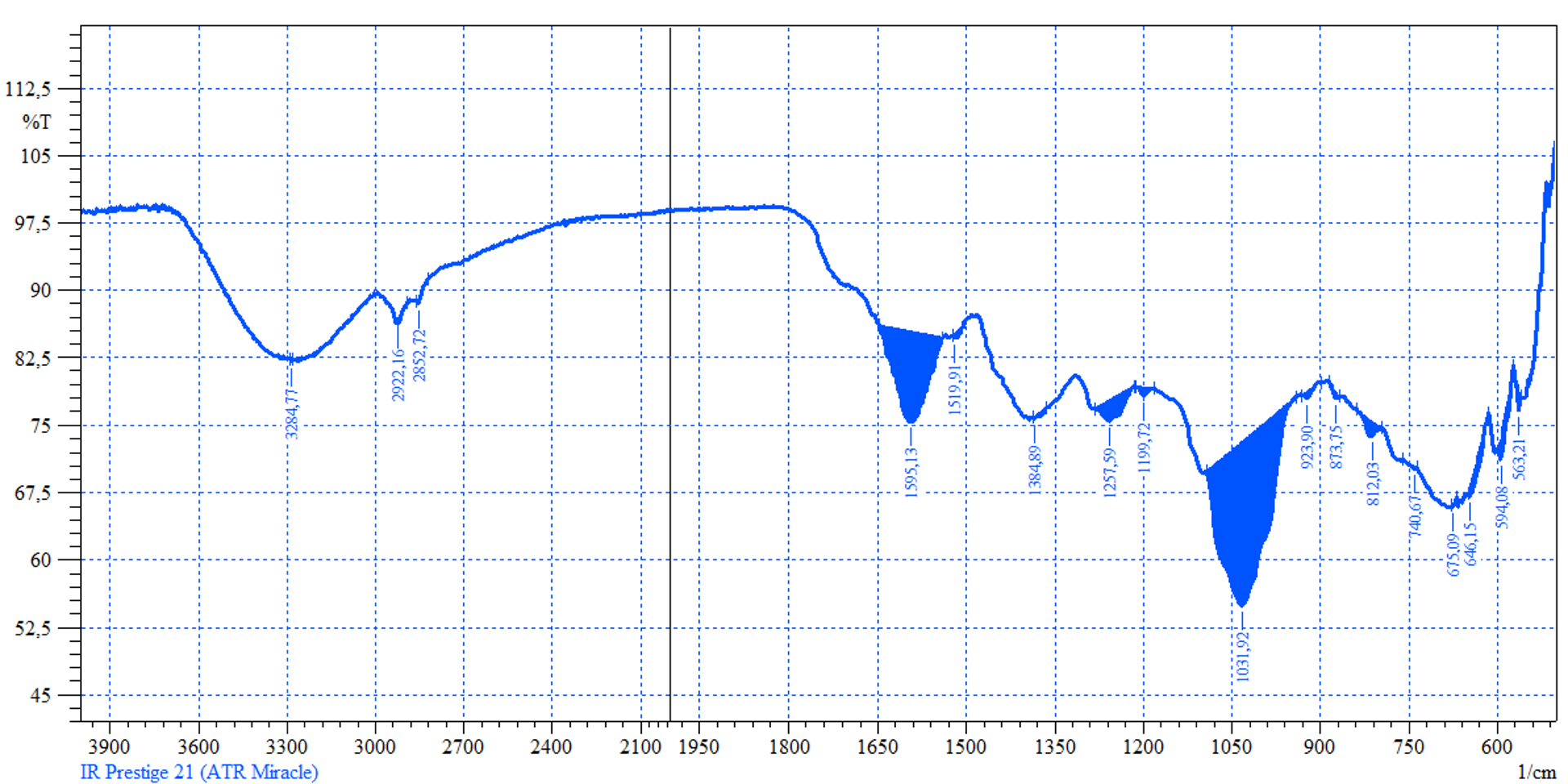 Extracted CSV file:tem.csv
en&2