
aliphatic hydrocarbon-type material with possible halogen substitution
Skatiet ziņojumu augstāk. Izmantojiet zemāk esošos komentārus, ja nepieciešama papildu diskusija.
aliphatic hydrocarbon-type material with possible halogen substitution
Parauga un mērījumu parametri
Identifikācijas rezultāts
0%Parastā FTIR meklēšana neatbalsta stingru savienojuma līmeņa identifikāciju šim paraugam. Lai arī tuvākais bibliotēkas ieraksts ir 2-Bromheptāns, visi uzskaitītie bibliotēkas līdzības rādītāji ir 0,000 un nav tiešu vai saistītu literatūras pierādījumu, kas sašaurinātu piešķīrumu. Novērotais spektrs ir drošāk aprakstāms kā alifātisks ogļūdeņraža tipa materiāls, kurā dominē spēcīgas C-H stiepšanās un locīšanas joslas, ar iespējamu halogēna aizvietošanas devumu zemas viļņu skaitļu joslu dēļ pie 660-769 cm⁻¹. Tomēr šīs zemas viļņu skaitļu pazīmes pašas par sevi nav pietiekamas, lai apstiprinātu konkrētu bromalkānu.
Detalizēta interpretācija
- Labākā bibliotēkas atbilstība: 2-Bromoheptane #232 | match 0.0%
- Spēcīgs alifātisks C-H stiepšanās apvalks pie 2835, 2857, 2878, 2889, 2904, 2913, 2925, 2941, 2950 un 2972 cm⁻¹ atbalsta piesātinātu ogļūdeņražu saturu.
- C-H deformācijas joslas pie 1469, 1442 un 1368 cm⁻¹ atbalsta alkilgrupas.
- Joslas pie 712 un 729 cm⁻¹ atbalsta metilēntirgu vai ķēdei līdzīgu ogļūdeņraža raksturu.
- Joslas zem 800 cm⁻¹ atstāj atvērtu iespēju halogenētam alifātiskam materiālam.
- Spēcīgākais ķīmiski saskaņotais parauga modelis ir alifātiska C-H absorbcija: vairākas joslas pie 2835-2972 cm⁻¹ kopā ar locīšanas pazīmēm pie 1469, 1442 un 1368 cm⁻¹ ir saskaņotas ar piesātinātām alkilgrupām.
- Joslas pie 712 un 729 cm⁻¹ ir saderīgas ar garas ķēdes vai metilēntirgu ogļūdeņraža raksturu.
- Zemo viļņu skaitļu joslas pie 660, 675, 749 un 769 cm⁻¹ varētu būt saskaņotas ar smagā atoma aizvietošanu, piemēram, C-Br vai citiem skeleta/ārpus plaknes režīmiem, taču tās nav unikāli identificējošas.
- Vāja pazīme pie 1645 cm⁻¹ un augstāku viļņu skaitļu joslas pie 3170-3178 cm⁻¹ nesniedz skaidru, iekšēji saskaņotu sakritību ar galveno bibliotēkas trāpījumu 2-Bromheptānu.
- Top-15 bibliotēkas saraksts ir ķīmiski neviendabīgs, iekļaujot spirtus, skābes, amīnus, olefīnus, sēra savienojumus un kopolimēru, tāpēc tas nesniedz stabilu kopēja materiāla virzienu, izņemot ļoti plašu mazo molekulu/organisko modeli.
- Galvenais bibliotēkas kandidāts 2-Bromheptāns nav stingri atbalstīts, jo ziņotā līdzība ir 0,000.
- Galvenie bibliotēkas kandidāti nesaplūst vienā ķīmiskajā klasē, kas ierobežo pārliecību par jebkuru šauru identifikāciju.
- Pazīmes pie 1645 un 3170-3178 cm⁻¹ nav labi izskaidrotas ar vienkāršu piesātinātu bromalkānu vien.
- Zemo viļņu skaitļu joslas nav pietiekamas, lai apstiprinātu broma aizvietošanu pret citiem pirkstu nospiedumu reģiona cēloņiem.
- Pašreizējie pierādījumi nevar ticami atšķirt vienkāršu alkānu, halogenētu alkānu vai maisījumu, kas satur alifātisku ogļūdeņraža komponentu.
- Tā kā netika atrasta ar literatūru pamatota atsauces sakritība, materiāla virzienam jāpaliek plašam.
Bibliotēku salīdzinājums
Bibliotēkas meklēšanas rezultāti — 15 labākie kandidāti
| Rangs | Atbilstība % | Savienojums | SMILES | Spektra Nr. | Darbība |
|---|---|---|---|---|---|
| Ielādē bibliotēkas kandidātus... | |||||
Pīķa analīze
★ = Literatūrā atbalstīts uzdevums| # | Viļņu skaitlis (cm⁻¹) | Absorbance | Piešķiršana | Atsauce | Piešķiršanas statuss | |
|---|---|---|---|---|---|---|
| 1 | · | 1442 | 1.00 | - | - | - |
| 2 | · | 2835 | 0.98 | - | - | - |
| 3 | · | 1469 | 0.88 | - | - | - |
| 4 | · | 1368 | 0.83 | - | - | - |
| 5 | · | 2950 | 0.80 | - | - | - |
| 6 | · | 2857 | 0.78 | - | - | - |
| 7 | · | 2941 | 0.68 | - | - | - |
| 8 | · | 2904 | 0.65 | - | - | - |
| 9 | · | 2972 | 0.61 | - | - | - |
| 10 | · | 2925 | 0.59 | - | - | - |
| 11 | · | 2913 | 0.57 | - | - | - |
| 12 | · | 2878 | 0.55 | - | - | - |
| 13 | · | 2889 | 0.54 | - | - | - |
| 14 | · | 712 | 0.35 | - | - | - |
| 15 | · | 729 | 0.24 | - | - | - |
| 16 | · | 982 | 0.20 | - | - | - |
| 17 | · | 749 | 0.19 | - | - | - |
| 18 | · | 1150 | 0.19 | - | - | - |
| 19 | · | 675 | 0.18 | - | - | - |
| 20 | · | 1002 | 0.18 | - | - | - |
| 21 | · | 2673 | 0.17 | - | - | - |
| 22 | · | 1021 | 0.17 | - | - | - |
| 23 | · | 1645 | 0.17 | - | - | - |
| 24 | · | 1047 | 0.15 | - | - | - |
| 25 | · | 1067 | 0.14 | - | - | - |
| 26 | · | 1079 | 0.14 | - | - | - |
| 27 | · | 769 | 0.14 | - | - | - |
| 28 | · | 660 | 0.13 | - | - | - |
| 29 | · | 3004 | 0.13 | - | - | - |
| 30 | · | 3170 | 0.13 | - | - | - |
| 31 | · | 3178 | 0.13 | - | - | - |
| 32 | · | 1295 | 0.11 | - | - | - |
Pielikums — neapstrādāts spektrs

Komentāri un papildu pierādījumi
Izmantojiet šo apgabalu, lai turpinātu interpretāciju, uzdotu jautājumus vai pievienotu papildu pārbaudes pierādījumus.
The above shows the FTIR analysis results of a jpg file uploaded by a user from UK . The original image is displayed below.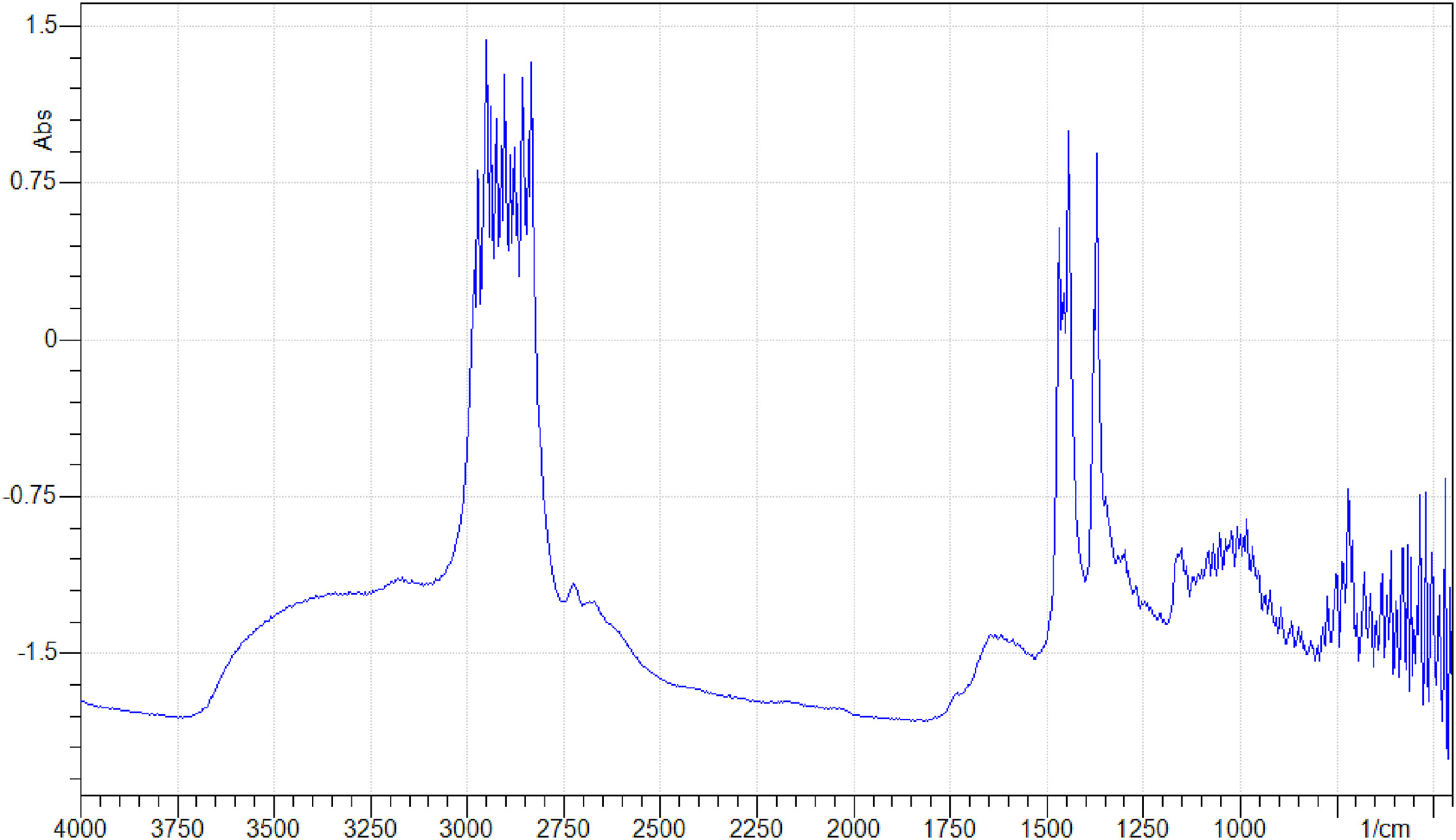 CSV FILE: tem.csv
en&2