
aromatic carbonyl-containing organic material, possibly an ester, ketone, or imide-like compound
Shikoni raportin e mësipërm. Përdorni komentet më poshtë nëse keni nevojë për diskutim të mëtejshëm.
aromatic carbonyl-containing organic material, possibly an ester, ketone, or imide-like compound
Parametrat e kampionit dhe matjes
Rezultati i identifikimit
0%Provat e zakonshme FTIR nuk mbështetin një caktim të fortë në nivel përbërjeje për këtë kampion. Hyrja më e afërt e bibliotekës është 5-etil-3-metil-5-fenilimidazolidinë-2,4-dion, por besueshmëria e përputhjes së bibliotekës mungon në mënyrë efektive dhe asnjë referencë e drejtpërdrejtë ose provë nga literatura e lidhur nuk e mbështet në mënyrë të pavarur atë strukturë të saktë. Brezat e vëzhguar interpretohen më sigurt si tregues të një materiali organik aromatik me një absorbim të fortë karbonil dhe breza të shumtë të tipit C-O/C-N në rajonin e gjurmëve të gishtave, në përputhje me një përbërje aromatike që përmban karbonil si një material i ngjashëm me esterin, ketonin ose imidin.
Interpretim i detajuar
- Përputhja kryesore e bibliotekës: 5-ethyl-3-methyl-5-phenylimidazolidine-2,4-dione #130 | përputhje 0.0%
- Provat e zakonshme FTIR nuk mbështetin një caktim të fortë në nivel përbërjeje për këtë kampion. Hyrja më e afërt e bibliotekës është 5-etil-3-metil-5-fenilimidazolidinë-2,4-dion, por besueshmëria e përputhjes së bibliotekës mungon në mënyrë efektive dhe asnjë referencë e drejtpërdrejtë ose provë nga literatura e lidhur nuk e mbështet në mënyrë të pavarur atë strukturë të saktë. Brezat e vëzhguar interpretohen më sigurt si tregues të një materiali organik aromatik me një absorbim të fortë karbonil dhe breza të shumtë të tipit C-O/C-N në rajonin e gjurmëve të gishtave, në përputhje me një përbërje aromatike që përmban karbonil si një material i ngjashëm me esterin, ketonin ose imidin.
- Një brez i fortë në 1713 cm-1 mbështet praninë e një grupi karbonil.
- Brezat në 1241, 1087 dhe 1011 cm-1 mbështetin shtrirjen e lidhur me heteroatome në rajonin e gjurmëve të gishtave, në përputhje me funksionalitete të tilla si C-O ose C-N.
- Brezat në 715 dhe 868 cm-1 mbështetin një model zëvendësimi aromatik në vend të një materiali thjesht alifatik.
- Disa kandidatë kryesorë të bibliotekës ndajnë kiminë aromatike dhe/ose që përmban karbonil, gjë që është në përputhje me grupin e pikut të vëzhguar në një nivel të gjerë klase.
- Brezat e matur në 1713 cm-1 dhe 1241 cm-1 janë në përputhje me një përbërje organike të fortë që përmban karbonil, e cila gjithashtu ka shtrirje të lidhjeve të vetme në rajonin e gjurmëve të gishtave nga funksionaliteti që përmban heteroatome.
- Brezat në 715 dhe 868 cm-1 janë të pajtueshëm me përkuljen aromatike C-H jashtë planit, gjë që mbështet praninë e një unaze aromatike ose grupi fenil të zëvendësuar.
- Brezat shtesë në 1011 dhe 1087 cm-1 përshtaten me një model gjurmësh gishtash që shihet shpesh në materialet organike që përmbajnë C-O dhe/ose C-N, por këto pika nuk janë mjaft specifike për të izoluar një klasë përbërjeje vetëm.
- Modeli i bibliotekës Top-15 përmban shumë kandidatë aromatikë dhe që përmbajnë karbonil, kështu që drejtimi më i gjerë kimik i një materiali organik që përmban karbonil aromatik është më i mbrojtur se çdo substancë e vetme e emërtuar.
- Kandidati kryesor i bibliotekës ka një ngjashmëri prej 0.000, kështu që tërheqja nuk ofron mbështetje të drejtpërdrejtë kuptimplote për atë identitet të saktë materiali.
- Nuk u gjet asnjë provë nga literatura e lidhur për të ngushtuar rezultatin në një nënklasë specifike karbonil aromatik.
- Lista e pikut të vëzhguar është e shkurtër dhe nuk tregon breza karakteristikë të mjaftueshëm për të dalluar me besim midis esterit, ketonit, amidit/imidit ose strukturave të tjera aromatike që përmbajnë karbonil.
- Provat aktuale nuk përcaktojnë nëse karbonili i përket posaçërisht një esteri, ketoni, amidi, imidi ose funksionaliteti i përzier.
- Modeli i zëvendësimit aromatik është vetëm pjesërisht i kufizuar nga brezat e disponueshëm me numër të ulët valor.
- Sepse të gjitha ngjashmëritë e raportuara të bibliotekës janë në mënyrë efektive zero, goditja e emërtuar e bibliotekës duhet të trajtohet vetëm si një vendmbajtës i tërheqjes dhe jo si një identifikim i konfirmuar.
Krahasimi i Bibliotekës
Rezultatet e Kërkimit në Bibliotekë — 15 Kandidatët Kryesorë
| Renditja | Përputhje % | Përbërës | SMILES | Nr. i spektrit | Veprimi |
|---|---|---|---|---|---|
| Duke ngarkuar kandidatët e bibliotekës... | |||||
Analiza e Pikut
★ = Caktimi i mbështetur nga literaturaShtojca — Spektri i Papërpunuar

Komente dhe prova vijuese
Përdorni këtë zonë për të vazhduar interpretimin, për të bërë pyetje ose për të shtuar prova shtesë verifikimi.
The above shows the FTIR analysis results of a PDF file uploaded by a user from UK . The original image is displayed below.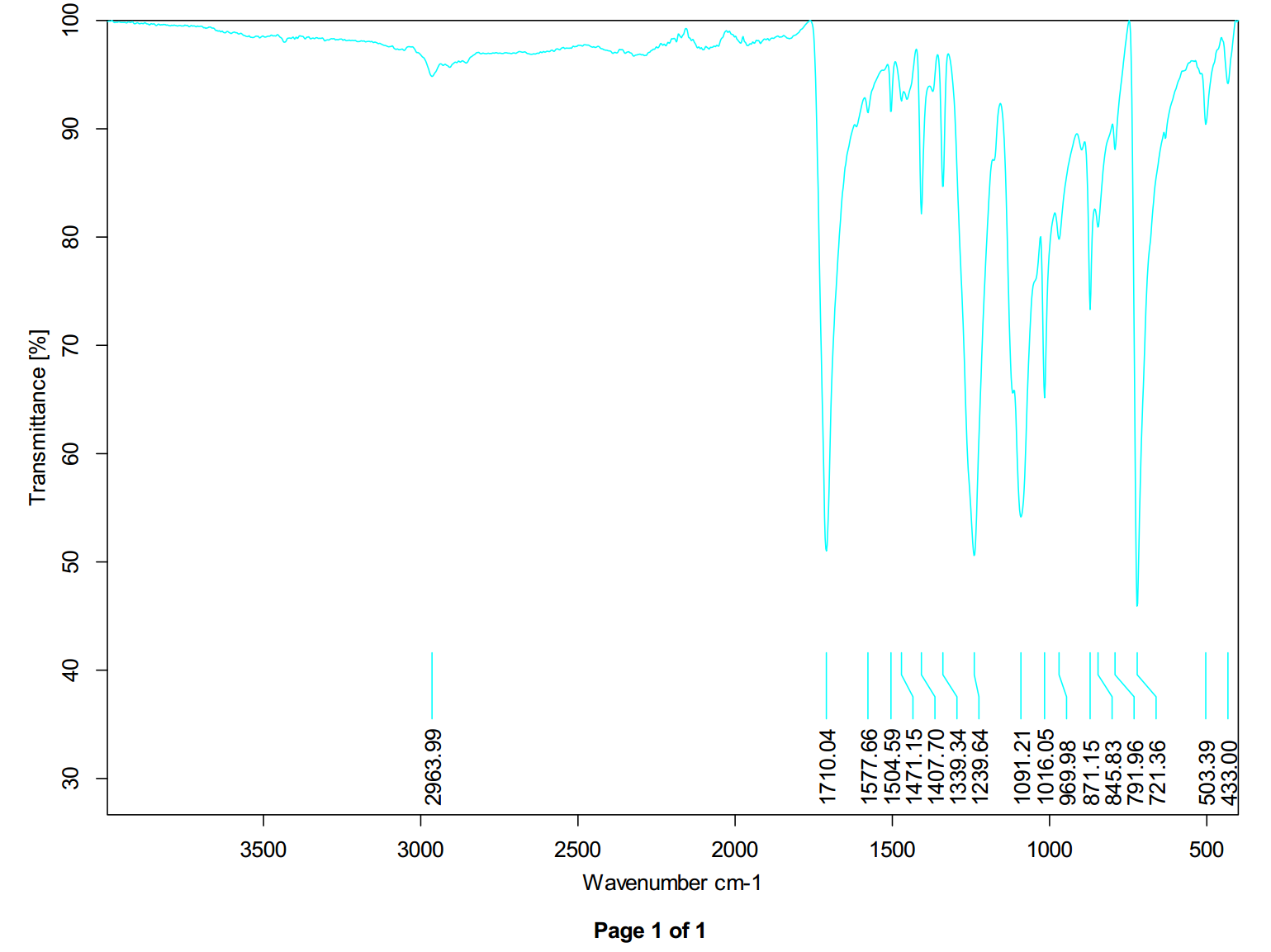 CSV FILE:20250613101541207392280.csv
en&2