
REZULTĀTU LAPA
oxygen-containing organic material with C-O stretching features, consistent with an alcohol and/or ether type compound
Skatiet ziņojumu augstāk. Izmantojiet zemāk esošos komentārus, ja nepieciešama papildu diskusija.
FTIR analīzes pārskats
oxygen-containing organic material with C-O stretching features, consistent with an alcohol and/or ether type compound
Parauga un mērījumu parametri
Ziņojuma Nr.
20250611123347086765289
Datums
2025-06-12 03:00:45
Spektrālais diapazons (cm⁻¹)
[(650, 4000)]
Pamatlīnija
AsLS pamatlīnijas korekcija
Bibliotēkas atbilstība
0%
Identifikācijas rezultāts
0%Pašreizējie FTIR pierādījumi ir pārāk ierobežoti, lai atbalstītu konkrēta savienojuma piešķiršanu. Novērotās joslas pie 1025 un 1050 cm-1 vislabāk atbilst C-O stiepšanai skābekli saturošā organiskā materiālā, piemēram, spirta vai ētera tipa savienojumā. Lai arī tuvākā bibliotēkas ievade ir (E)-3-fenilbut-2-ēn-1-ols, bibliotēkas atbilstības ticamība ir praktiski nulle, un nav tiešu vai saistītu literatūras pierādījumu, kas īpaši atbalstītu šo identitāti paraugam.
Detalizēta interpretācija
- Labākā bibliotēkas atbilstība: (E)-3-phenylbut-2-en-1-ol #414 | match 0.0%
- Joslas pie 1025 un 1050 cm-1 apstiprina C-O vienkāršās saites stiepšanos.
- Vairāki labākie bibliotēkas kandidāti satur skābekli saturošas funkcionālās grupas, kas kopumā atbilst novērotajām vidējās IR pazīmēm.
- Labākā bibliotēkas etiķete (E)-3-fenilbut-2-ēn-1-ols ir vismaz ķīmiski saderīga ar C-O absorbciju, jo tas ir spirts.
- Interpretācijai ir pieejamas tikai divas reģistrētās joslas pie 1025 un 1050 cm-1.
- Šīs joslas atrodas reģionā, kas parasti tiek saistīts ar C-O stiepšanās vibrācijām skābekli saturošos organiskajos savienojumos.
- Vadošie bibliotēkas kandidāti ir ķīmiski neviendabīgi, bet vairāki ietver skābekli saturošas funkcionalitātes, piemēram, spirtus, ēterus, acetālus, esterus, alkoksīdus vai siloksāna saistītas alkoksigrupas.
- Šis plašais Top-15 modelis ir saderīgs ar skābekli saturošu organisko materiālu, bet tas neatbalsta šaurāku struktūru, pamatojoties tikai uz pašreizējo spektru.
- Visas uzrādītās bibliotēkas līdzības ir 0,000, tāpēc izguve nesniedz pozitīvu atbalstu nevienam konkrētam kandidātam.
- Novērotajam spektram trūkst papildu raksturīgo joslu, kas nepieciešamas, lai atbalstītu šauro piešķiršanu (E)-3-fenilbut-2-ēn-1-olam, piemēram, skaidras O-H, aromātiskā gredzena vai alkēna saistītās pazīmes.
- Top-15 kandidātu saraksts ir ķīmiski daudzveidīgs, kas ierobežo pārliecību par jebkuru vienotu struktūras interpretāciju.
- Ar tikai divām smailēm spektrs neatšķir spirta, ētera, acetāla, esteru saistītas vai citas skābekli saturošas organiskās iespējas.
- Nav literatūrā pamatotu pierādījumu, kas saistītu paraugu ar konkrētu nosauktu savienojumu.
- O-H, C=O, aromātiskās C-H, alifātiskās C-H, nitrila vai halogēnu saistīto pazīmju esamība vai neesamība no pašreizējiem datiem paliek nezināma.
Bibliotēku salīdzinājums
Bibliotēkas spektrs parādīsies šeit.
Bibliotēkas meklēšanas rezultāti — 15 labākie kandidāti
| Rangs | Atbilstība % | Savienojums | SMILES | Spektra Nr. | Darbība |
|---|---|---|---|---|---|
| Ielādē bibliotēkas kandidātus... | |||||
Pīķa analīze
★ = Literatūrā atbalstīts uzdevumsPielikums — neapstrādāts spektrs

Diskusija
Komentāri un papildu pierādījumi
Izmantojiet šo apgabalu, lai turpinātu interpretāciju, uzdotu jautājumus vai pievienotu papildu pārbaudes pierādījumus.
The above shows the FTIR analysis results of a PDF file uploaded by a user from UK . The original image is displayed below.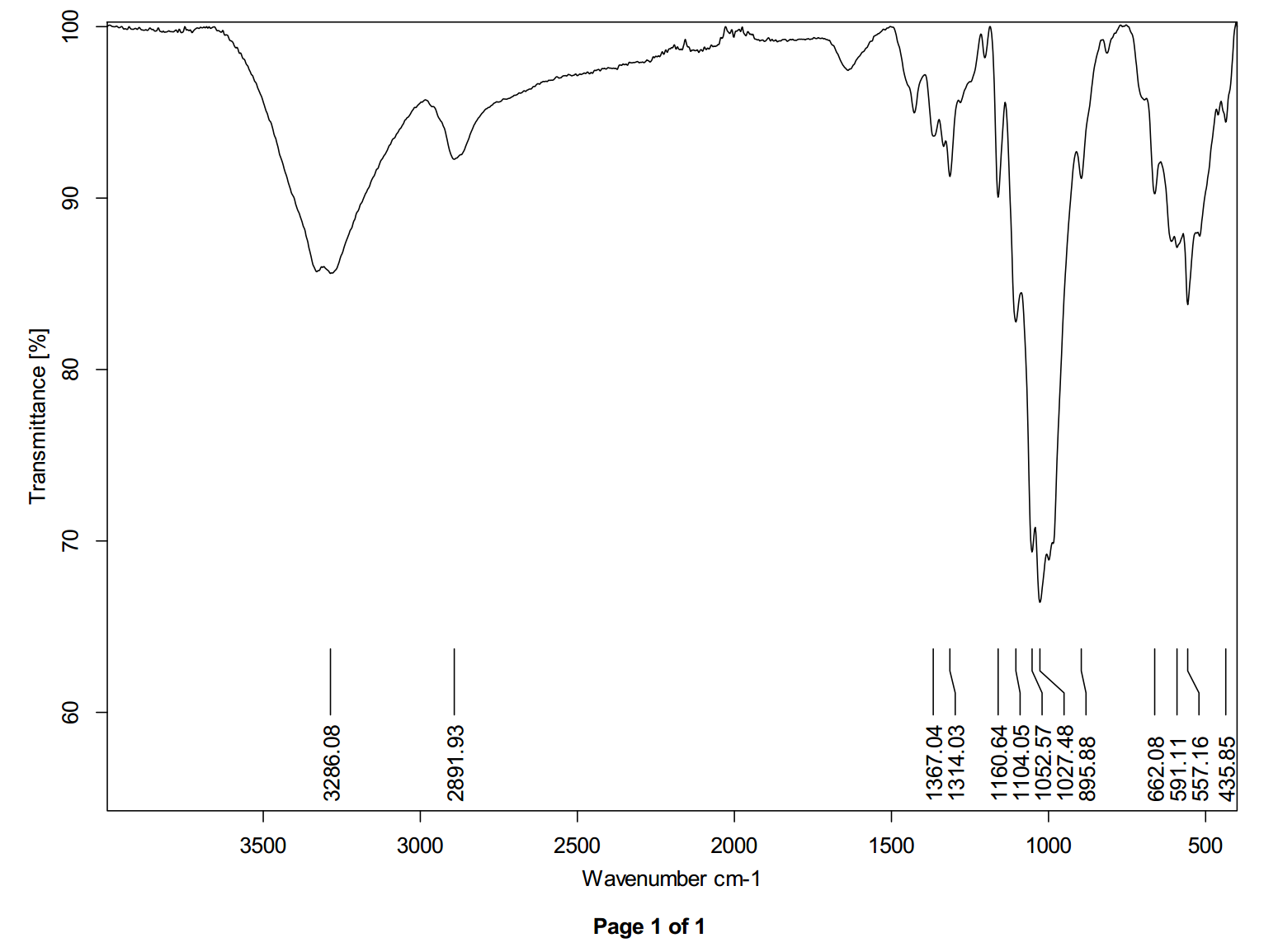 CSV FILE:tem.csv
en&2