
carboxylate salt with a six-membered ring, plausibly aromatic
Просмотрите отчет выше. Используйте комментарии ниже, если вам нужно последующее обсуждение.
carboxylate salt with a six-membered ring, plausibly aromatic
Параметры образца и измерения
Результат идентификации
0%Обычный ИК-Фурье поиск не поддерживает надежную идентификацию на уровне соединения, хотя БЕНЗОАТ НАТРИЯ является ближайшей записью в библиотеке. Более сильным химически обоснованным выводом является то, что образец соответствует соли, содержащей карбоксилат, и демонстрирует признаки шестичленного кольца, при этом ароматическое кольцо остается возможным. Это более широкое направление лучше соответствует паттерну топ-15 библиотеки, чем конкретный названный материал, поскольку уверенность поиска очень низкая и нет ни прямой ссылки, ни подтверждения из родственной литературы.
Детальная интерпретация
- Лучшее совпадение в библиотеке: БЕНЗОАТ НАТРИЯ #37733 | совпадение 0.0%
- Обычный ИК-Фурье поиск не поддерживает надежную идентификацию на уровне соединения, хотя БЕНЗОАТ НАТРИЯ является ближайшей записью в библиотеке. Более сильным химически обоснованным выводом является то, что образец соответствует соли, содержащей карбоксилат, и демонстрирует признаки шестичленного кольца, при этом ароматическое кольцо остается возможным. Это более широкое направление лучше соответствует паттерну топ-15 библиотеки, чем конкретный названный материал, поскольку уверенность поиска очень низкая и нет ни прямой ссылки, ни подтверждения из родственной литературы.
- Кандидаты из топ-15 библиотеки преобладают карбоксилатами солей, поддерживая направление материала, содержащего карбоксилат.
- Ведущая метка библиотеки — БЕНЗОАТ НАТРИЯ, что химически согласуется с направлением соли карбоксилата, содержащей кольцо.
- Полосы при 1546 и 1425 см-1 поддерживают интерпретацию соли карбоксилата больше, чем простого нейтрального углеводорода.
- Полосы при 794 и 3058 см-1 поддерживают наличие структурных особенностей, связанных с кольцом и, возможно, ароматических.
- Библиотечный консенсус явно указывает на шестичленный кольцевой паттерн.
- Ближайшее попадание в библиотеке — БЕНЗОАТ НАТРИЯ, но сообщаемая уверенность совпадения низка и все ведущие кандидаты имеют нулевое разделение по сходству, поэтому ранжирование недостаточно селективно для утверждения сущности.
- Среди кандидатов из топ-15 библиотеки наиболее четкая общая химия — мотив, содержащий C=O/O карбоксилатного типа; несколько ведущих записей являются карбоксилатами натрия или калия.
- Библиотечный консенсус также указывает на шестичленное кольцо, а образец включает полосы в области 794 и 3058 см-1, совместимые с кольцевыми и, возможно, ароматическими C-H колебаниями.
- Полоса образца при 1664 см-1 согласуется с окружением, содержащим карбонил, в то время как сильные сигналы при 1546 и 1425 см-1 совместимы с асимметричным и симметричным растяжением карбоксилата в солях.
- Поскольку не было найдено ни прямой ссылки на литературу, ни стабильного совпадения с родственной литературой, спектр лучше описывается на уровне направления материала, чем как подтвержденное конкретное вещество.
- Уверенность библиотеки сообщается как низкая, без значимого разделения по сходству среди ведущих кандидатов.
- Ведущие кандидаты включают как ароматические карбоксилаты, так и длинноцепочечные алифатические карбоксилаты, поэтому поиск не определяет однозначно тип кольца или точное соединение.
- Никакие независимые данные из родственной литературы не подтверждают отнесение к бензоату.
- Остается неопределенным, является ли кольцо окончательно ароматическим или образец представляет собой другой карбоксилат металла, который случайно имеет схожие ИК-Фурье характеристики.
- Противоположный ион не может быть подтвержден только на основании этих ИК-Фурье данных.
- Имеющиеся данные не позволяют надежно отличить БЕНЗОАТ НАТРИЯ от других карбоксилатов натрия или калия с кольцевыми структурами.
Сравнение библиотек
Результаты поиска по библиотеке — Топ-15 кандидатов
| Ранг | Совпадение % | Составной | SMILES | Спектр № | Действие |
|---|---|---|---|---|---|
| Загрузка кандидатов из библиотеки... | |||||
Анализ пиков
★ = Подтвержденное литературой присвоение| # | Волновое число (cm⁻¹) | Поглощение | Отнесение | Цитирование | Статус отнесения | |
|---|---|---|---|---|---|---|
| 1 | · | 2884 | 1.00 | - | - | - |
| 2 | · | 1546 | 0.80 | - | - | - |
| 3 | · | 2815 | 0.60 | - | - | - |
| 4 | · | 1425 | 0.36 | - | - | - |
| 5 | · | 794 | 0.30 | - | - | - |
| 6 | · | 2846 | 0.30 | - | - | - |
| 7 | · | 1021 | 0.27 | - | - | - |
| 8 | · | 1059 | 0.25 | - | - | - |
| 9 | · | 1357 | 0.24 | - | - | - |
| 10 | · | 1241 | 0.21 | - | - | - |
| 11 | · | 717 | 0.20 | - | - | - |
| 12 | · | 2570 | 0.20 | - | - | - |
| 13 | · | 2477 | 0.17 | - | - | - |
| 14 | · | 2671 | 0.15 | - | - | - |
| 15 | · | 654 | 0.14 | - | - | - |
| 16 | · | 3058 | 0.12 | - | - | - |
| 17 | · | 1481 | 0.11 | - | - | - |
| 18 | · | 1664 | 0.10 | - | - | - |
Приложение — Исходный спектр

Комментарии и последующие доказательства
Используйте эту область, чтобы продолжить интерпретацию, задать вопросы или добавить дополнительные доказательства проверки.
The above shows the FTIR analysis results of a jpg file uploaded by a user (IP: 103.XX ). The original image is displayed below.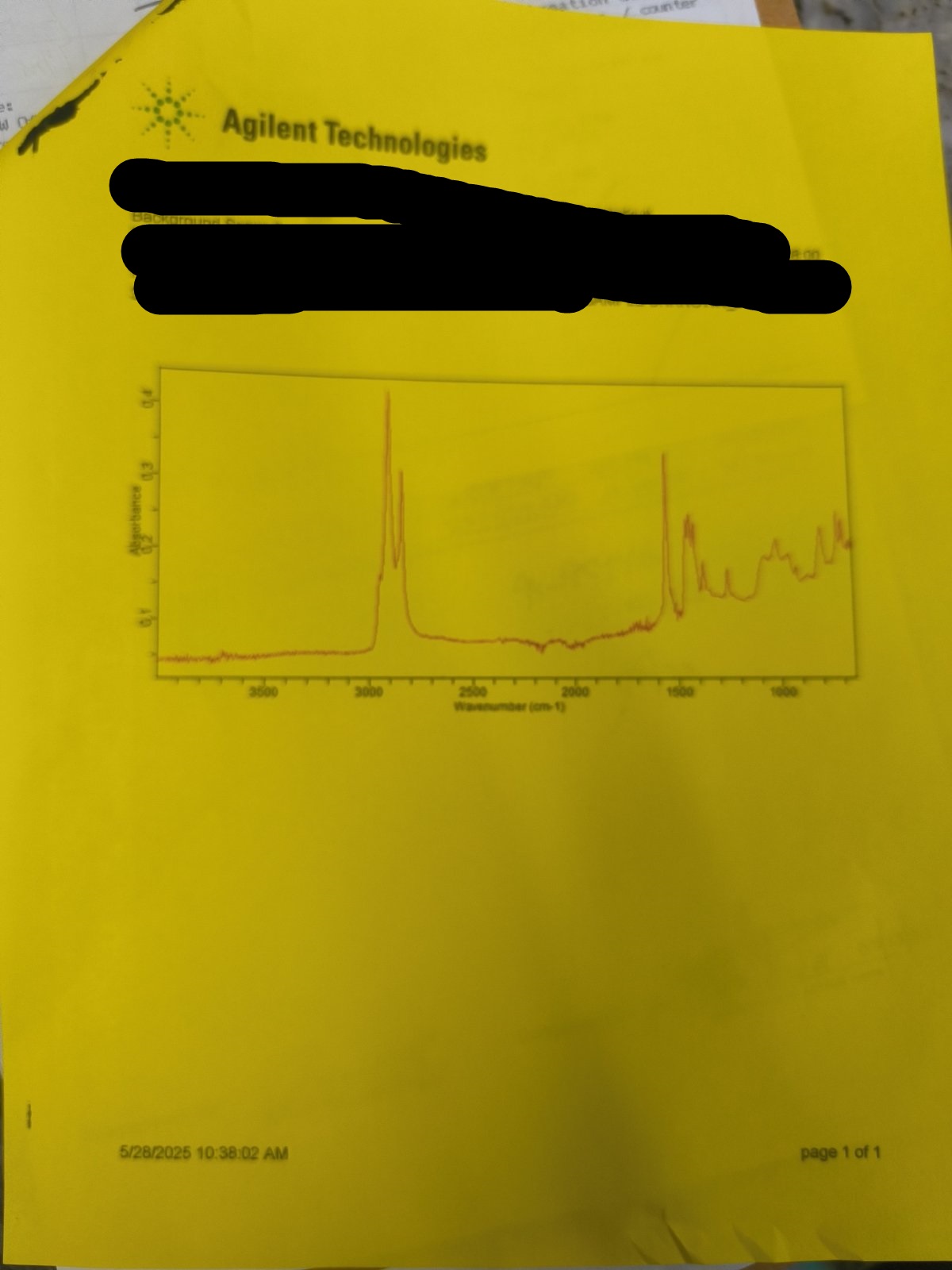 CSV FILE:csv.CSV
en&2