
หน้าที่ผลลัพธ์
ester-containing organic material with aliphatic C-H bands
ดูรายงานด้านบน ใช้ความคิดเห็นด้านล่างหากคุณต้องการพูดคุยติดตามผล
รายงานการวิเคราะห์ FTIR
ester-containing organic material with aliphatic C-H bands
พารามิเตอร์ตัวอย่างและการวัด
รายงานหมายเลข
20250523103046505648076
วันที่
2025-05-23 12:37:10
ช่วงสเปกตรัม (cm⁻¹)
[(650, 4000)]
เส้นฐาน
การแก้ไขเส้นฐาน AsLS
การจับคู่ห้องสมุด
0%
ผลการระบุ
0%หลักฐาน FTIR ไม่สนับสนุนการระบุที่มั่นใจว่าเป็นเมทิลโพรพ-2-อิโนเอตในฐานะสารประกอบเฉพาะ สเปกตรัมที่สังเกตได้อธิบายได้อย่างปลอดภัยกว่าเป็นวัสดุอินทรีย์ที่มีเอสเทอร์และแสดงการดูดกลืน C-H อะลิฟาติก แถบตัวอย่างที่แข็งแรงที่สุดคือคาร์บอนิลใกล้ 1737 cm⁻¹, แถบที่เกี่ยวข้องกับ C-O ใกล้ 1236 cm⁻¹, และการยืดของ C-H แอลคิลใกล้ 2920 และ 2853 cm⁻¹ ซึ่งรวมกันสอดคล้องกับเอสเทอร์อะลิฟาติกหรือส่วนประกอบที่มีเอสเทอร์ การจับคู่กับคลังสเปกตรัมอ่อนแอ ความคล้ายคลึงที่รายงานทั้งหมดเป็นศูนย์จริง และไม่มีหลักฐานโดยตรงหรือจากวรรณกรรมที่เกี่ยวข้องที่จำกัดผลลัพธ์ให้แคบลงอย่างอิสระ
การตีความโดยละเอียด
- การจับคู่คลังที่ดีที่สุด: เมทิลโพรพ-2-อิโนเอต #57605 | การจับคู่ 0.0%
- การรวมกันของ 1737 และ 1236 cm⁻¹ สอดคล้องกับหมู่เอสเทอร์
- การดูดกลืนที่ 2920 และ 2853 cm⁻¹ สนับสนุนสภาพแวดล้อม C-H ที่อิ่มตัวหรือเป็นอะลิฟาติกเป็นส่วนใหญ่
- ตัวเลือกอันดับต้นจากคลังสเปกตรัมคือเมทิลโพรพ-2-อิโนเอต อย่างน้อยก็สอดคล้องทางเคมีว่ามีหมู่คาร์บอนิลเอสเทอร์และพันธะ C-O
- แถบที่แข็งแรงที่ 1737 cm⁻¹ เป็นลักษณะของการดูดกลืนคาร์บอนิลในช่วงเอสเทอร์
- แถบที่ 1236 cm⁻¹ สอดคล้องกับการยืดของ C-O ที่คาดสำหรับฟังก์ชันเอสเทอร์
- แถบที่ 2920 และ 2853 cm⁻¹ สนับสนุนการยืดของ C-H อะลิฟาติกจากวัสดุอินทรีย์ที่มีหมู่แอลคิล
- หลักฐานจากตัวอย่างจึงสนับสนุนองค์ประกอบอินทรีย์อะลิฟาติกที่มีเอสเทอร์ได้น่าเชื่อถือมากกว่าสารประกอบเฉพาะที่ระบุชื่อ
- การเปรียบเทียบกับคลังสเปกตรัมอ้างอิงไม่สามารถจำแนกได้: ตัวเลือกอันดับต้นไม่สอดคล้องทางเคมีซึ่งกันและกัน และทั้งหมดมีความคล้ายคลึงที่รายงานเป็น 0.000
- รูปแบบ 15 อันดับแรกประกอบด้วยตัวเลือกที่มีฮาโลเจน ไฮโดรคาร์บอน กำมะถัน อะโรมาติก และเอสเทอร์ ดังนั้นจึงไม่ได้ให้ประเภทวัสดุที่แคบและสอดคล้องกัน นอกเหนือจากทิศทางอินทรีย์ที่กว้างมาก
- พีคของตัวอย่างไม่ได้ให้หลักฐานสนับสนุนที่ชัดเจนสำหรับลักษณะอัลไคน์เฉพาะที่ต้องการโดยเมทิลโพรพ-2-อิโนเอต
- รายการพีคปัจจุบันสั้นและอาจละเว้นแถบที่แยกความสำคัญที่อ่อนกว่าได้
- หากไม่มีหลักฐานยืนยันสำหรับอัลไคน์ ฮาโลเจน วงแหวนอะโรมาติก ฟังก์ชันไนโตรเจน หรือหมู่กำหนดอื่น ๆ สารอินทรีย์ที่มีเอสเทอร์หลายชนิดยังคงเป็นไปได้
- หลักฐานปัจจุบันสนับสนุนการตีความในระดับหมู่ฟังก์ชันได้ดีกว่าการระบุโมเลกุลที่แน่นอน
การเปรียบเทียบคลังข้อมูล
สเปกตรัมคลังข้อมูลจะปรากฏที่นี่
ผลการค้นหาคลัง — 15 อันดับแรก
| อันดับ | การจับคู่ % | สารประกอบ | SMILES | หมายเลขสเปกตรัม | การดำเนินการ |
|---|---|---|---|---|---|
| กำลังโหลดผู้สมัครคลังข้อมูล... | |||||
การวิเคราะห์พีค
★ = การกำหนดที่สนับสนุนโดยวรรณกรรมภาคผนวก — สเปกตรัมดิบ

การอภิปราย
ความคิดเห็นและหลักฐานเพิ่มเติม
ใช้พื้นที่นี้เพื่อดำเนินการตีความต่อ ถามคำถาม หรือเพิ่มหลักฐานการตรวจสอบเพิ่มเติม
The above shows the FTIR analysis results of a PDF file uploaded by a user (IP: 217.XX ). The original image is displayed below.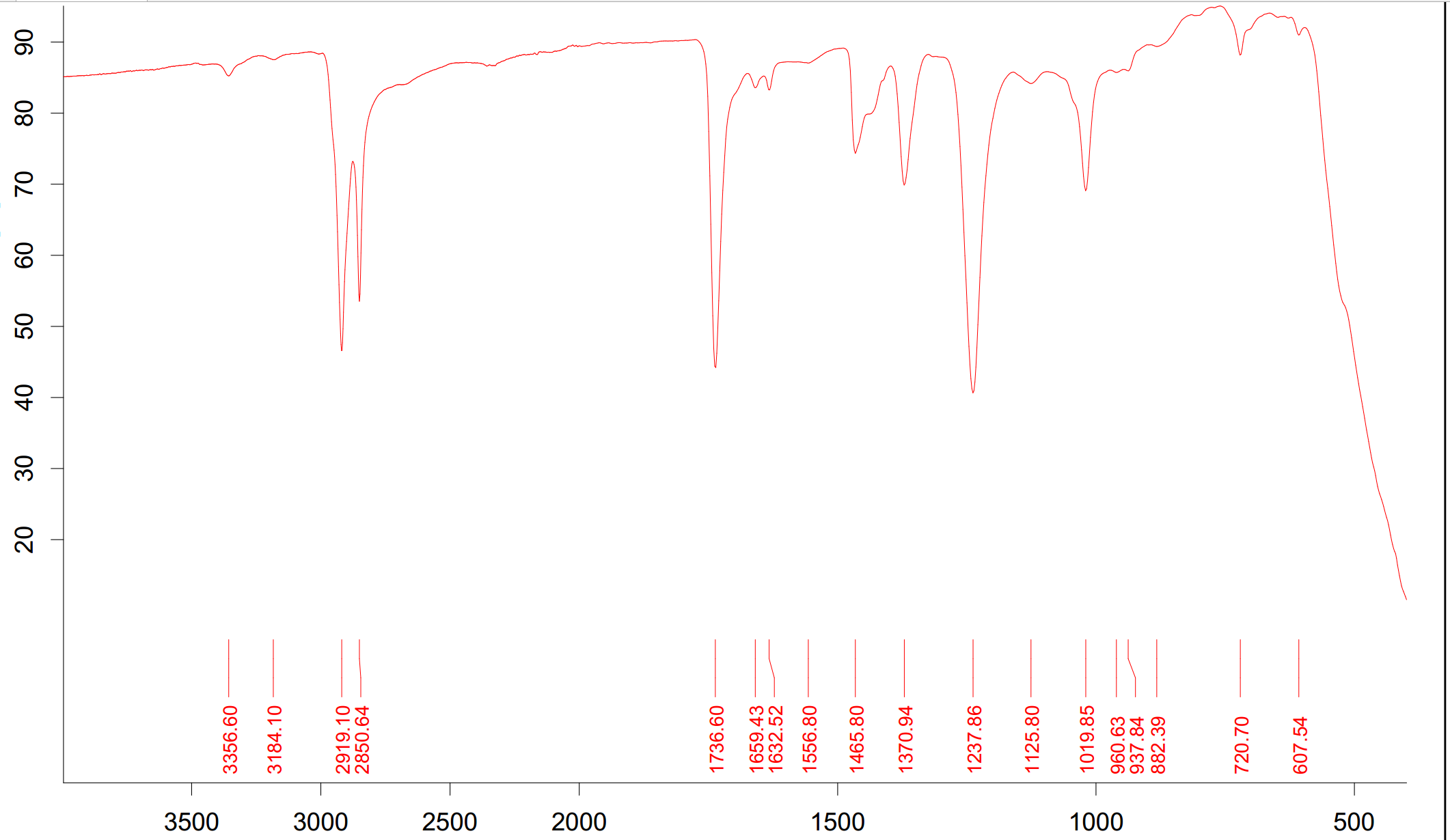 CSV FILE:tem.csv
en&2