
nitrogen-containing aromatic organic compound with possible heteroaromatic ring character
Peržiūrėkite aukščiau esančią ataskaitą. Naudokite toliau pateiktus komentarus, jei reikia tolesnės diskusijos.
nitrogen-containing aromatic organic compound with possible heteroaromatic ring character
Mėginio ir matavimo parametrai
Identifikavimo rezultatas
0%Bibliotekos paieška nominaliai grąžina 4-metilpiridiną kaip artimiausią įrašą, tačiau atitikties kokybė iš esmės nėra diskriminacinė ir nėra pakankamai stipri medžiagos identifikavimui. Pastebėtos juostos saugiau interpretuojamos kaip rodančios organinį mėginį su aromatiniu ar konjuguotu nesotumu, tikėtiną azoto turinčią funkciją ir stiprų pirštų atspaudų srities indėlį iš C-N ir/arba C-O tipo vibracijų. Kadangi nėra nepriklausomų tiesioginių nuorodų ar susijusios literatūros įrodymų, patvirtinančių konkretų bibliotekos pataikymą, dabartinis rezultatas geriausiai pateikiamas kaip azoto turintis aromatinis organinis junginys su galimu heteroaromatinio žiedo pobūdžiu, o ne kaip patvirtintas 4-metilpiridino priskyrimas.
Išsami interpretacija
- Geriausias bibliotekos atitikmuo: 4-metilpiridinas #57195 | match 0.0%
- Bibliotekos paieška nominaliai grąžina 4-metilpiridiną kaip artimiausią įrašą, tačiau atitikties kokybė iš esmės nėra diskriminacinė ir nėra pakankamai stipri medžiagos identifikavimui. Pastebėtos juostos saugiau interpretuojamos kaip rodančios organinį mėginį su aromatiniu ar konjuguotu nesotumu, tikėtiną azoto turinčią funkciją ir stiprų pirštų atspaudų srities indėlį iš C-N ir/arba C-O tipo vibracijų. Kadangi nėra nepriklausomų tiesioginių nuorodų ar susijusios literatūros įrodymų, patvirtinančių konkretų bibliotekos pataikymą, dabartinis rezultatas geriausiai pateikiamas kaip azoto turintis aromatinis organinis junginys su galimu heteroaromatinio žiedo pobūdžiu, o ne kaip patvirtintas 4-metilpiridino priskyrimas.
- Geriausiai surikiuota bibliotekos atitiktis yra 4-metilpiridinas, kuri bent jau rodo į pakeistą azoto turintį aromatinį žiedą kaip vieną tikėtiną kryptį.
- 1609 cm-1 juosta palaiko aromatinį arba konjuguotą nesotumą.
- Stipri 1157-1302 cm-1 sritis palaiko pakeistą organinį pagrindą, kuriame yra heteroatomais susijusios pirštų atspaudų juostos, potencialiai įskaitant C-N.
- 836 cm-1 juosta atitinka pakeisto aromatinio ar heteroaromatinio žiedo judėjimą.
- Spektras rodo juostas ties 1609 ir 1679 cm-1, atitinkančias konjuguotas žiedo vibracijas ir/arba nesotų heteroatomų turinčią funkciją.
- Klasteris ties 1157, 1166, 1222, 1291 ir 1302 cm-1 rodo stiprų pirštų atspaudų srities aktyvumą, suderinamą su C-N ir/arba C-O tempimu pakeistame organiniame junginyje.
- Juosta ties 3198 cm-1 yra suderinama su X-H tempimo srities indėliu, kuris gali atsirasti N-H arba stipriai pasislinkusiose O-H aplinkose, tačiau vien ši reikšmė nenustato konkrečios funkcinės grupės.
- Juostos netoli 1463 ir 1473 cm-1 atitinka žiedo arba alkilo deformacijos būdus pakeistoje aromatinio tipo molekulėje.
- Būdinga savybė ties 836 cm-1 atitinka neplokštuminę žiedo vibraciją, kuri gali atsirasti pakeistose aromatinėse ar heteroaromatinėse sistemose.
- 15 geriausių bibliotekos sąrašas yra chemiškai mišrus ir apima heteroaromatinius junginius, bromintą aniliną, poliolius, chinonus, ksantino tipo karbonilinius junginius ir tioesterį, todėl jis nesuteikia vieno nuoseklaus medžiagos tapatybės modelio.
- Kadangi visi pateikti bibliotekos panašumai yra 0,000, bibliotekos rezultatas turėtų būti vertinamas kaip silpna krypties užuomina, o ne kaip patikimas junginio atitikimas.
- Bibliotekos atitikties stiprumas iš esmės nėra, o visi kandidatų panašumai pateikiami kaip 0,000.
- Nėra susijusios literatūros įrodymų, palaikančių stabilią siaurą šio mėginio kryptį.
- 15 geriausių kandidatų neturi vienodos chemijos, todėl pasitikėjimas bet kokia konkrečia iš bibliotekos gauta struktūra yra ribotas.
- Pastebėta 1679 cm-1 juosta gali reikšti funkcionalumą, viršijantį paprastą metilo pakaitalą turintį piridino žiedą, todėl siauras priskyrimas 4-metilpiridinui nėra pakankamai pagrįstas.
- Lieka neaišku, ar 3198 cm-1 juosta atspindi N-H, O-H ar kitą pasislinkusį tempimo indėlį.
- Lieka neaišku, ar 1679 cm-1 savybė atsiranda dėl karbonilą turinčios priemaišos, konjuguotos nesotios funkcijos ar kitos heteroatomais susijusios vibracijos.
- Dabartinio smailių rinkinio nepakanka, kad būtų galima užtikrintai atskirti piridino tipo heteroaromatinius junginius, anilino tipo aromatinius junginius ar kitus konjuguotus azoto turinčius organinius junginius.
- Tvirtą junginio lygmens identifikavimą blokuoja diskriminacinės bibliotekos atitikties trūkumas ir patvirtinančių etaloninių įrodymų nebuvimas.
Bibliotekų palyginimas
Bibliotekos paieškos rezultatai — 15 geriausių kandidatų
| Reitingas | Atitikimas % | Sudėtinis | SMILES | Spektro Nr. | Veiksmas |
|---|---|---|---|---|---|
| Įkeliami bibliotekos kandidatai... | |||||
Smailių analizė
★ = Literatūra pagrįstas priskyrimasPriedas — Neapdorotas spektras

Komentarai ir tolesni įrodymai
Naudokite šią sritį interpretacijai tęsti, klausimams užduoti ar papildomiems patvirtinimo įrodymams pridėti.
The above shows the FTIR analysis results of a pdf file uploaded by a user (IP: 132.XX.XX ). The original image is displayed below.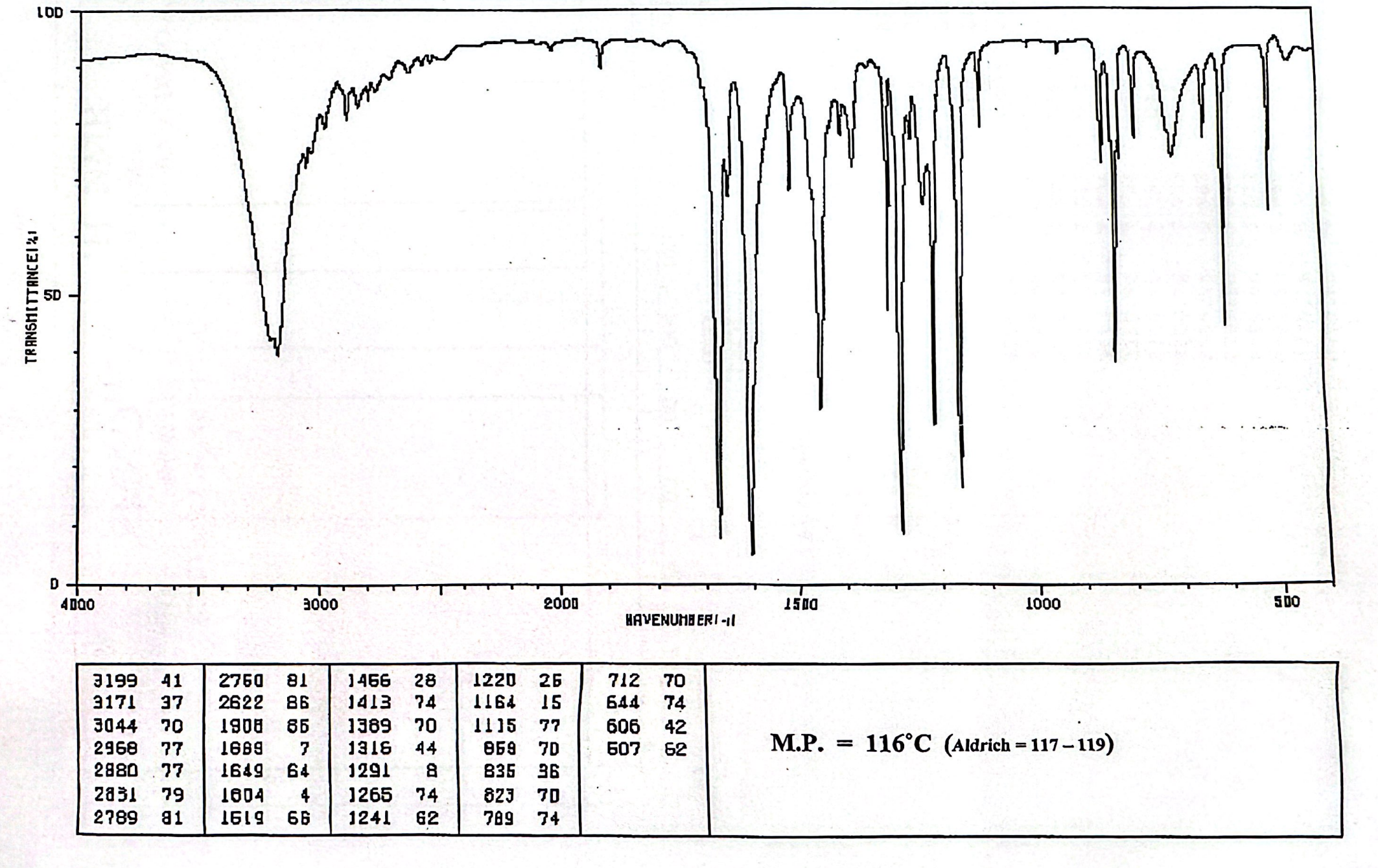 csv file:tem.csv
en&2