
silicon- and oxygen-containing cyclic material
Bekijk het rapport hierboven. Gebruik de opmerkingen hieronder als u een vervolggesprek nodig heeft.
silicon- and oxygen-containing cyclic material
Monster- en meetparameters
Identificatieresultaat
0%De gewone FTIR-zoekopdracht ondersteunt geen stevige identificatie op verbindingsniveau voor dit monster. Hoewel de dichtstbijzijnde bibliotheeknaam 1-methylpyrrolidin-2-on is, zijn alle vermelde bibliotheekovereenkomsten effectief nul en is het bredere Top-15 patroon inconsistent met een enkel goed overeenkomend molecuul. Het waargenomen spectrum kan beter worden behandeld als een silicium- en zuurstofhoudend cyclisch materiaal, voornamelijk ondersteund door sterke vingerafdrukabsorptie in het gebied bij 1067, 1119 en 1253 cm-1 samen met laagfrequente banden bij 688 en 725 cm-1. De duidelijke carbonylbanden bij 1727 en 1735 cm-1 worden echter niet goed verklaard door alleen die richting, dus het resultaat moet een verbrede materiaaltoewijzing blijven in plaats van een entiteitsclaim.
Gedetailleerde interpretatie
- Beste bibliotheekovereenkomst: 1-methylpyrrolidin-2-one #26062 | match 0.0%
- De gewone FTIR-zoekopdracht ondersteunt geen stevige identificatie op verbindingsniveau voor dit monster. Hoewel de dichtstbijzijnde bibliotheeknaam 1-methylpyrrolidin-2-on is, zijn alle vermelde bibliotheekovereenkomsten effectief nul en is het bredere Top-15 patroon inconsistent met een enkel goed overeenkomend molecuul. Het waargenomen spectrum kan beter worden behandeld als een silicium- en zuurstofhoudend cyclisch materiaal, voornamelijk ondersteund door sterke vingerafdrukabsorptie in het gebied bij 1067, 1119 en 1253 cm-1 samen met laagfrequente banden bij 688 en 725 cm-1. De duidelijke carbonylbanden bij 1727 en 1735 cm-1 worden echter niet goed verklaard door alleen die richting, dus het resultaat moet een verbrede materiaaltoewijzing blijven in plaats van een entiteitsclaim.
- Waargenomen banden bij 1067 en 1119 cm-1 ondersteunen sterke zuurstofgebonden vingerafdrukabsorptie consistent met Si-O en/of C-O binding.
- De band bij 1253 cm-1 ondersteunt een geoxideerd, gesubstitueerd raamwerk en is compatibel met siliciumhoudende organische materialen.
- Banden bij 688 en 725 cm-1 ondersteunen de aanwezigheid van een gestructureerd laagfrequent vingerafdrukpatroon consistent met siliciumhoudende cyclische of ring-gerelateerde chemie.
- Het gemeenschappelijke patroon van het bibliotheekpakket wijst expliciet op silicium/zuurstof heterocyclische chemie in plaats van een goed ondersteund enkel klein molecuul.
- Het sterkste praktische bewijs komt van de monsterbanden bij 1067, 1119 en 1253 cm-1, die consistent zijn met prominente Si-O/C-O-type vingerafdrukabsorptie in een zuurstofhoudend raamwerk.
- Banden bij 688 en 725 cm-1 zijn ook compatibel met een zwaarder atoom gesubstitueerde ring of siliciumhoudend vingerafdrukpatroon, wat overeenkomt met de brede bibliotheekconsensus richting silicium/zuurstof heterocyclische chemie.
- De Top-15 bibliotheekset convergeert niet naar één coherente benoemde stof; in plaats daarvan bevat het gemengde carbonylhoudende verbindingen en herhaalde zwakke treffers, wat aangeeft dat de zoekmatch niet specifiek is.
- Het monster vertoont ook een duidelijk doublet-achtig carbonylgebied bij 1727 en 1735 cm-1, wat wijst op een of meer C=O-bevattende componenten of omgevingen die niet veilig worden verklaard door alleen de verbrede silicium/zuurstof cyclische richting.
- Alle gerapporteerde top bibliotheekovereenkomsten zijn 0,000, dus de genoemde hit moet niet worden behandeld als een betrouwbare identificatie.
- De Top-15 kandidaten zijn chemisch divers, waaronder diketonen, aldehyden, amiden, nitrilen, esters en zwavelhoudende carbonylen, wat elke nauwe toewijzing verzwakt.
- De sterke carbonylbanden bij 1727 en 1735 cm-1 worden niet specifiek verklaard door de verbrede silicium/zuurstof cyclische richting.
- Het blijft onzeker of het monster een enkel silicium-zuurstof cyclische stof, een carbonylhoudend silicium-organisch materiaal of een mengsel is.
- Het carbonyl doublet nabij 1727-1735 cm-1 kan meerdere carbonylomgevingen, overlappende componenten of een extra niet-silicium bestanddeel weerspiegelen.
- Omdat de referentiebibliotheekvergelijking zwak is en niet wordt ondersteund door directe literatuurvergelijking, moet de huidige conclusie blijven op een verbreed materiaalrichtingsniveau.
Bibliotheekvergelijking
Bibliotheekzoekresultaten — Top 15 kandidaten
| Rang | Match % | Samengesteld | SMILES | Spectrum nr. | Actie |
|---|---|---|---|---|---|
| Bibliotheekkandidaten laden... | |||||
Piekanalyse
★ = Door literatuur ondersteunde toewijzingBijlage — Ruw spectrum

Opmerkingen en vervolgbewijs
Gebruik dit gebied om de interpretatie voort te zetten, vragen te stellen of extra verificatiebewijs toe te voegen.
The above shows the FTIR analysis results of a png file uploaded by a user (IP: 190.XX.XX.149 ). The original image is displayed below.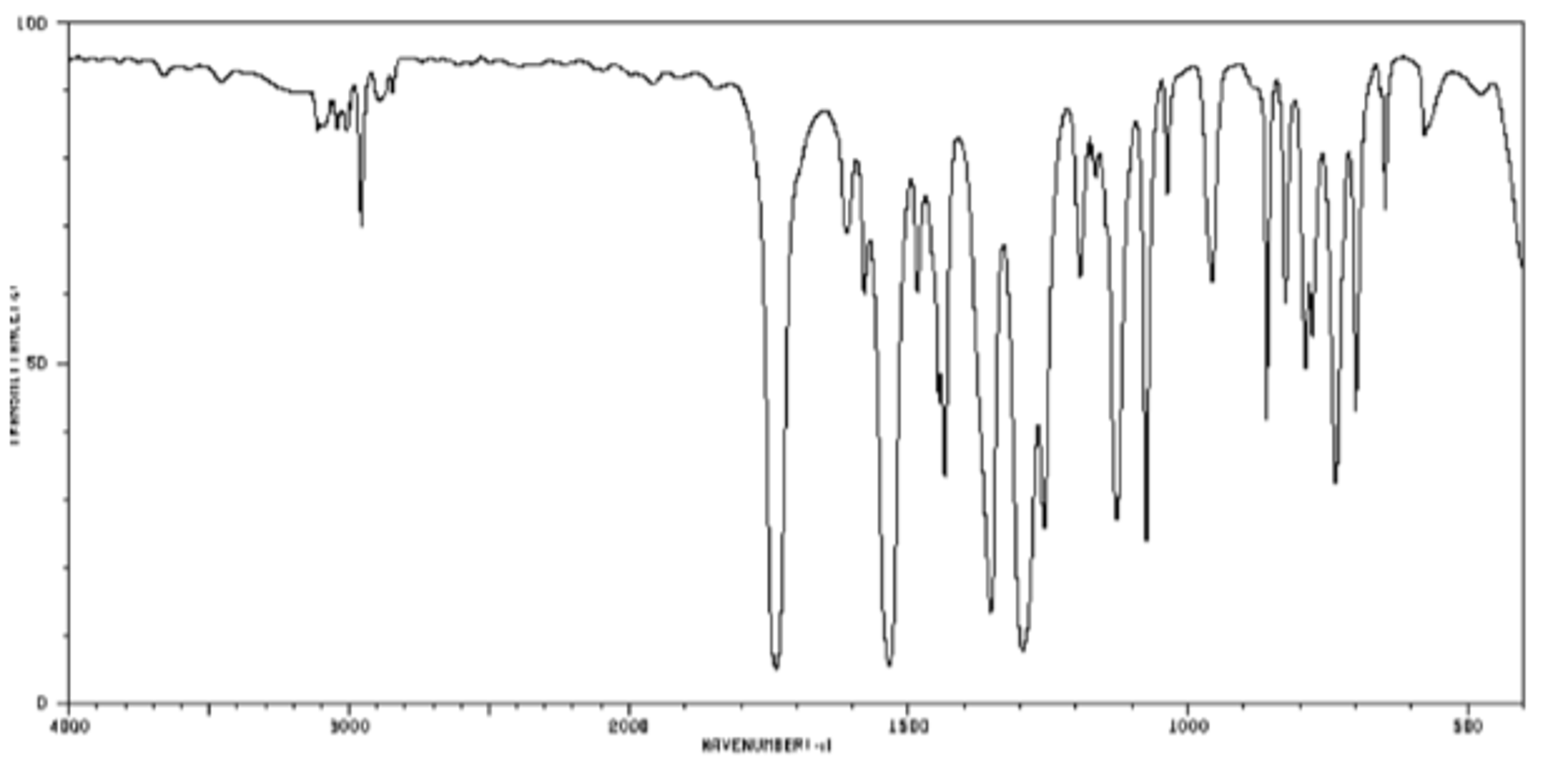 . CSV file extracted from image:tem.csv
zh-hans&2