
silicon- and oxygen-containing cyclic material
Sehen Sie sich den Bericht oben an. Nutzen Sie die Kommentare unten, wenn Sie eine Folgediskussion benötigen.
silicon- and oxygen-containing cyclic material
Proben- und Messparameter
Identifikationsergebnis
0%Die gewöhnliche FTIR-Suche unterstützt keine feste Identifizierung auf Verbindungsebene für diese Probe. Obwohl der nächstgelegene Bibliotheksname 1-Methylpyrrolidin-2-on ist, sind alle aufgeführten Bibliotheksähnlichkeiten effektiv null und das breitere Top-15-Muster ist inkonsistent mit einem einzelnen gut passenden Molekül. Das beobachtete Spektrum wird besser als Hinweis auf ein silizium- und sauerstoffhaltiges cyclisches Material behandelt, gestützt hauptsächlich durch starke Fingerprint-Region-Absorption bei 1067, 1119 und 1253 cm-1 zusammen mit niederwellenzahligen Banden bei 688 und 725 cm-1. Allerdings werden die deutlichen Carbonylregion-Banden bei 1727 und 1735 cm-1 durch diese Richtung allein nicht gut erklärt, daher sollte das Ergebnis eine verbreiterte Materialzuweisung bleiben, anstatt eine Entitätsbehauptung.
Detailinterpretation
- Beste Bibliotheksübereinstimmung: 1-methylpyrrolidin-2-one #26062 | match 0.0%
- Die gewöhnliche FTIR-Suche unterstützt keine feste Identifizierung auf Verbindungsebene für diese Probe. Obwohl der nächstgelegene Bibliotheksname 1-Methylpyrrolidin-2-on ist, sind alle aufgeführten Bibliotheksähnlichkeiten effektiv null und das breitere Top-15-Muster ist inkonsistent mit einem einzelnen gut passenden Molekül. Das beobachtete Spektrum wird besser als Hinweis auf ein silizium- und sauerstoffhaltiges cyclisches Material behandelt, gestützt hauptsächlich durch starke Fingerprint-Region-Absorption bei 1067, 1119 und 1253 cm-1 zusammen mit niederwellenzahligen Banden bei 688 und 725 cm-1. Allerdings werden die deutlichen Carbonylregion-Banden bei 1727 und 1735 cm-1 durch diese Richtung allein nicht gut erklärt, daher sollte das Ergebnis eine verbreiterte Materialzuweisung bleiben, anstatt eine Entitätsbehauptung.
- Beobachtete Banden bei 1067 und 1119 cm-1 unterstützen eine starke sauerstoffgebundene Fingerprint-Absorption, die mit Si-O- und/oder C-O-Bindung konsistent ist.
- Die Bande bei 1253 cm-1 unterstützt ein oxygeniertes, substituiertes Gerüst und ist mit siliziumhaltigen organischen Materialien kompatibel.
- Banden bei 688 und 725 cm-1 unterstützen das Vorhandensein eines strukturierten niederfrequenten Fingerprint-Musters, das mit siliziumhaltiger cyclischer oder ringassoziierter Chemie konsistent ist.
- Das gemeinsame Muster des Bibliothekspakets weist explizit auf Silizium/Sauerstoff-Heterocyclus-Chemie hin, nicht auf ein gut gestütztes einzelnes kleines Molekül.
- Die stärksten praktischen Beweise stammen von den Probenbanden bei 1067, 1119 und 1253 cm-1, die mit einer prominenten Si-O/C-O-artigen Fingerprint-Absorption in einem sauerstoffhaltigen Gerüst konsistent sind.
- Banden bei 688 und 725 cm-1 sind auch mit einem schweratom-substituierten Ring oder siliziumhaltigen Fingerprint-Muster kompatibel, was mit dem breiten Bibliothekskonsens in Richtung Silizium/Sauerstoff-Heterocyclus-Chemie übereinstimmt.
- Der Top-15-Bibliothekssatz konvergiert nicht auf eine kohärente benannte Substanz; stattdessen enthält er gemischte carbonylhaltige Verbindungen und wiederholte schwache Treffer, was darauf hindeutet, dass die Suchübereinstimmung nicht spezifisch ist.
- Die Probe zeigt auch eine deutliche doublettartige Carbonylregion bei 1727 und 1735 cm-1, was auf eine oder mehrere C=O-haltige Komponenten oder Umgebungen hinweist, die durch die verbreiterte Silizium/Sauerstoff-cyclische Richtung allein nicht sicher erklärt werden.
- Alle gemeldeten Top-Bibliotheksähnlichkeiten sind 0,000, daher sollte der genannte Treffer nicht als zuverlässige Identifizierung betrachtet werden.
- Die Top-15-Kandidaten sind chemisch vielfältig, einschließlich Diketone, Aldehyde, Amide, Nitrile, Ester und schwefelhaltige Carbonyle, was jede enge Zuordnung schwächt.
- Die starken Carbonylregion-Banden bei 1727 und 1735 cm-1 werden durch die verbreiterte Silizium/Sauerstoff-cyclische Richtung nicht spezifisch erklärt.
- Es bleibt ungewiss, ob die Probe eine einzelne Silizium-Sauerstoff-cyclische Substanz, ein carbonylhaltiges siliziumorganisches Material oder eine Mischung ist.
- Das Carbonyl-Dublett nahe 1727-1735 cm-1 könnte mehrere Carbonylumgebungen, überlappende Komponenten oder einen zusätzlichen nicht-siliziumhaltigen Bestandteil widerspiegeln.
- Da der Vergleich mit der Referenzbibliothek schwach und durch direkte Literaturübereinstimmung nicht gestützt ist, sollte die aktuelle Schlussfolgerung auf einer verbreiterten Materialrichtungsebene bleiben.
Bibliotheksvergleich
Bibliothekssuchergebnisse – Top 15 Kandidaten
| Rang | Übereinstimmung % | Zusammensetzung | SMILES | Spektrum-Nr. | Aktion |
|---|---|---|---|---|---|
| Bibliothekskandidaten werden geladen... | |||||
Peak-Analyse
★ = Literaturgestützte ZuordnungAnhang – Rohspektrum

Kommentare und Folgebeweise
Nutzen Sie diesen Bereich, um die Interpretation fortzusetzen, Fragen zu stellen oder zusätzliche Überprüfungsbeweise hinzuzufügen.
The above shows the FTIR analysis results of a png file uploaded by a user (IP: 190.XX.XX.149 ). The original image is displayed below.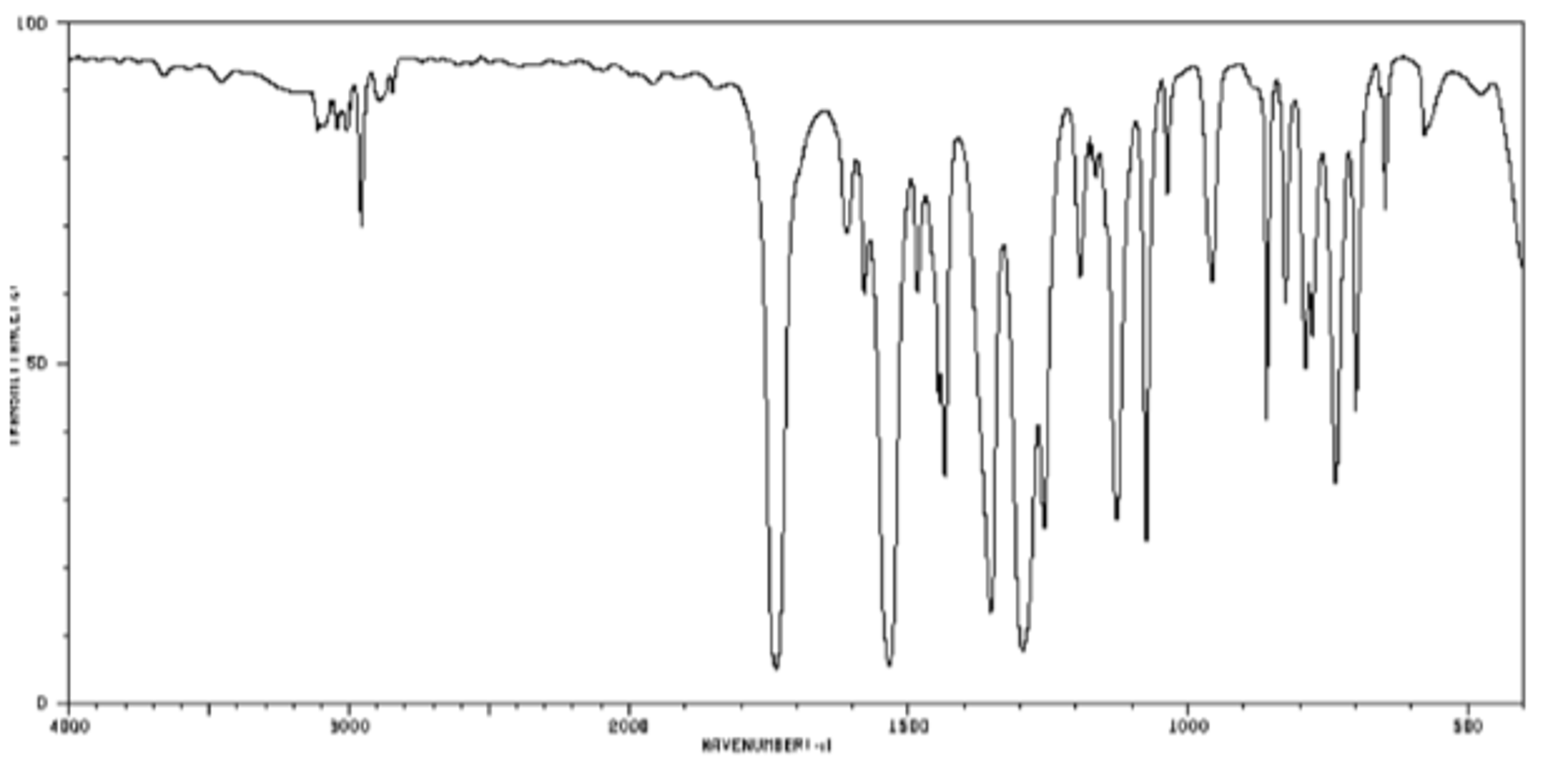 . CSV file extracted from image:tem.csv
zh-hans&2