
styrenic aromatic hydrocarbon polymer
Shikoni raportin e mësipërm. Përdorni komentet më poshtë nëse keni nevojë për diskutim të mëtejshëm.
styrenic aromatic hydrocarbon polymer
Parametrat e kampionit dhe matjes
Rezultati i identifikimit
0%Modeli FTIR është më i përputhshëm me një polimer hidrokarbur aromatik stirenik, me Polystyrene si përputhjen më të afërt të bibliotekës. Ky drejtim mbështetet nga shtrirja C-H aromatike afër 3031-3081 cm-1, shiritat e unazës aromatike në 1604 dhe 1493 cm-1, shiritat e fortë jashtë-planar C-H aromatikë në 701, 751 dhe 758 cm-1, dhe shtrirjet C-H alifatike në 2926 dhe 2857 cm-1, të cilat së bashku janë karakteristike për një polimer hidrokarbur të zëvendësuar me fenil. Megjithatë, besimi i bibliotekës është shumë i ulët dhe asnjë referencë e drejtpërdrejtë ose dëshmi nga literatura e lidhur nuk konfirmon në mënyrë të pavarur një caktim specifik entiteti, kështu që përfundimi më i mbrojtur është një drejtim polimeri hidrokarbur aromatik stirenik dhe jo një identifikim i fortë entiteti
Interpretim i detajuar
- Përputhja kryesore e bibliotekës: Polystyrene #46662 | match 0.0%
- Modeli FTIR është më i përputhshëm me një polimer hidrokarbur aromatik stirenik, me Polystyrene si përputhjen më të afërt të bibliotekës. Ky drejtim mbështetet nga shtrirja C-H aromatike afër 3031-3081 cm-1, shiritat e unazës aromatike në 1604 dhe 1493 cm-1, shiritat e fortë jashtë-planar C-H aromatikë në 701, 751 dhe 758 cm-1, dhe shtrirjet C-H alifatike në 2926 dhe 2857 cm-1, të cilat së bashku janë karakteristike për një polimer hidrokarbur të zëvendësuar me fenil. Megjithatë, besimi i bibliotekës është shumë i ulët dhe asnjë referencë e drejtpërdrejtë ose dëshmi nga literatura e lidhur nuk konfirmon në mënyrë të pavarur një caktim specifik entiteti, kështu që përfundimi më i mbrojtur është një drejtim polimeri hidrokarbur aromatik stirenik dhe jo një identifikim i fortë entiteti.
- Përputhja më e afërt e bibliotekës: Polystyrene, me shumë hyrje shtesë të Polystyrene që zënë pozicionet e para kandidate.
- Modeli i përbashkët i bibliotekës Top-15: spektra kryesisht të polimerit të hidrokarbureve aromatike stirenike.
- Shtrirja C-H aromatike është e pranishme në 3031, 3071 dhe 3081 cm-1.
- Vibrimet e unazës aromatike janë të pranishme në 1604 dhe 1493 cm-1.
- Shiritat jashtë-planar C-H aromatikë në 701, 751 dhe 758 cm-1 mbështesin një model zëvendësimi aromatik stirenik.
- Shiritat C-H alifatikë në 2926, 2857, 1450, 1376 dhe 1360 cm-1 mbështesin një kornizë polimeri hidrokarbur.
- Kandidatët kryesorë të bibliotekës janë kryesisht hyrje të Polystyrene, dhe modeli më i gjerë Top-15 dominohet nga materiale stirenike.
- Mostra tregon karakteristika tipike të unazës aromatike në 1604 dhe 1493 cm-1 së bashku me shtrirjen C-H aromatike në 3031, 3071 dhe 3081 cm-1.
- Shiritat në 701, 751 dhe 758 cm-1 janë në përputhje me përkuljen jashtë-planar C-H aromatike të pritur për një mjedis unaze fenil stirenike.
- Shtrirja C-H alifatike në 2926 dhe 2857 cm-1 mbështet një shtyllë polimeri hidrokarbur.
- Nuk tregohet ndonjë funksionalitet i qartë i karbonilit, hidroksilit, nitrilit ose ndonjë heteroatom tjetër të fortë nga lista e pikut të raportuar, e cila e mban drejtimin brenda një klase polimeri aromatik kryesisht hidrokarbur.
- Besimi i përputhjes së bibliotekës raportohet si i ulët, kështu që vetëm rikuperimi nuk është mjaft i fortë për një identifikim të fortë të materialit.
- Asnjë përputhje nga literatura e lidhur nuk u rikuperua për të ngushtuar caktimin përtej një drejtimi polimeri aromatik stirenik.
- Dëshmitë e raportuara nuk përcaktojnë nëse materiali është Polystyrene i pastër ose një material stirenik i lidhur, përzierje, kopolimer ose formë e modifikuar.
- Dëshmitë e tanishme mbështesin kiminë aromatike stirenike, por nuk dallojnë në mënyrë të sigurt Polystyrene nga materialet polimerike stirenike të lidhura ngushtë.
- Shiritat e vegjël si 903, 1025 dhe 1070 cm-1 nuk janë të mjaftueshëm këtu për të provuar një formulim më specifik pa mbështetje më të fortë referimi.
- Për shkak se konfirmimi i drejtpërdrejtë i literaturës dhe referencës mungon, caktimi në nivel entiteti mbetet më pak i sigurt sesa drejtimi i gjerë kimik.
Krahasimi i Bibliotekës
Rezultatet e Kërkimit në Bibliotekë — 15 Kandidatët Kryesorë
| Renditja | Përputhje % | Përbërës | SMILES | Nr. i spektrit | Veprimi |
|---|---|---|---|---|---|
| Duke ngarkuar kandidatët e bibliotekës... | |||||
Analiza e Pikut
★ = Caktimi i mbështetur nga literatura| # | Numri i valës (cm⁻¹) | Absorbanca | Detyrë | Citim | Statusi i caktimit | |
|---|---|---|---|---|---|---|
| 1 | · | 701 | 1.00 | - | - | - |
| 2 | · | 2926 | 0.92 | - | - | - |
| 3 | · | 1450 | 0.91 | - | - | - |
| 4 | · | 3031 | 0.91 | - | - | - |
| 5 | · | 751 | 0.83 | - | - | - |
| 6 | · | 758 | 0.71 | - | - | - |
| 7 | · | 1493 | 0.41 | - | - | - |
| 8 | · | 3071 | 0.37 | - | - | - |
| 9 | · | 3081 | 0.33 | - | - | - |
| 10 | · | 2857 | 0.31 | - | - | - |
| 11 | · | 1604 | 0.28 | - | - | - |
| 12 | · | 1025 | 0.20 | - | - | - |
| 13 | · | 903 | 0.14 | - | - | - |
| 14 | · | 1070 | 0.13 | - | - | - |
| 15 | · | 1360 | 0.11 | - | - | - |
| 16 | · | 1376 | 0.11 | - | - | - |
Shtojca — Spektri i Papërpunuar

Komente dhe prova vijuese
Përdorni këtë zonë për të vazhduar interpretimin, për të bërë pyetje ose për të shtuar prova shtesë verifikimi.
The user from Taiwan (IP: 2407::) uploaded a DOCX file containing three IR spectra. Swipe up to view the qualitative analysis of the first spectrum. The user also expressed intent to calculate sample thickness using interference peaks. Based on the spectra, the analysis was performed at wave numbers 2501 and 2563, yielding an interference peak difference (V₁ - V₂) of 62 cm-1 and ΔN = 1. By inputting the film's refractive index(n), the sample thickness (d) was determined.Here is the original spectrum of the sample extracted from the DOCX file.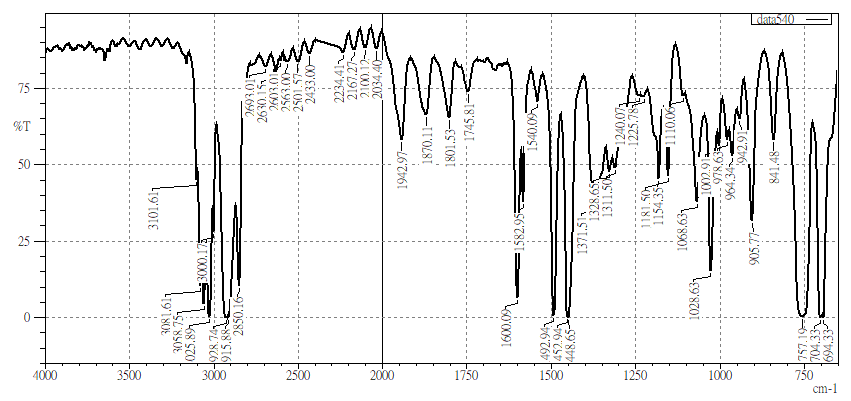
en&2