
styrenic aromatic hydrocarbon polymer
ਉੱਪਰ ਦਿੱਤੀ ਰਿਪੋਰਟ ਦੇਖੋ। ਜੇਕਰ ਤੁਹਾਨੂੰ ਫਾਲੋ-ਅੱਪ ਚਰਚਾ ਦੀ ਲੋੜ ਹੈ ਤਾਂ ਹੇਠਾਂ ਦਿੱਤੀਆਂ ਟਿੱਪਣੀਆਂ ਦੀ ਵਰਤੋਂ ਕਰੋ।
styrenic aromatic hydrocarbon polymer
ਨਮੂਨਾ ਅਤੇ ਮਾਪ ਪੈਰਾਮੀਟਰ
ਪਛਾਣ ਨਤੀਜਾ
0%FTIR ਪੈਟਰਨ ਇੱਕ ਸਟਾਇਰੀਨਿਕ ਐਰੋਮੈਟਿਕ ਹਾਈਡਰੋਕਾਰਬਨ ਪੋਲੀਮਰ ਨਾਲ ਸਭ ਤੋਂ ਵੱਧ ਮੇਲ ਖਾਂਦਾ ਹੈ, ਜਿਸ ਵਿੱਚ ਪੋਲੀਸਟਾਇਰੀਨ ਸਭ ਤੋਂ ਨੇੜੇ ਦੀ ਲਾਇਬ੍ਰੇਰੀ ਮੈਚ ਹੈ। ਇਸ ਦਿਸ਼ਾ ਦਾ ਸਮਰਥਨ 3031-3081 cm-1 ਦੇ ਨੇੜੇ ਐਰੋਮੈਟਿਕ C-H ਸਟਰੈਚਿੰਗ, 1604 ਅਤੇ 1493 cm-1 'ਤੇ ਐਰੋਮੈਟਿਕ ਰਿੰਗ ਬੈਂਡ, 701, 751, ਅਤੇ 758 cm-1 'ਤੇ ਮਜ਼ਬੂਤ ਆਉਟ-ਆਫ-ਪਲੇਨ ਐਰੋਮੈਟਿਕ C-H ਬੈਂਡ, ਅਤੇ 2926 ਅਤੇ 2857 cm-1 'ਤੇ ਐਲੀਫੈਟਿਕ C-H ਸਟਰੈਚਿੰਗ ਦੁਆਰਾ ਕੀਤਾ ਜਾਂਦਾ ਹੈ, ਜੋ ਇਕੱਠੇ ਮਿਲ ਕੇ ਇੱਕ ਫਿਨਾਇਲ-ਸਬਸਟੀਚਿਊਟਡ ਹਾਈਡਰੋਕਾਰਬਨ ਪੋਲੀਮਰ ਦੇ ਗੁਣ ਹਨ। ਹਾਲਾਂਕਿ, ਲਾਇਬ੍ਰੇਰੀ ਦਾ ਭਰੋਸਾ ਬਹੁਤ ਘੱਟ ਹੈ ਅਤੇ ਕੋਈ ਸਿੱਧਾ ਸੰਦਰਭ ਜਾਂ ਸਬੰਧਤ-ਸਾਹਿਤ ਸਬੂਤ ਸੁਤੰਤਰ ਤੌਰ 'ਤੇ ਕਿਸੇ ਖਾਸ ਇਕਾਈ ਨਿਰਧਾਰਨ ਦੀ ਪੁਸ਼ਟੀ ਨਹੀਂ ਕਰਦਾ, ਇਸ ਲਈ ਸਭ ਤੋਂ ਵੱਧ ਬਚਾਅ ਯੋਗ ਸਿੱਟਾ ਇੱਕ ਪੱਕੀ ਇਕਾਈ ਪਛਾਣ ਦੀ ਬਜਾਏ ਇੱਕ ਸਟਾਇਰੀਨਿਕ ਐਰੋਮੈਟਿਕ ਹਾਈਡਰੋਕਾਰਬਨ ਪੋਲੀਮਰ ਦਿਸ਼ਾ ਹੈ।
ਵਿਸਤ੍ਰਿਤ ਵਿਆਖਿਆ
- ਚੋਟੀ ਦਾ ਲਾਇਬ੍ਰੇਰੀ ਮੈਚ: Polystyrene #46662 | ਮੈਚ 0.0%
- FTIR ਪੈਟਰਨ ਇੱਕ ਸਟਾਇਰੀਨਿਕ ਐਰੋਮੈਟਿਕ ਹਾਈਡਰੋਕਾਰਬਨ ਪੋਲੀਮਰ ਨਾਲ ਸਭ ਤੋਂ ਵੱਧ ਮੇਲ ਖਾਂਦਾ ਹੈ, ਜਿਸ ਵਿੱਚ ਪੋਲੀਸਟਾਇਰੀਨ ਸਭ ਤੋਂ ਨੇੜੇ ਦੀ ਲਾਇਬ੍ਰੇਰੀ ਮੈਚ ਹੈ। ਇਸ ਦਿਸ਼ਾ ਦਾ ਸਮਰਥਨ 3031-3081 cm-1 ਦੇ ਨੇੜੇ ਐਰੋਮੈਟਿਕ C-H ਸਟਰੈਚਿੰਗ, 1604 ਅਤੇ 1493 cm-1 'ਤੇ ਐਰੋਮੈਟਿਕ ਰਿੰਗ ਬੈਂਡ, 701, 751, ਅਤੇ 758 cm-1 'ਤੇ ਮਜ਼ਬੂਤ ਆਉਟ-ਆਫ-ਪਲੇਨ ਐਰੋਮੈਟਿਕ C-H ਬੈਂਡ, ਅਤੇ 2926 ਅਤੇ 2857 cm-1 'ਤੇ ਐਲੀਫੈਟਿਕ C-H ਸਟਰੈਚਿੰਗ ਦੁਆਰਾ ਕੀਤਾ ਜਾਂਦਾ ਹੈ, ਜੋ ਇਕੱਠੇ ਮਿਲ ਕੇ ਇੱਕ ਫਿਨਾਇਲ-ਸਬਸਟੀਚਿਊਟਡ ਹਾਈਡਰੋਕਾਰਬਨ ਪੋਲੀਮਰ ਦੇ ਗੁਣ ਹਨ। ਹਾਲਾਂਕਿ, ਲਾਇਬ੍ਰੇਰੀ ਦਾ ਭਰੋਸਾ ਬਹੁਤ ਘੱਟ ਹੈ ਅਤੇ ਕੋਈ ਸਿੱਧਾ ਸੰਦਰਭ ਜਾਂ ਸਬੰਧਤ-ਸਾਹਿਤ ਸਬੂਤ ਸੁਤੰਤਰ ਤੌਰ 'ਤੇ ਕਿਸੇ ਖਾਸ ਇਕਾਈ ਨਿਰਧਾਰਨ ਦੀ ਪੁਸ਼ਟੀ ਨਹੀਂ ਕਰਦਾ, ਇਸ ਲਈ ਸਭ ਤੋਂ ਵੱਧ ਬਚਾਅ ਯੋਗ ਸਿੱਟਾ ਇੱਕ ਪੱਕੀ ਇਕਾਈ ਪਛਾਣ ਦੀ ਬਜਾਏ ਇੱਕ ਸਟਾਇਰੀਨਿਕ ਐਰੋਮੈਟਿਕ ਹਾਈਡਰੋਕਾਰਬਨ ਪੋਲੀਮਰ ਦਿਸ਼ਾ ਹੈ।
- ਸਭ ਤੋਂ ਨੇੜੇ ਦੀ ਲਾਇਬ੍ਰੇਰੀ ਮੈਚ: ਪੋਲੀਸਟਾਇਰੀਨ, ਕਈ ਵਾਧੂ ਪੋਲੀਸਟਾਇਰੀਨ ਐਂਟਰੀਆਂ ਚੋਟੀ ਦੇ ਉਮੀਦਵਾਰ ਸਥਾਨਾਂ 'ਤੇ ਕਬਜ਼ਾ ਕਰ ਰਹੀਆਂ ਹਨ।
- ਆਮ ਟੌਪ-15 ਲਾਇਬ੍ਰੇਰੀ ਪੈਟਰਨ: ਮੁੱਖ ਤੌਰ 'ਤੇ ਸਟਾਇਰੀਨਿਕ, ਐਰੋਮੈਟਿਕ ਹਾਈਡਰੋਕਾਰਬਨ ਪੋਲੀਮਰ ਸਪੈਕਟ੍ਰਾ।
- ਐਰੋਮੈਟਿਕ C-H ਸਟਰੈਚਿੰਗ 3031, 3071, ਅਤੇ 3081 cm-1 'ਤੇ ਮੌਜੂਦ ਹੈ।
- ਐਰੋਮੈਟਿਕ ਰਿੰਗ ਵਾਈਬ੍ਰੇਸ਼ਨ 1604 ਅਤੇ 1493 cm-1 'ਤੇ ਮੌਜੂਦ ਹਨ।
- 701, 751, ਅਤੇ 758 cm-1 'ਤੇ ਆਉਟ-ਆਫ-ਪਲੇਨ ਐਰੋਮੈਟਿਕ C-H ਬੈਂਡ ਇੱਕ ਸਟਾਇਰੀਨਿਕ ਐਰੋਮੈਟਿਕ ਬਦਲ ਪੈਟਰਨ ਦਾ ਸਮਰਥਨ ਕਰਦੇ ਹਨ।
- 2926, 2857, 1450, 1376, ਅਤੇ 1360 cm-1 'ਤੇ ਐਲੀਫੈਟਿਕ C-H ਬੈਂਡ ਇੱਕ ਹਾਈਡਰੋਕਾਰਬਨ ਪੋਲੀਮਰ ਫਰੇਮਵਰਕ ਦਾ ਸਮਰਥਨ ਕਰਦੇ ਹਨ।
- ਮੁੱਖ ਲਾਇਬ੍ਰੇਰੀ ਉਮੀਦਵਾਰ ਬਹੁਤ ਜ਼ਿਆਦਾ ਪੋਲੀਸਟਾਇਰੀਨ ਐਂਟਰੀਆਂ ਹਨ, ਅਤੇ ਵਿਆਪਕ ਟੌਪ-15 ਪੈਟਰਨ ਸਟਾਇਰੀਨਿਕ ਸਮੱਗਰੀਆਂ ਦੁਆਰਾ ਦਬਦਬਾ ਹੈ।
- ਨਮੂਨਾ 1604 ਅਤੇ 1493 cm-1 'ਤੇ ਵਿਸ਼ੇਸ਼ਤਾ ਐਰੋਮੈਟਿਕ ਰਿੰਗ ਵਿਸ਼ੇਸ਼ਤਾਵਾਂ ਦਿਖਾਉਂਦਾ ਹੈ, ਨਾਲ ਹੀ 3031, 3071, ਅਤੇ 3081 cm-1 'ਤੇ ਐਰੋਮੈਟਿਕ C-H ਸਟਰੈਚਿੰਗ।
- 701, 751, ਅਤੇ 758 cm-1 'ਤੇ ਬੈਂਡ ਇੱਕ ਸਟਾਇਰੀਨਿਕ ਫਿਨਾਇਲ ਰਿੰਗ ਵਾਤਾਵਰਨ ਲਈ ਉਮੀਦ ਕੀਤੇ ਐਰੋਮੈਟਿਕ C-H ਆਊਟ-ਆਫ-ਪਲੇਨ ਬੈਂਡਿੰਗ ਦੇ ਅਨੁਕੂਲ ਹਨ।
- 2926 ਅਤੇ 2857 cm-1 'ਤੇ ਐਲੀਫੈਟਿਕ C-H ਸਟਰੈਚਿੰਗ ਇੱਕ ਹਾਈਡਰੋਕਾਰਬਨ ਪੋਲੀਮਰ ਬੈਕਬੋਨ ਦਾ ਸਮਰਥਨ ਕਰਦੀ ਹੈ।
- ਰਿਪੋਰਟ ਕੀਤੀ ਪੀਕ ਸੂਚੀ ਦੁਆਰਾ ਕੋਈ ਸਪਸ਼ਟ ਕਾਰਬੋਨਿਲ, ਹਾਈਡ੍ਰੋਕਸਿਲ, ਨਾਈਟ੍ਰਾਈਲ, ਜਾਂ ਹੋਰ ਮਜ਼ਬੂਤ ਹੈਟਰੋਆਟਮ-ਬੇਅਰਿੰਗ ਕਾਰਜਸ਼ੀਲਤਾ ਦਰਸਾਈ ਨਹੀਂ ਗਈ ਹੈ, ਜੋ ਦਿਸ਼ਾ ਨੂੰ ਇੱਕ ਵੱਡੇ ਪੱਧਰ 'ਤੇ ਹਾਈਡਰੋਕਾਰਬਨ ਐਰੋਮੈਟਿਕ ਪੋਲੀਮਰ ਸ਼੍ਰੇਣੀ ਦੇ ਅੰਦਰ ਰੱਖਦੀ ਹੈ।
- ਲਾਇਬ੍ਰੇਰੀ ਮੈਚ ਦਾ ਭਰੋਸਾ ਘੱਟ ਦੱਸਿਆ ਗਿਆ ਹੈ, ਇਸ ਲਈ ਇਕੱਲਾ ਰਿਟ੍ਰੀਵਲ ਇੱਕ ਪੱਕੀ ਸਮੱਗਰੀ ਪਛਾਣ ਲਈ ਕਾਫ਼ੀ ਮਜ਼ਬੂਤ ਨਹੀਂ ਹੈ।
- ਸਟਾਇਰੀਨਿਕ ਐਰੋਮੈਟਿਕ ਪੋਲੀਮਰ ਦਿਸ਼ਾ ਤੋਂ ਅੱਗੇ ਅਸਾਈਨਮੈਂਟ ਨੂੰ ਸੀਮਤ ਕਰਨ ਲਈ ਕੋਈ ਸਬੰਧਤ-ਸਾਹਿਤ ਮੈਚ ਪ੍ਰਾਪਤ ਨਹੀਂ ਹੋਇਆ।
- ਰਿਪੋਰਟ ਕੀਤੇ ਗਏ ਸਬੂਤ ਇਹ ਸਥਾਪਿਤ ਨਹੀਂ ਕਰਦੇ ਕਿ ਸਮੱਗਰੀ ਸ਼ੁੱਧ ਪੋਲੀਸਟਾਇਰੀਨ ਹੈ ਜਾਂ ਇੱਕ ਸਬੰਧਤ ਸਟਾਇਰੀਨਿਕ ਸਮੱਗਰੀ, ਮਿਸ਼ਰਣ, ਕੋਪੋਲੀਮਰ, ਜਾਂ ਸੋਧਿਆ ਰੂਪ ਹੈ।
- ਮੌਜੂਦਾ ਸਬੂਤ ਸਟਾਇਰੀਨਿਕ ਐਰੋਮੈਟਿਕ ਰਸਾਇਣ ਦਾ ਸਮਰਥਨ ਕਰਦੇ ਹਨ ਪਰ ਪੋਲੀਸਟਾਇਰੀਨ ਨੂੰ ਨੇੜਿਓਂ ਸਬੰਧਤ ਸਟਾਇਰੀਨਿਕ ਪੋਲੀਮਰ ਸਮੱਗਰੀਆਂ ਤੋਂ ਸੁਰੱਖਿਅਤ ਢੰਗ ਨਾਲ ਵੱਖ ਨਹੀਂ ਕਰਦੇ।
- 903, 1025, ਅਤੇ 1070 cm-1 ਵਰਗੇ ਮਾਮੂਲੀ ਬੈਂਡ ਇੱਥੇ ਮਜ਼ਬੂਤ ਸੰਦਰਭ ਸਮਰਥਨ ਤੋਂ ਬਿਨਾਂ ਵਧੇਰੇ ਖਾਸ ਫਾਰਮੂਲੇਸ਼ਨ ਸਾਬਤ ਕਰਨ ਲਈ ਕਾਫ਼ੀ ਨਹੀਂ ਹਨ।
- ਕਿਉਂਕਿ ਸਿੱਧਾ ਸਾਹਿਤ ਅਤੇ ਸੰਦਰਭ ਪੁਸ਼ਟੀ ਗੈਰਹਾਜ਼ਰ ਹੈ, ਇਸ ਲਈ ਇਕਾਈ-ਪੱਧਰ ਦਾ ਅਸਾਈਨਮੈਂਟ ਵਿਆਪਕ ਰਸਾਇਣਕ ਦਿਸ਼ਾ ਨਾਲੋਂ ਘੱਟ ਨਿਸ਼ਚਿਤ ਰਹਿੰਦਾ ਹੈ।
ਲਾਇਬ੍ਰੇਰੀ ਤੁਲਨਾ
ਲਾਇਬ੍ਰੇਰੀ ਖੋਜ ਨਤੀਜੇ — ਚੋਟੀ ਦੇ 15 ਉਮੀਦਵਾਰ
| ਰੈਂਕ | ਮੇਲ % | ਮਿਸ਼ਰਿਤ | SMILES | ਸਪੈਕਟ੍ਰਮ ਨੰ. | ਕਾਰਵਾਈ |
|---|---|---|---|---|---|
| ਲਾਇਬ੍ਰੇਰੀ ਉਮੀਦਵਾਰ ਲੋਡ ਹੋ ਰਹੇ ਹਨ... | |||||
ਪੀਕ ਵਿਸ਼ਲੇਸ਼ਣ
★ = ਸਾਹਿਤ-ਸਮਰਥਿਤ ਨਿਰਧਾਰਨ| # | ਵੇਵਨੰਬਰ (cm⁻¹) | ਅਬਜ਼ੌਰਬੈਂਸ | ਨਿਰਧਾਰਤ | ਹਵਾਲਾ | ਅਸਾਈਨਮੈਂਟ ਸਥਿਤੀ | |
|---|---|---|---|---|---|---|
| 1 | · | 701 | 1.00 | - | - | - |
| 2 | · | 2926 | 0.92 | - | - | - |
| 3 | · | 1450 | 0.91 | - | - | - |
| 4 | · | 3031 | 0.91 | - | - | - |
| 5 | · | 751 | 0.83 | - | - | - |
| 6 | · | 758 | 0.71 | - | - | - |
| 7 | · | 1493 | 0.41 | - | - | - |
| 8 | · | 3071 | 0.37 | - | - | - |
| 9 | · | 3081 | 0.33 | - | - | - |
| 10 | · | 2857 | 0.31 | - | - | - |
| 11 | · | 1604 | 0.28 | - | - | - |
| 12 | · | 1025 | 0.20 | - | - | - |
| 13 | · | 903 | 0.14 | - | - | - |
| 14 | · | 1070 | 0.13 | - | - | - |
| 15 | · | 1360 | 0.11 | - | - | - |
| 16 | · | 1376 | 0.11 | - | - | - |
ਅਨੁਬੰਧ — ਕੱਚਾ ਸਪੈਕਟ੍ਰਮ

ਟਿੱਪਣੀਆਂ ਅਤੇ ਫਾਲੋ-ਅੱਪ ਸਬੂਤ
ਇਸ ਖੇਤਰ ਦੀ ਵਰਤੋਂ ਕਰਕੇ ਵਿਆਖਿਆ ਜਾਰੀ ਰੱਖੋ, ਸਵਾਲ ਪੁੱਛੋ, ਜਾਂ ਵਾਧੂ ਤਸਦੀਕ ਸਬੂਤ ਜੋੜੋ।
The user from Taiwan (IP: 2407::) uploaded a DOCX file containing three IR spectra. Swipe up to view the qualitative analysis of the first spectrum. The user also expressed intent to calculate sample thickness using interference peaks. Based on the spectra, the analysis was performed at wave numbers 2501 and 2563, yielding an interference peak difference (V₁ - V₂) of 62 cm-1 and ΔN = 1. By inputting the film's refractive index(n), the sample thickness (d) was determined.Here is the original spectrum of the sample extracted from the DOCX file.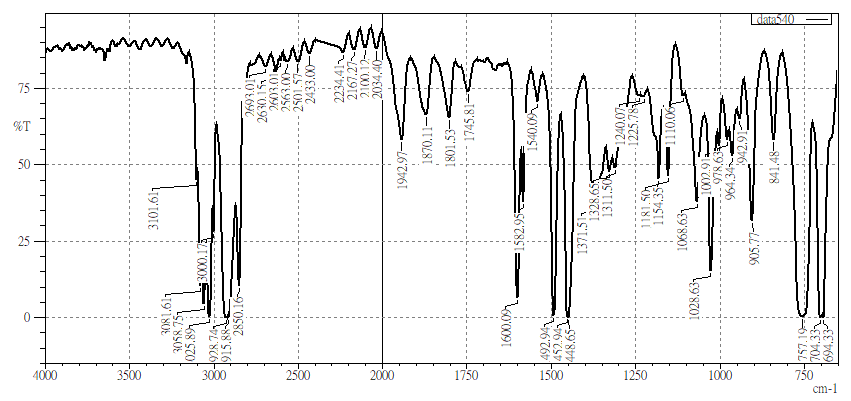
en&2