
heteroatom-containing organic material with possible amine/alcohol character
Oglejte si poročilo zgoraj. Uporabite komentarje spodaj, če potrebujete nadaljnjo razpravo.
heteroatom-containing organic material with possible amine/alcohol character
Parametri vzorca in meritve
Rezultat identifikacije
0%FTIR dokazi ne podpirajo trdne identifikacije materiala. Najbližji zadetek iz spektralne knjižnice je Poli(etilenimin), modificiran z epiklorohidrinom, vendar je zaupanje v ujemanje dejansko odsotno in nobeni neposredni ali sorodni literaturni dokazi ne podpirajo te dodelitve. Opazovani spekter prevladuje širok pas pri približno 3321 cm-1, pas pri približno 1025 cm-1 in več šibkih značilnosti v območju 1900-2300 cm-1, ki so skupaj bolj skladni s širokim organskim materialom, ki vsebuje heteroatome, potencialno z vodikovo vezanimi O-H in/ali N-H skupinami, kot z varno identificiranim specifičnim polimerom ali žveplovim heterociklom.
Podrobna interpretacija
- Najboljši zadetek knjižnice: Poly(ethylenimine),epichlorohydrin modified #7725 | match 0.0%
- Prva dva kandidata iz spektralne knjižnice sta materiala, povezana s poliamini: Poli(etilenimin), modificiran z epiklorohidrinom, in Poli(etilenimin).
- Opazovani pas pri 3321 cm-1 je združljiv z materiali, ki vsebujejo amin ali alkohol.
- Pas pri 1025 cm-1 je združljiv s funkcionalnostjo C-N ali C-O, kar je smiselno za materiale, podobne poliaminom/poliolom, med vodilnimi kandidati.
- Več vodilnih kandidatov vsebuje znatno vsebnost heteroatomov, zato je široka organska smer z heteroatomi varneje podprta kot specifična imenovana snov.
- Široka absorpcija pri 3321 cm-1 je skladna z raztezanjem vodikovo vezanih O-H in/ali N-H.
- Pas pri 1025 cm-1 podpira raztezanje tipa C-O in/ali C-N v organskem materialu, ki vsebuje kisik ali dušik.
- Značilnost pri 1513 cm-1 lahko odraža deformacijo organskega ogrodja ali upogibanje, povezano z N-H, vendar sama po sebi ni dovolj specifična.
- Več značilnosti pri 1902, 1980, 2071, 2159, 2236 in 2334 cm-1 je netipičnih kot skladen identifikacijski vzorec za najboljšega kandidata iz spektralne knjižnice in lahko vključujejo šibke kombinacijske pasove, atmosferske prispevke ali manjše komponente.
- Vzorec prvih 15 iz spektralne knjižnice je notranje neskladen, zajema poliamine, poliole, soli, barvila in žveplove obročne sisteme namesto enega kemično skladnega razreda.
- Vse navedene podobnosti iz spektralne knjižnice so 0.000, zato iskanje po knjižnici ne zagotavlja zanesljivega neposrednega ujemanja.
- Konsenzna opomba knjižnice, ki kaže na žveplov heterocikel / metil, ni prepričljivo odražena v opazovanem nizu vrhov, ki nima jasnih značilnih dokazov za aromatski žveplov heterocikel.
- Opazovani niz vrhov ne kaže značilnega, popolnega vzorca, ki bi pričakovano varno potrdil imenovanega najboljšega kandidata.
- Široka značilnost pri 3321 cm-1 ne more zanesljivo razlikovati med materiali, bogatimi z O-H in N-H.
- Šibka struktura v območju 1900-2300 cm-1 ostaja dvoumna in morda ne pripada glavni kemiji vzorca.
- Brez močnejšega ujemanja v območju prstnih odtisov sedanji podatki ne morejo ločiti med poliamini, polioli ali drugimi organskimi možnostmi, ki vsebujejo heteroatome.
- Specifična identifikacija na ravni entitete ni podprta zgolj s trenutnimi FTIR dokazi.
Primerjava knjižnic
Rezultati iskanja po knjižnici — najboljših 15 kandidatov
| Uvrstitev | Ujemanje % | Spojina | SMILES | Št. spektra | {'index': 16, 'corrected': 'Samo na podlagi ujemanja s knjižnico, razvrščenega po podobnosti.'} |
|---|---|---|---|---|---|
| Nalaganje kandidatov knjižnice... | |||||
Analiza vrhov
★ = Dodelitev, podprta z literaturo| # | Valovno število (cm⁻¹) | {'index': 12, 'corrected': 'Dodeljena skupina'} | Dodelitev | {'index': 33, 'corrected': 'Kontakt'} | {'index': 21, 'corrected': 'ŠTEVILKA CAS'} | |
|---|---|---|---|---|---|---|
| 1 | · | 1025 | 1.00 | - | - | - |
| 2 | · | 897 | 0.61 | - | - | - |
| 3 | · | 1513 | 0.35 | - | - | - |
| 4 | · | 1980 | 0.32 | - | - | - |
| 5 | · | 3321 | 0.30 | - | - | - |
| 6 | · | 2159 | 0.25 | - | - | - |
| 7 | · | 1902 | 0.23 | - | - | - |
| 8 | · | 2236 | 0.21 | - | - | - |
| 9 | · | 2071 | 0.21 | - | - | - |
| 10 | · | 2334 | 0.20 | - | - | - |
Dodatek – neobdelan spekter

Komentarji in nadaljnji dokazi
Uporabite to področje za nadaljevanje interpretacije, postavljanje vprašanj ali dodajanje dodatnih dokazov za preverjanje.
This is the FTIR analysis result of a TIFF file uploaded by a user with IP156.xx.xx.163 The original image is shown below.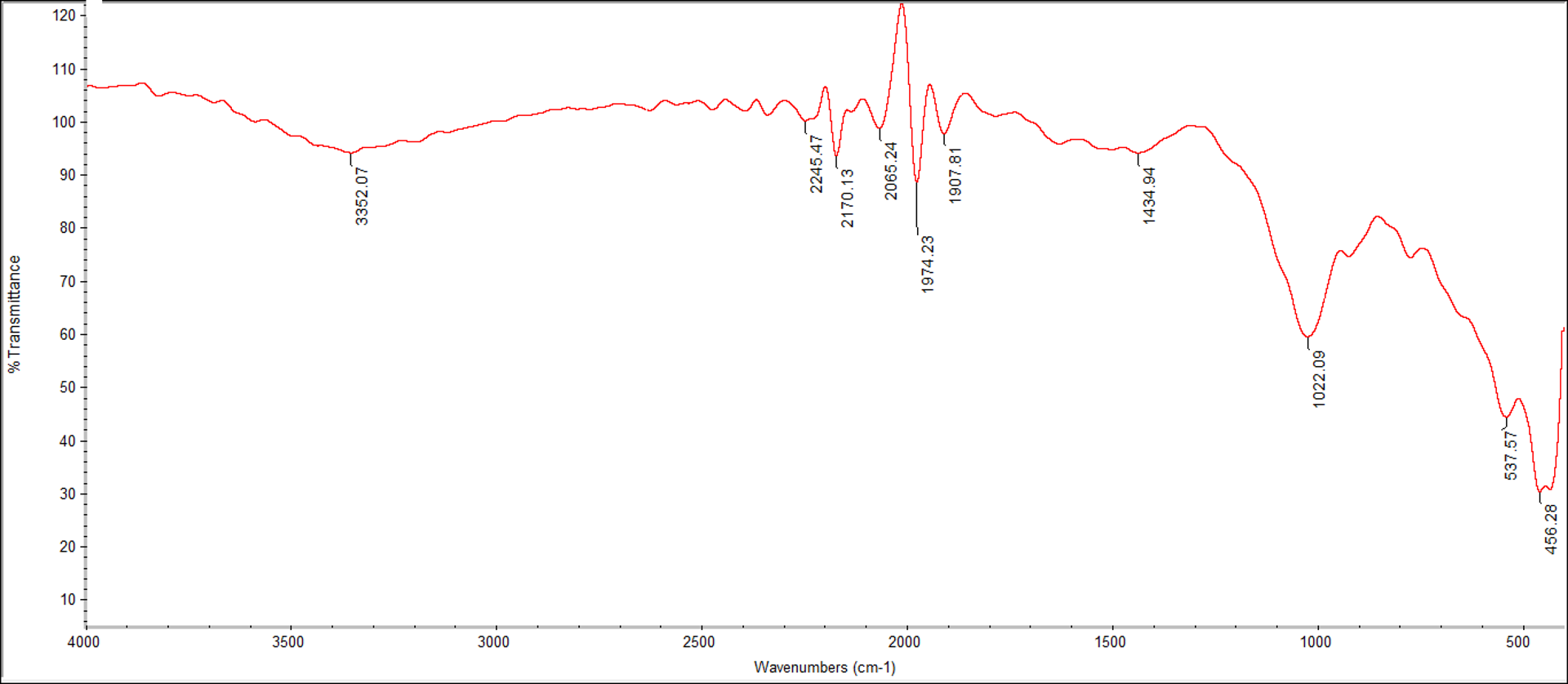
en&2