
nitrile- and methyl-containing organic material
పై నివేదికను వీక్షించండి. మీకు ఫాలో-అప్ చర్చ అవసరమైతే క్రింద వ్యాఖ్యలను ఉపయోగించండి.
nitrile- and methyl-containing organic material
నమూనా & కొలత పారామితులు
గుర్తింపు ఫలితం
0%సాధారణ FTIR శోధన ఈ నమూనాను కాల్షియం;మెగ్నీషియం;డైకార్బొనేట్గా గట్టి గుర్తింపుకు మద్దతు ఇవ్వదు, ఎందుకంటే ఆ లైబ్రరీ ఎంట్రీ మొదటి స్థానంలో ఉన్నప్పటికీ, నివేదించబడిన అన్ని లైబ్రరీ సారూప్యతలు 0.000 మరియు ప్రత్యక్ష లేదా సంబంధిత సాహిత్య సాక్ష్యం కేటాయింపును తగ్గించదు. విస్తృత లైబ్రరీ నమూనా నుండి మరింత రసాయనికంగా మద్దతు ఇవ్వగల చదువు కేవలం తాత్కాలిక సేంద్రీయ దిశ మాత్రమే: నైట్రైల్- మరియు మీథైల్-కలిగిన పదార్థం, బహుశా సుగంధ లేదా రింగ్-కలిగిన లక్షణంతో. ఈ దిశ విస్తృతంగా ఉంది ఎందుకంటే 845, 1142, 1243, 1269, 1423 మరియు 1585 cm⁻¹ వద్ద గమనించిన బ్యాండ్లు సాధారణ ~2210–2260 cm⁻¹ ప్రాంతం సమీపంలో స్పష్టంగా నివేదించబడిన నైట్రైల్ సాగదీసే బ్యాండ్ను కలిగి ఉండవు మరియు ప్రస్తుత సాక్ష్యం నిర్దిష్ట సమ్మేళనం-స్థాయి ముగింపుకు అవసరమైన కీలక ఫంక్షనల్ గ్రూపులను స్థాపించదు
వివరణాత్మక వివరణ
- అత్యుత్తమ లైబ్రరీ మ్యాచ్: calcium;magnesium;dicarbonate #82401 | match 0.0%
- లైబ్రరీ ఏకాభిప్రాయం శోధన ఫలితాలలో ప్రధాన భాగస్వామ్య దిశాత్మక సూచనగా నైట్రైల్ / మీథైల్ వైపు స్పష్టంగా సూచిస్తుంది.
- అనేక అధిక ర్యాంకింగ్ లైబ్రరీ అభ్యర్థులు చిన్న సేంద్రీయ అణువులు లేదా ప్రత్యామ్నాయ రింగ్ వ్యవస్థలు, ఇవి నమ్మకమైన ఖనిజ ఉప్పు ముగింపు కంటే విస్తృత సేంద్రీయ దిశకు మద్దతు ఇస్తాయి.
- నమూనా 1423 మరియు 1585 cm⁻¹ వద్ద బ్యాండ్లతో సహా బహుళ ఫింగర్ప్రింట్-ప్రాంత శోషణలను చూపిస్తుంది, ఇది ప్రత్యామ్నాయ సేంద్రీయ కార్యాచరణ మరియు/లేదా రింగ్-సంబంధిత కంపనాల అవకాశంతో స్థిరంగా ఉంటుంది.
- అత్యుత్తమ ర్యాంక్ పొందిన లైబ్రరీ పేరు కాల్షియం;మెగ్నీషియం;డైకార్బొనేట్, కానీ తిరిగి పొందే విశ్వాసం స్పష్టంగా తక్కువగా ఉంది మరియు ప్రముఖ అభ్యర్థులకు సారూప్యత విలువలు అన్నీ 0.000.
- టాప్-15 లైబ్రరీ నమూనా సమ్మేళనం స్థాయిలో రసాయనికంగా అస్థిరంగా ఉంది, కానీ దాని పేర్కొన్న ఏకాభిప్రాయం కార్బొనేట్ ఉప్పు కేటాయింపు కంటే నైట్రైల్ / మీథైల్ వైపు సూచిస్తుంది.
- కొలిచిన స్పెక్ట్రం 845, 1142, 1243, 1269, 1423 మరియు 1585 cm⁻¹ వద్ద బ్యాండ్లను కలిగి ఉంది, ఇవి ప్రస్తుత సాక్ష్యంపై నమ్మకమైన అకర్బన బైకార్బొనేట్/కార్బొనేట్ గుర్తింపు కంటే సేంద్రీయ ఫింగర్ప్రింట్-ప్రాంత వివరణతో ఎక్కువ అనుకూలంగా ఉంటాయి.
- నివేదించబడిన అత్యుత్తమ హిట్, కాల్షియం;మెగ్నీషియం;డైకార్బొనేట్, నమ్మదగినదిగా మద్దతు ఇవ్వబడలేదు ఎందుకంటే దాని మ్యాచ్ స్కోరు 0.000 మరియు ధృవీకరించే సూచన సాక్ష్యం లేదు.
- ఇరుకైన నైట్రైల్ కేటాయింపు పరిమితంగా ఉంది ఎందుకంటే ఊహించిన ~2210–2260 cm⁻¹ ప్రాంతంలో లక్షణ నైట్రైల్ సాగదీసే బ్యాండ్ నివేదించబడలేదు.
- టాప్-15 అభ్యర్థులు రసాయనికంగా విభిన్నంగా ఉన్నారు, ఇది లైబ్రరీ శోధన నుండి ఏదైనా సమ్మేళనం-నిర్దిష్ట ముగింపును బలహీనపరుస్తుంది.
- ఈ నిర్దిష్ట నమూనా కోసం కార్బొనేట్, బైకార్బొనేట్, నైట్రైల్, సుగంధ ప్రతిక్షేపణ లేదా హాలోజనీకరణను ధృవీకరించే ప్రత్యక్ష సాహిత్య ప్రకటన లేదా సంబంధిత-సాహిత్య నమూనా లేదు.
- ప్రస్తుత శిఖర జాబితా కొరతగా ఉంది మరియు స్పెక్ట్రం యొక్క భాగానికి పరిమితం చేయబడింది, కాబట్టి ముఖ్యమైన గుర్తింపు ప్రాంతాలు వివరణ నుండి తప్పిపోవచ్చు.
- ప్రస్తుత సాక్ష్యం స్పష్టమైన సేంద్రీయ దిశ స్వచ్ఛమైన సమ్మేళనం, మిశ్రమం లేదా కలుషితమైన నమూనాను ప్రతిబింబిస్తుందో లేదో నిర్ణయించలేము.
- సంభావ్య సుగంధ/రింగ్ లక్షణం లైబ్రరీ నమూనా మరియు 1585 cm⁻¹ బ్యాండ్ నుండి మాత్రమే అనుమితి; ఇది ప్రస్తుత సాక్ష్యం నుండి సురక్షితంగా స్థాపించబడలేదు.
- అధిక-తరంగసంఖ్య మరియు నైట్రైల్-సాగదీసే ప్రాంతం లేకుండా, నమూనాను విస్తృత నైట్రైల్- మరియు మీథైల్-కలిగిన సేంద్రీయ పదార్థ దిశకు మించి సురక్షితంగా తగ్గించలేము.
లైబ్రరీ పోలిక
లైబ్రరీ శోధన ఫలితాలు — టాప్ 15 అభ్యర్థులు
| ర్యాంక్ | సరిపోలిక % | సమ్మేళనం | SMILES | స్పెక్ట్రం నం. | చర్య |
|---|---|---|---|---|---|
| లైబ్రరీ అభ్యర్థులను లోడ్ చేస్తోంది... | |||||
శిఖర విశ్లేషణ
★ = సాహిత్య-సమర్థిత నియామకంఅనుబంధం — రా స్పెక్ట్రమ్

వ్యాఖ్యలు మరియు ఫాలో-అప్ సాక్ష్యం
ఈ ప్రాంతాన్ని ఉపయోగించి వివరణ కొనసాగించండి, ప్రశ్నలు అడగండి లేదా అదనపు ధృవీకరణ సాక్ష్యాన్ని జోడించండి.
This is the FTIR analysis result of a pdf file uploaded by a user with IP 2409::: The original image is shown below.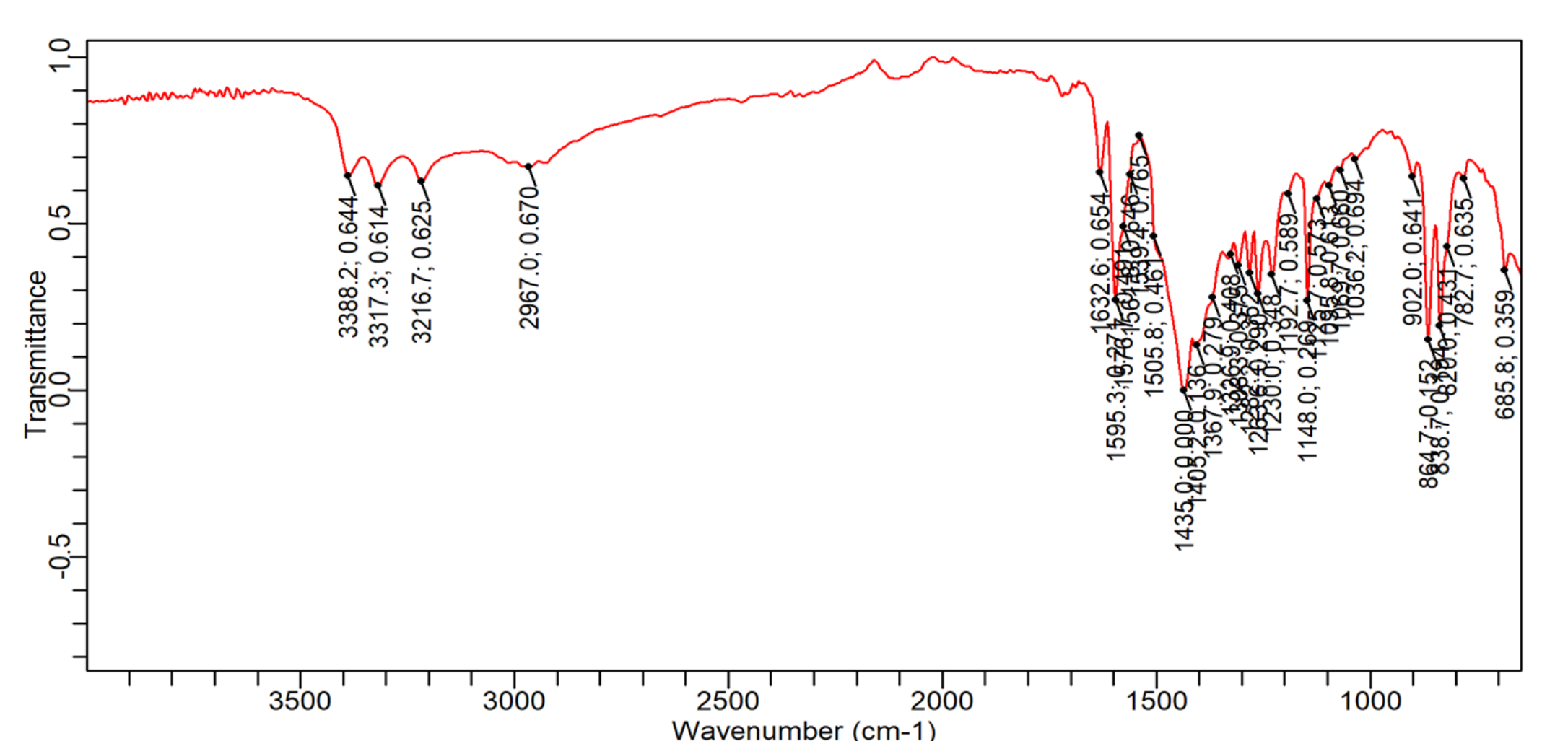
en&2