
परिणाम पृष्ठ
oxygen-containing inorganic or oxygenated surface material with hydroxyl/water contribution
वरील अहवाल पहा. फॉलो-अप चर्चेची आवश्यकता असल्यास खालील टिप्पण्या वापरा.
FTIR विश्लेषण अहवाल
oxygen-containing inorganic or oxygenated surface material with hydroxyl/water contribution
नमुना आणि मापन पॅरामीटर्स
अहवाल क्र.
20250420200457395596082
तारीख
2025-04-21 01:21:53
स्पेक्ट्रल श्रेणी (cm⁻¹)
[(650, 4000)]
बेसलाइन
अक्षम
लायब्ररी जुळणी
0%
ओळख परिणाम
0%FTIR शोध या नमुन्यासाठी विश्वसनीय विशिष्ट पदार्थ ओळख समर्थन देत नाही. जरी सर्वात जवळची संग्रह नोंद oxygen(-2) anion; yttrium(+3) cation आहे, तरी सर्व सूचीबद्ध संग्रह समानता 0.000 आहेत आणि कोणताही थेट संदर्भ किंवा संबंधित-साहित्य पुष्टी नाही. निरीक्षण केलेले स्पेक्ट्रम रूढीपणे ऑक्सिजन-युक्त पदार्थ म्हणून वर्णन केले जाऊ शकते ज्यामध्ये मजबूत हायड्रॉक्सिल किंवा शोषलेले पाणी योगदान आहे, संभाव्य कमी-तरंगसंख्या अजैविक किंवा पृष्ठभाग-संबंधित वैशिष्ट्यांसह.
तपशीलवार व्याख्या
- शीर्ष लायब्ररी जुळणी: oxygen(-2) anion; yttrium(+3) cation #75964 | जुळणी 0.0%
- FTIR शोध या नमुन्यासाठी विश्वसनीय विशिष्ट पदार्थ ओळख समर्थन देत नाही. जरी सर्वात जवळची संग्रह नोंद oxygen(-2) anion; yttrium(+3) cation आहे, तरी सर्व सूचीबद्ध संग्रह समानता 0.000 आहेत आणि कोणताही थेट संदर्भ किंवा संबंधित-साहित्य पुष्टी नाही. निरीक्षण केलेले स्पेक्ट्रम रूढीपणे ऑक्सिजन-युक्त पदार्थ म्हणून वर्णन केले जाऊ शकते ज्यामध्ये मजबूत हायड्रॉक्सिल किंवा शोषलेले पाणी योगदान आहे, संभाव्य कमी-तरंगसंख्या अजैविक किंवा पृष्ठभाग-संबंधित वैशिष्ट्यांसह.
- 3435 आणि 1650 cm-1 जवळील बँड्समधून मजबूत O-H/पाणी-संबंधित पुरावा उपलब्ध आहे.
- 3690, 3754, आणि 3856 cm-1 वर अतिरिक्त तीक्ष्ण उच्च-तरंगसंख्या O-H वैशिष्ट्ये हायड्रॉक्सिलेटेड किंवा पृष्ठभाग-हायड्रॉक्सिल वैशिष्ट्य दर्शवतात.
- अग्रगण्य संग्रह परिणामाचे नाव oxygen(-2) anion; yttrium(+3) cation आहे, जे किमान मोठ्या प्रमाणात ऑक्सिजन-समृद्ध अजैविक व्याख्येशी सुसंगत आहे.
- संग्रह सर्वसम्मती वर्णनात ऑक्सिजन-युक्त वैशिष्ट्याचा उल्लेख आहे, जे सु-परिभाषित हायड्रोकार्बन पदार्थापेक्षा निरीक्षण केलेल्या O-H आणि कमी-वारंवारता वैशिष्ट्यांशी अधिक सुसंगत आहे.
- मोजलेले बँड 857, 1540, 1650, 2306, 2355, 3435, 3690, 3754, आणि 3856 cm-1 वर आहेत.
- 3435 cm-1 जवळील रुंद बँड आणि 1650 cm-1 जवळील बँड हे हायड्रॉक्सिल गट किंवा शोषलेल्या पाण्यापासून O-H ताणणे आणि H-O-H वाकणे यांच्याशी सुसंगत आहे.
- 3690, 3754, आणि 3856 cm-1 वरील उच्च-तरंगसंख्या बँड्स कमकुवत हायड्रोजन-बंधित किंवा वेगळ्या O-H वातावरणाशी सुसंगत आहेत, जसे की पृष्ठभाग हायड्रॉक्सिल्स.
- 857 cm-1 बँड कमी-वारंवारता जाळी, धातू-ऑक्सिजन, किंवा ऑक्सिजनेटेड फ्रेमवर्क कंपन दर्शवू शकते, परंतु ते एकट्याने विशिष्ट संयुग नियुक्त करण्यासाठी पुरेसे नाही.
- 2306 आणि 2355 cm-1 बँड्स सामान्यतः वातावरणीय CO2 द्वारे प्रभावित होतात आणि नमुन्यापासून व्युत्पन्न असल्याचे स्वतंत्रपणे पुष्टी होईपर्यंत सावधगिरीने हाताळले पाहिजेत.
- टॉप-15 संग्रह पद्धत अत्यंत विसंगत आणि कमी जुळणारी आहे, म्हणून ती विशिष्ट घटकाऐवजी फक्त विस्तृत ऑक्सिजन-युक्त दिशा समर्थन करते.
- सर्व शीर्ष संग्रह उमेदवारांची समानता मूल्ये 0.000 आहेत, म्हणून संग्रह शोध विशिष्ट पदार्थासाठी सकारात्मक जुळणी समर्थन देत नाही.
- टॉप-15 उमेदवार असंबंधित रसायनशास्त्रांवर विस्तारतात, ज्यामध्ये अजैविक क्षार, ऑर्गनोटिन, पॉलीथिलीन, आम्ल, आणि सुगंधी संयुगे यांचा समावेश आहे, जे खराब विशिष्टता दर्शवते.
- विशिष्ट संयुग वर्गाची पुष्टी करण्यासाठी कोणताही संबंधित-साहित्य पुरावा प्राप्त झाला नाही.
- संग्रह दिशा सूचन ऑक्सिजन हेटरोसायकल / मिथाइल हे वास्तविक शिखर संचाद्वारे समर्थित नाही, ज्यामध्ये मिथाइल-प्रतिस्थापित सेंद्रिय हेटरोसायकलसाठी स्पष्ट वैशिष्ट्यपूर्ण C-H ताणणे आणि फिंगरप्रिंट पुरावा नाही.
- नमुना प्रामुख्याने अजैविक ऑक्साइड/हायड्रॉक्साइड, हायड्रेटेड पृष्ठभाग, किंवा शोषलेली आर्द्रता असलेले मिश्रित पदार्थ आहे की नाही हे अस्पष्ट आहे.
- 1540 cm-1 बँडचा उगम उपलब्ध पुराव्यावरून सुरक्षितपणे स्थापित केलेला नाही.
- 2306 आणि 2355 cm-1 वैशिष्ट्ये आंतरिक नमुना बँडपेक्षा पर्यावरणीय CO2 असू शकतात.
- मजबूत फिंगरप्रिंट-प्रदेश सहमती किंवा समर्थन संदर्भ डेटाशिवाय, विशिष्ट संग्रह हिट ओळख म्हणून हाताळला जाऊ शकत नाही.
लायब्ररी तुलना
लायब्ररी स्पेक्ट्रम येथे दिसेल.
लायब्ररी शोध परिणाम — शीर्ष 15 उमेदवार
| रँक | जुळणी % | संयुक्त | SMILES | स्पेक्ट्रम क्रमांक | क्रिया |
|---|---|---|---|---|---|
| लायब्ररी उमेदवार लोड करत आहे... | |||||
शिखर विश्लेषण
★ = साहित्य-समर्थित असाइनमेंटपरिशिष्ट — मूळ स्पेक्ट्रम

चर्चा
टिप्पण्या आणि पाठपुरावा पुरावे
व्याख्या सुरू ठेवण्यासाठी, प्रश्न विचारण्यासाठी किंवा अतिरिक्त पडताळणी पुरावे जोडण्यासाठी हे क्षेत्र वापरा.
This is the FTIR analysis result of a pdf file uploaded by a user with IP 106.XX.XXX.247 The original image is shown below.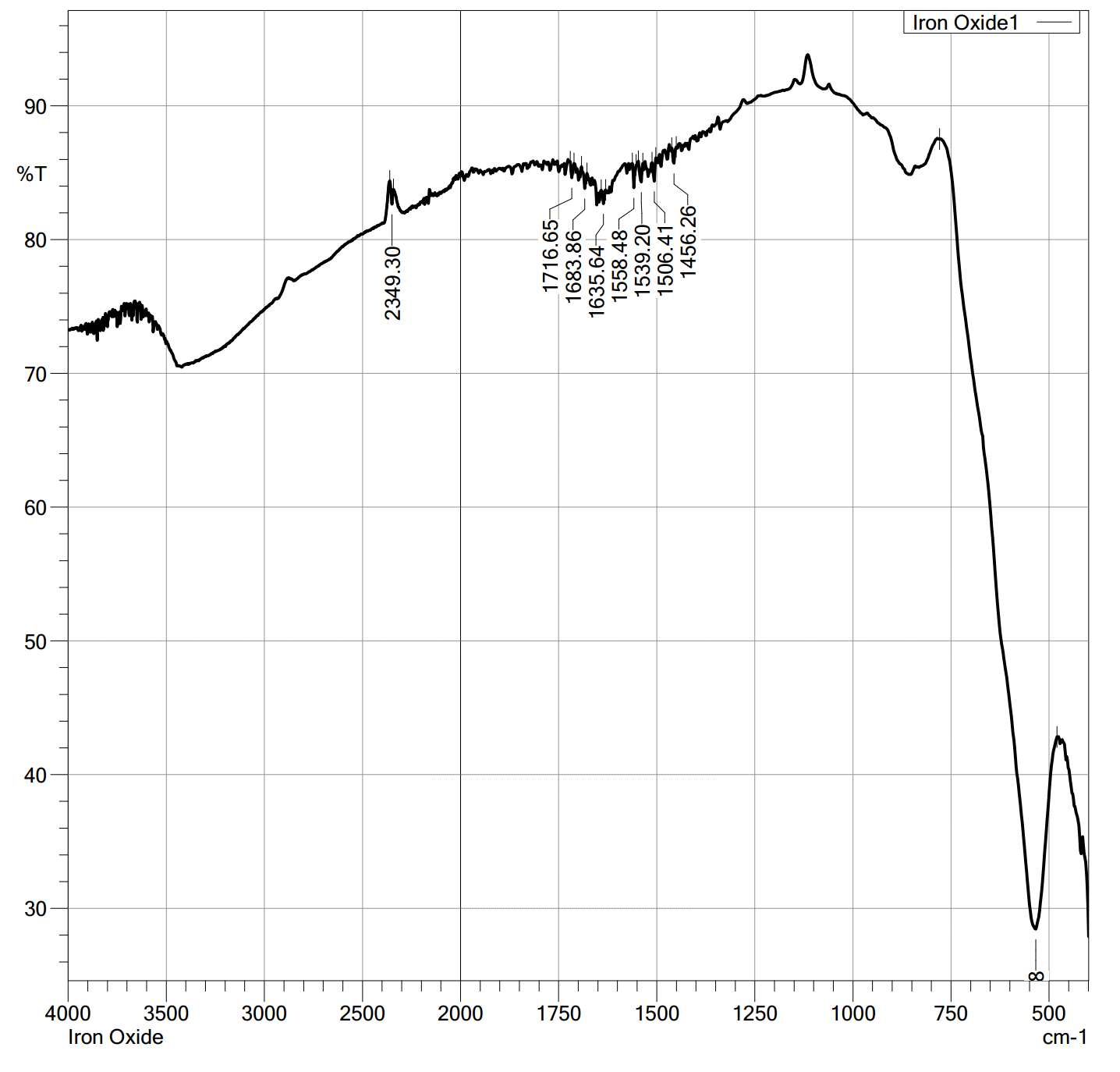
en&2