
PUBLIC SPECTRUM SEARCH
oxygen(-2) anion; yttrium(+3) cation
Free public result — the submitted spectrum with its top library candidates, not an AI identification.
SPECTRUM & LIBRARY MATCHES
Submitted spectrum and top library candidates

Top 15 library matches
| # | Reference | CAS | Similarity |
|---|---|---|---|
| 1 | oxygen(-2) anion; yttrium(+3) cation | 1314-36-9 | - |
| 2 | butyl-hydroxy-oxotin | 2273-43-0 | - |
| 3 | polyethylene | 9002-88-4 | - |
| 4 | Selenous acid | 7783-00-8 | - |
| 5 | Selenous acid | 7783-00-8 | - |
| 6 | none | none | - |
| 7 | acetic acid;hydrazine | 13255-48-6 | - |
| 8 | disodium hydrogen arsorate heptahydrate | 10048-95-0 | - |
| 9 | 3-Hydroxybenzonitrile | 873-62-1 | - |
| 10 | Calcium dichloride dihydrate | 10035-04-8 | - |
| 11 | 3-Aminophthalic acid hydrochloride | 6946-22-1 | - |
| 12 | 2-carbamoylbenzoic acid | 88-97-1 | - |
| 13 | chromium(+2) cation dichloride | 10049-05-5 | - |
| 14 | tetramethylazanium;fluoride;tetrahydrate | 17787-40-5 | - |
| 15 | magnesium;2-oxidooxycarbonylbenzoate;hexahydrate | 84665-66-7 | - |
Discussion
Comments and follow-up evidence
Use this area to continue the interpretation, ask questions, or add extra verification evidence.
This is the FTIR analysis result of a pdf file uploaded by a user with IP 106.XX.XXX.247 The original image is shown below.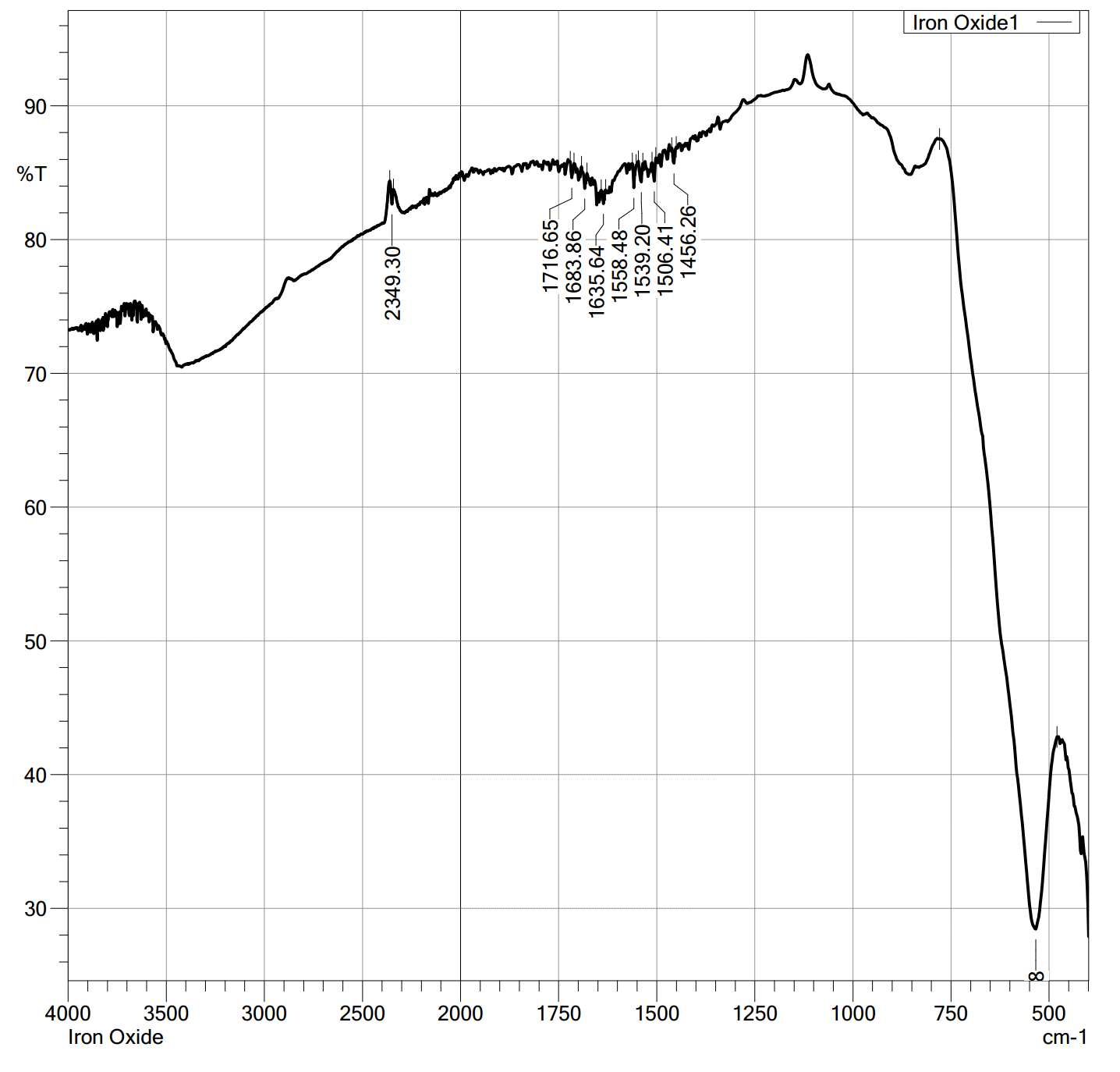
en&2