
PAGE DE RÉSULTATS
aliphatic hydrocarbon material with methyl-substituted saturated chain or ring character
Consultez le rapport ci-dessus. Utilisez les commentaires ci-dessous si vous avez besoin d'une discussion de suivi.
Rapport d'analyse FTIR
aliphatic hydrocarbon material with methyl-substituted saturated chain or ring character
Paramètres d'échantillon et de mesure
Rapport n°
20250417141837629213870
Date
2025-04-17 10:26:07
Plage spectrale (cm⁻¹)
[(650, 4000)]
Ligne de base
Correction de ligne de base AsLS
Correspondance de bibliothèque
0%
Résultat d'identification
0%Le motif FTIR est le plus cohérent avec un matériau hydrocarboné aliphatique largement saturé présentant des bandes d'étirement et de flexion CH contenant des méthyles, mais la correspondance de la bibliothèque avec le 1,4-diméthylcyclohexane n'est pas assez solide pour soutenir une identification ferme d'un seul composé. Le spectre observé correspond mieux à une direction hydrocarbonée plus large qu'à une molécule spécifique nommée.
Interprétation détaillée
- Meilleure correspondance de bibliothèque: 1,4-Diméthylcyclohexane #9446 | match 0.0%
- Le motif FTIR est le plus cohérent avec un matériau hydrocarboné aliphatique largement saturé présentant des bandes d'étirement et de flexion CH contenant des méthyles, mais la correspondance de la bibliothèque avec le 1,4-diméthylcyclohexane n'est pas assez solide pour soutenir une identification ferme d'un seul composé. Le spectre observé correspond mieux à une direction hydrocarbonée plus large qu'à une molécule spécifique nommée.
- Les pics observés à 2848, 2916 et 2949 cm-1 sont caractéristiques de l'étirement aliphatique sp3 C-H.
- Les pics observés à 1459 et 1374 cm-1 soutiennent la déformation CH2/CH3, cohérente avec un matériau aliphatique substitué par des méthyles.
- Les principaux candidats de la bibliothèque se regroupent autour d'hydrocarbures saturés contenant des méthyles et de matériaux de type polyoléfine.
- L'échantillon montre un fort étirement aliphatique C-H à 2848, 2916 et 2949 cm-1 accompagné de bandes de déformation méthyle/méthylène à 1459 et 1374 cm-1, ce qui soutient un squelette hydrocarboné saturé contenant des groupes méthyles.
- Les bandes à 718, 840, 972 et 998 cm-1 indiquent une structure de région d'empreinte digitale au sein d'un matériau aliphatique, mais elles ne sont pas suffisamment distinctives en elles-mêmes pour confirmer spécifiquement le petit cycloalcane récupéré.
- Le motif des 15 premiers de la bibliothèque est dominé par des candidats de type hydrocarboné tels que les isomères du diméthylcyclohexane, les matériaux polypropylène/éthylène-propylène et le poly(1-butène), ce qui soutient collectivement une direction d'hydrocarbure saturé riche en méthyles.
- La confiance de la bibliothèque est faible, avec toutes les similitudes rapportées à 0,0, donc la meilleure correspondance ne peut pas être traitée comme une identification d'entité fiable.
- La liste des caractéristiques récupérées comprend des indices liés aux hétéroatomes tels que l'oxygène, le carbonyle, le chlore, le brome et des termes associés au soufre, mais ceux-ci ne sont pas soutenus de manière convaincante par l'ensemble des pics observés.
- Le spectre ne montre pas de bandes de confirmation claires qui permettraient de distinguer de manière fiable un petit cycloalcane spécifique d'une polyoléfine ou d'un autre matériau hydrocarboné saturé.
- Il reste incertain si l'échantillon est un composé discret de type cycloalcane ou un matériau de type polymère hydrocarboné/polyoléfine.
- Des bandes d'empreinte digitale dans la région 700-1200 cm-1 sont présentes mais insuffisamment spécifiques ici pour une attribution étroite.
- Sans correspondances de référence ou de littérature corroborantes, les preuves actuelles ne soutiennent qu'une direction large d'hydrocarbure aliphatique.
Comparaison de bibliothèques
Le spectre de la bibliothèque apparaîtra ici.
Résultats de recherche dans la bibliothèque — Top 15 des candidats
| Rang | Correspondance % | Composé | SMILES | N° de spectre | Action |
|---|---|---|---|---|---|
| Chargement des candidats de la bibliothèque... | |||||
Analyse des pics
★ = Attribution soutenue par la littérature| # | Nombre d'onde (cm⁻¹) | Absorbance | Attribution | Citation | État de l'attribution | |
|---|---|---|---|---|---|---|
| 1 | · | 2916 | 1.00 | - | - | - |
| 2 | · | 1374 | 0.59 | - | - | - |
| 3 | · | 2949 | 0.57 | - | - | - |
| 4 | · | 2848 | 0.44 | - | - | - |
| 5 | · | 1459 | 0.43 | - | - | - |
| 6 | · | 998 | 0.23 | - | - | - |
| 7 | · | 1031 | 0.22 | - | - | - |
| 8 | · | 1100 | 0.18 | - | - | - |
| 9 | · | 972 | 0.17 | - | - | - |
| 10 | · | 1166 | 0.14 | - | - | - |
| 11 | · | 718 | 0.13 | - | - | - |
| 12 | · | 840 | 0.11 | - | - | - |
Annexe — Spectre brut

Discussion
Commentaires et preuves de suivi
Utilisez cette zone pour poursuivre l'interprétation, poser des questions ou ajouter des preuves de vérification supplémentaires.
This IR spectrum is one of the files previously uploaded by a user from India (IP: 14.xxx.xxx.121). Since the uploaded files already include CSV or SPA formats—both of which support direct web-based queries—please upload each SPA or CSV file individually for analysis, rather than in a ZIP archive.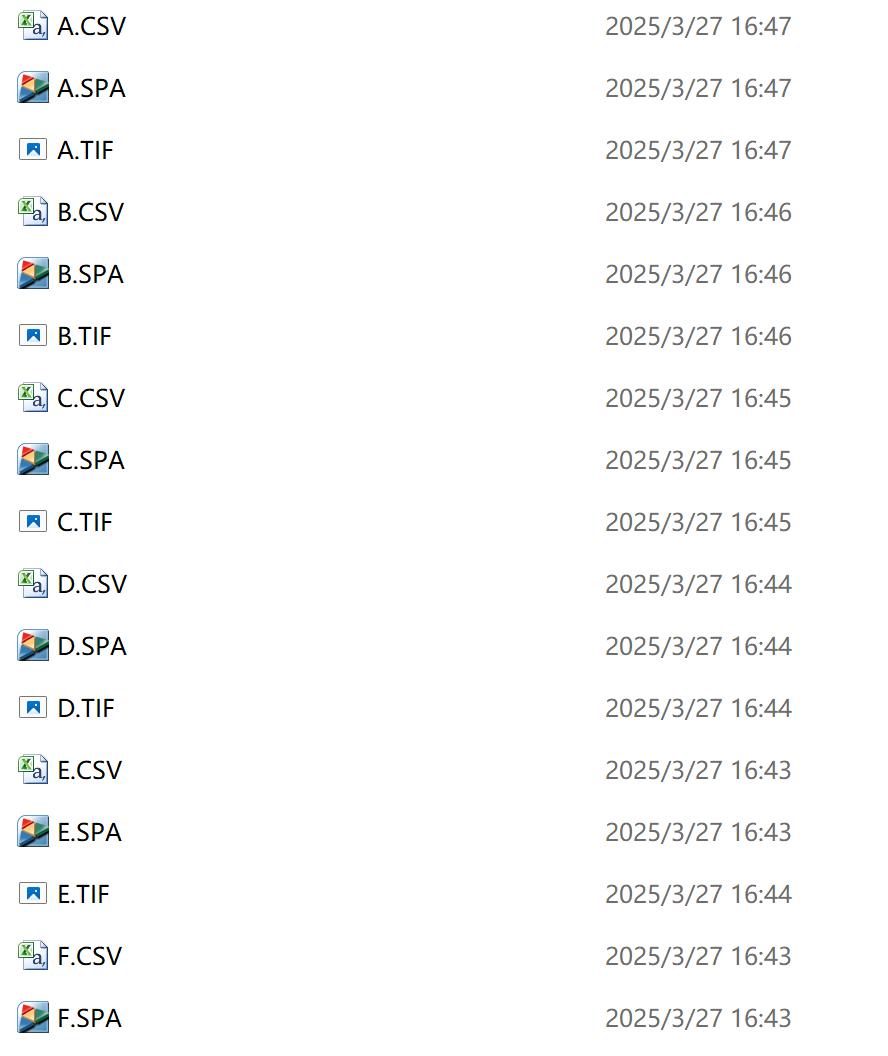
en&2