
oxygenated hydrocarbon material with aliphatic C-H and hydroxyl/carbonyl functionality, possibly including a vinyl chloride-containing polymer component
Visualizza il rapporto sopra. Usa i commenti qui sotto se hai bisogno di una discussione di follow-up.
oxygenated hydrocarbon material with aliphatic C-H and hydroxyl/carbonyl functionality, possibly including a vinyl chloride-containing polymer component
Parametri del campione e di misura
Risultato dell'identificazione
0%La corrispondenza più vicina nella libreria è POLYVINYL CHLORIDE, ma la qualità della corrispondenza è molto debole e non è sufficientemente supportata per una identificazione certa del materiale. Lo spettro osservato è meglio descritto in modo più ampio come un materiale organico ossigenato che mostra bande C-H alifatiche, una banda carbonilica forte e multiple caratteristiche O-H, con una certa coerenza di basso livello con le voci della libreria contenenti cloruro di vinile, ma senza un supporto caratteristico sufficiente per confermare il PVC stesso.
Interpretazione dettagliata
- Miglior match della libreria: POLYVINYL CHLORIDE #7953 | match 0.0%
- La corrispondenza più vicina nella libreria è POLYVINYL CHLORIDE, ma la qualità della corrispondenza è molto debole e non è sufficientemente supportata per una identificazione certa del materiale. Lo spettro osservato è meglio descritto in modo più ampio come un materiale organico ossigenato che mostra bande C-H alifatiche, una banda carbonilica forte e multiple caratteristiche O-H, con una certa coerenza di basso livello con le voci della libreria contenenti cloruro di vinile, ma senza un supporto caratteristico sufficiente per confermare il PVC stesso.
- Etichetta libreria più vicina: POLYVINYL CHLORIDE.
- Molti candidati principali includono polimeri contenenti cloruro di vinile, indicando una somiglianza a livello di pattern con quella regione della libreria.
- Le bande alifatiche C-H osservate a 2852, 2922 e 2955 cm-1 sono compatibili con materiali organici polimerici o plastificati.
- Il cluster della regione delle impronte digitali a 1005-1271 cm-1 supporta la funzionalità contenente ossigeno, coerente con diversi candidati della libreria contenenti copolimeri ossigenati o additivi.
- Il campione mostra bande di stiramento alifatico C-H a 2852, 2922 e 2955 cm-1, coerenti con uno scheletro idrocarburico organico o sostituenti.
- Una banda forte a 1727 cm-1 supporta la presenza di un componente contenente carbonile, che non è previsto per PVC non modificato come materiale unico.
- Le bande a 3439, 3527, 3619 e 3695 cm-1 indicano specie contenenti idrossile o O-H adsorbito/associato, favorendo ancora una volta un contributo di materiale ossigenato.
- Le bande a 1005, 1032, 1073, 1120 e 1271 cm-1 sono coerenti con assorbimenti C-O o correlati nella regione delle impronte digitali spesso osservati in organici ossigenati o additivi polimerici.
- Il pattern Top-15 della libreria include PVC e voci di tipo cloruro di vinile/acetato di vinile/alcol vinilico, suggerendo che una famiglia di polimeri vinilici clorurati è una possibile direzione, ma la fiducia complessiva del recupero è bassa e non esclusiva.
- Tutte le somiglianze riportate con la libreria sono effettivamente zero, quindi il recupero non fornisce un forte potere di identificazione.
- Lo spettro contiene una banda carbonilica chiara a 1727 cm-1, che contrasta con l'assegnazione di PVC puro come materiale unico.
- Le forti caratteristiche O-H a 3439-3695 cm-1 non sono un supporto sufficiente per una semplice assegnazione di PVC e suggeriscono contenuto ossigenato aggiuntivo, contaminazione superficiale, contributo di additivi o una classe di materiale diversa.
- Non è chiaro se le bande ossigenate derivino da un copolimero, da un pacchetto di plastificanti/additivi, da prodotti di degradazione o da contaminazione superficiale.
- Le prove attuali non stabiliscono in modo sicuro bande contenenti cloro abbastanza specifiche da confermare il PVC.
- Poiché non è stata trovata una corrispondenza diretta in letteratura, la conclusione attuale dovrebbe rimanere a un livello ampio di direzione del materiale piuttosto che a un'affermazione di entità.
Confronto librerie
Risultati della ricerca in libreria — Top 15 candidati
| Classifica | Corrispondenza % | Composto | SMILES | Numero spettro | Azione |
|---|---|---|---|---|---|
| Caricamento candidati libreria... | |||||
Analisi dei picchi
★ = Assegnazione supportata da letteratura| # | Numero d'onda (cm⁻¹) | Assorbanza | Assegnazione | Citazione | Stato dell'assegnazione | |
|---|---|---|---|---|---|---|
| 1 | · | 1727 | 1.00 | - | - | - |
| 2 | · | 1425 | 0.95 | - | - | - |
| 3 | · | 2922 | 0.92 | - | - | - |
| 4 | · | 1271 | 0.84 | - | - | - |
| 5 | · | 1120 | 0.65 | - | - | - |
| 6 | · | 2955 | 0.64 | - | - | - |
| 7 | · | 872 | 0.55 | - | - | - |
| 8 | · | 2852 | 0.54 | - | - | - |
| 9 | · | 1005 | 0.50 | - | - | - |
| 10 | · | 952 | 0.46 | - | - | - |
| 11 | · | 741 | 0.45 | - | - | - |
| 12 | · | 1032 | 0.43 | - | - | - |
| 13 | · | 1073 | 0.37 | - | - | - |
| 14 | · | 690 | 0.27 | - | - | - |
| 15 | · | 800 | 0.25 | - | - | - |
| 16 | · | 832 | 0.22 | - | - | - |
| 17 | · | 3695 | 0.20 | - | - | - |
| 18 | · | 1634 | 0.17 | - | - | - |
| 19 | · | 1579 | 0.14 | - | - | - |
| 20 | · | 2117 | 0.13 | - | - | - |
| 21 | · | 3619 | 0.13 | - | - | - |
| 22 | · | 3439 | 0.12 | - | - | - |
| 23 | · | 3527 | 0.12 | - | - | - |
| 24 | · | 3074 | 0.12 | - | - | - |
| 25 | · | 2670 | 0.11 | - | - | - |
| 26 | · | 2325 | 0.10 | - | - | - |
Appendice — Spettro grezzo

Commenti e prove di follow-up
Utilizza quest'area per continuare l'interpretazione, fare domande o aggiungere ulteriori prove di verifica.
This is the FTIR analysis result of a .dx file uploaded by a user with IP 191.XX.XXX.255 The original image is shown below.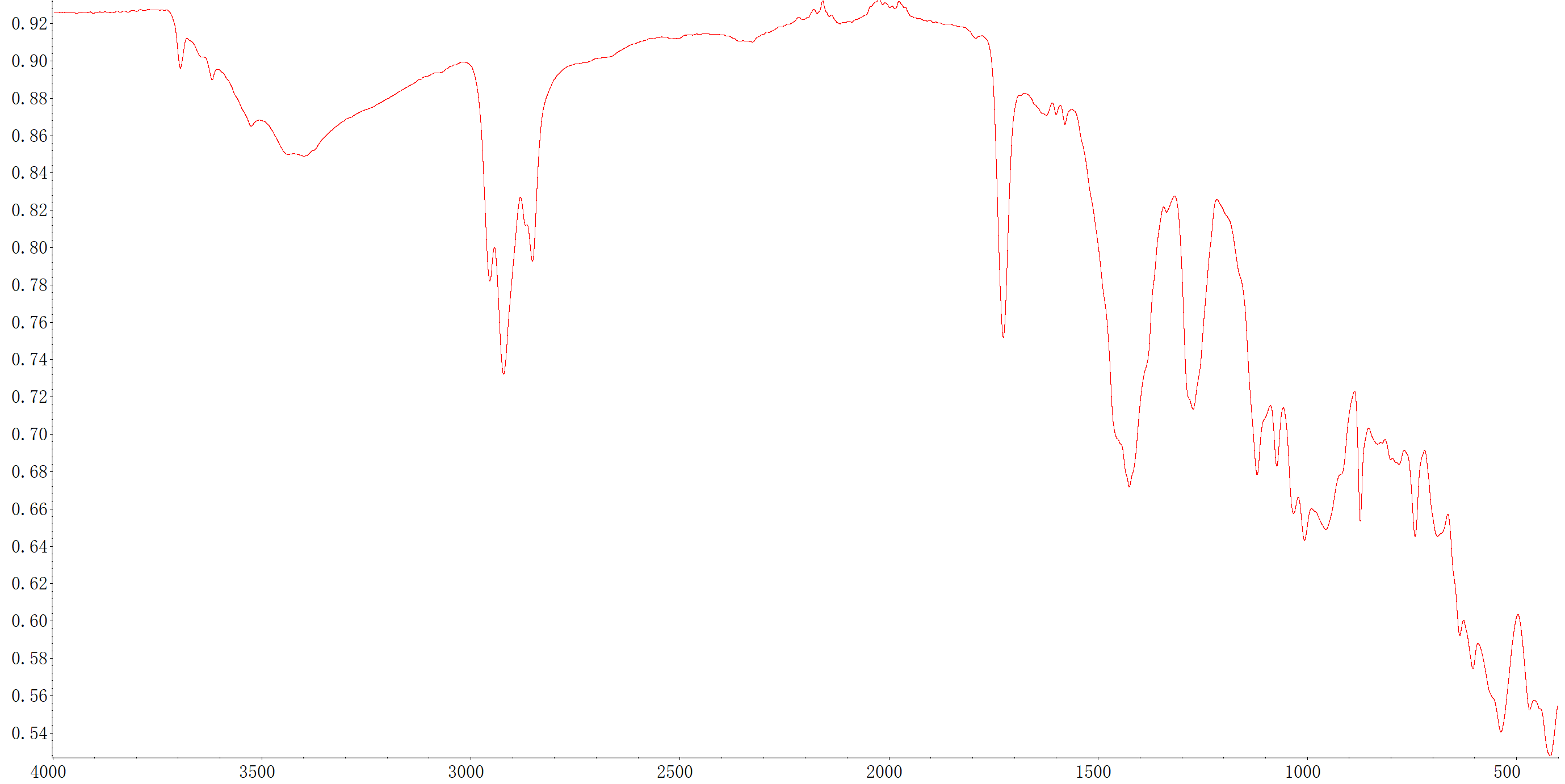
en&2