
heteroatom-containing aromatic organic compound
Yuxarıdakı hesabata baxın. Əlavə müzakirə ehtiyacınız varsa aşağıdakı şərhlərdən istifadə edin.
heteroatom-containing aromatic organic compound
Nümunə və Ölçmə Parametrləri
İdentifikasiya nəticəsi
0%Mövcud FTIR nəticəsi möhkəm birləşmə səviyyəsində identifikasiyanı dəstəkləmir. Kitabxana zirvə hiti 5,6,8-trihidroksi-7-metilnaftalin-1,4-diondur, lakin bütün bildirilən kitabxana oxşarlıqları 0.000-dir və nümunədə yalnız 1584 sm-1-də tək bir müşahidə olunan zolaq var. Bu zolaq ümumi aromatik halqa və ya birləşmiş heteroatom tərkibli üzvi quruluşla uyğundur, lakin spesifik xinonabənzər zirvə namizədini və ya geniş kitabxana nümunəsində görünən alternativ azot, nitro, kükürd və ya halogen tərkibli namizədləri təsdiqləmək üçün kifayət deyil. Buna görə də ən kimyəvi cəhətdən dəstəklənən nəticə geniş heteroatom tərkibli aromatik üzvi birləşmədir.
Ətraflı şərh
- Ən yaxşı kitabxana uyğunluğu: 5,6,8-trihydroxy-7-methylnaphthalene-1,4-dione #51997 | uyğunluq 0.0%
- Mövcud FTIR nəticəsi möhkəm birləşmə səviyyəsində identifikasiyanı dəstəkləmir. Kitabxana zirvə hiti 5,6,8-trihidroksi-7-metilnaftalin-1,4-diondur, lakin bütün bildirilən kitabxana oxşarlıqları 0.000-dir və nümunədə yalnız 1584 sm-1-də tək bir müşahidə olunan zolaq var. Bu zolaq ümumi aromatik halqa və ya birləşmiş heteroatom tərkibli üzvi quruluşla uyğundur, lakin spesifik xinonabənzər zirvə namizədini və ya geniş kitabxana nümunəsində görünən alternativ azot, nitro, kükürd və ya halogen tərkibli namizədləri təsdiqləmək üçün kifayət deyil. Buna görə də ən kimyəvi cəhətdən dəstəklənən nəticə geniş heteroatom tərkibli aromatik üzvi birləşmədir.
- 1584 sm-1 zolağı birləşmiş və ya aromatik üzvi çərçivənin mövcudluğunu dəstəkləyir.
- Bir neçə aparıcı namizəd doymamış və ya aromatik sistemlərə malikdir, bu da müşahidə olunan zolaqla ən azı geniş şəkildə uyğundur.
- Zirvə kitabxana namizədi oksigenlə zəngin aromatik xinonabənzər molekuldur, məhdud spektr tərəfindən istisna edilmir, lakin xüsusi olaraq təsdiqlənmir.
- Yalnız bir nümunə zolağı, 1584 sm-1-də bildirilir, bu, adətən aromatik C=C və ya digər birləşmiş skelet vibrasiyası ilə uyğundur.
- Adlandırılmış zirvə kitabxana hiti 5,6,8-trihidroksi-7-metilnaftalin-1,4-diondur, lakin axtarış etibarı açıq şəkildə aşağıdır və sadalanan oxşarlıq dəyərləri hamısı 0.000-dir.
- Top-15 kitabxana dəsti kimyəvi cəhətdən uyğunsuzdur, xinonlar, aromatik aldehidlər, nitro birləşmələr, azot heterotsiklləri, tioefirlər, karboksilatlar və halogenləşdirilmiş alifatiklər daxildir.
- Bu namizəd səpələnməsi ardıcıl, nümunə ilə dəstəklənən funksional qrup nümunəsinə malik olmadığı üçün axtarış dar material sinfi təyin etməyə əsas vermir.
- Zirvə namizədlər tərəfindən nəzərdə tutulan daha spesifik funksional qrupları dəstəkləmək üçün xarakterik karbonil, hidroksil, nitro, C-halogen, kükürd-oksigen və ya aydın şəkildə ayrılmış azot tərkibli zolaqlar bildirilmir.
- Kitabxana konsensus ifadəsi kükürd-oksigen və azot heterotsikl xarakterini ehtiva edir, lakin nümunə sübutları bu təyinatları təsdiqləmək üçün lazım olan zolaqları müstəqil şəkildə göstərmir.
- 1584 sm-1-də tək bir zolaq aromatik karbohidrogenlər, xinonlar, heteroaromatiklər və ya digər birləşmiş üzvi maddələr arasında fərq qoya bilməz.
- Xüsusi bir birləşməni və ya sinfi gücləndirmək üçün heç bir əlaqəli ədəbiyyat uyğunluğu tapılmadı.
- Əlavə bildirilən zirvələrin olmaması heteroatom funksional qruplarının mövcudluğunu və şəxsiyyətini qeyri-müəyyən buraxır.
Kitabxana müqayisəsi
Kitabxana Axtarış Nəticələri — İlk 15 Namizəd
| Sıralama | Uyğunluq % | Mürəkkəb | SMILES | Spektr nömrəsi | Əməliyyat |
|---|---|---|---|---|---|
| Kitabxana namizədləri yüklənir... | |||||
Pik Analizi
★ = Ədəbiyyatla dəstəklənən təyinat| # | Dalğa nömrəsi (cm⁻¹) | Absorbans | Təyinat | Sitat | Təyinat statusu | |
|---|---|---|---|---|---|---|
| 1 | · | 1584 | 1.00 | - | - | - |
Əlavə — Xam spektr

Şərhlər və əlavə sübutlar
Bu sahədən təfsiri davam etdirmək, sual vermək və ya əlavə yoxlama sübutları əlavə etmək üçün istifadə edin.
This is the FTIR analysis result of a pdf file uploaded by a user with IP 103.XX.XXX.194 The original image is shown below.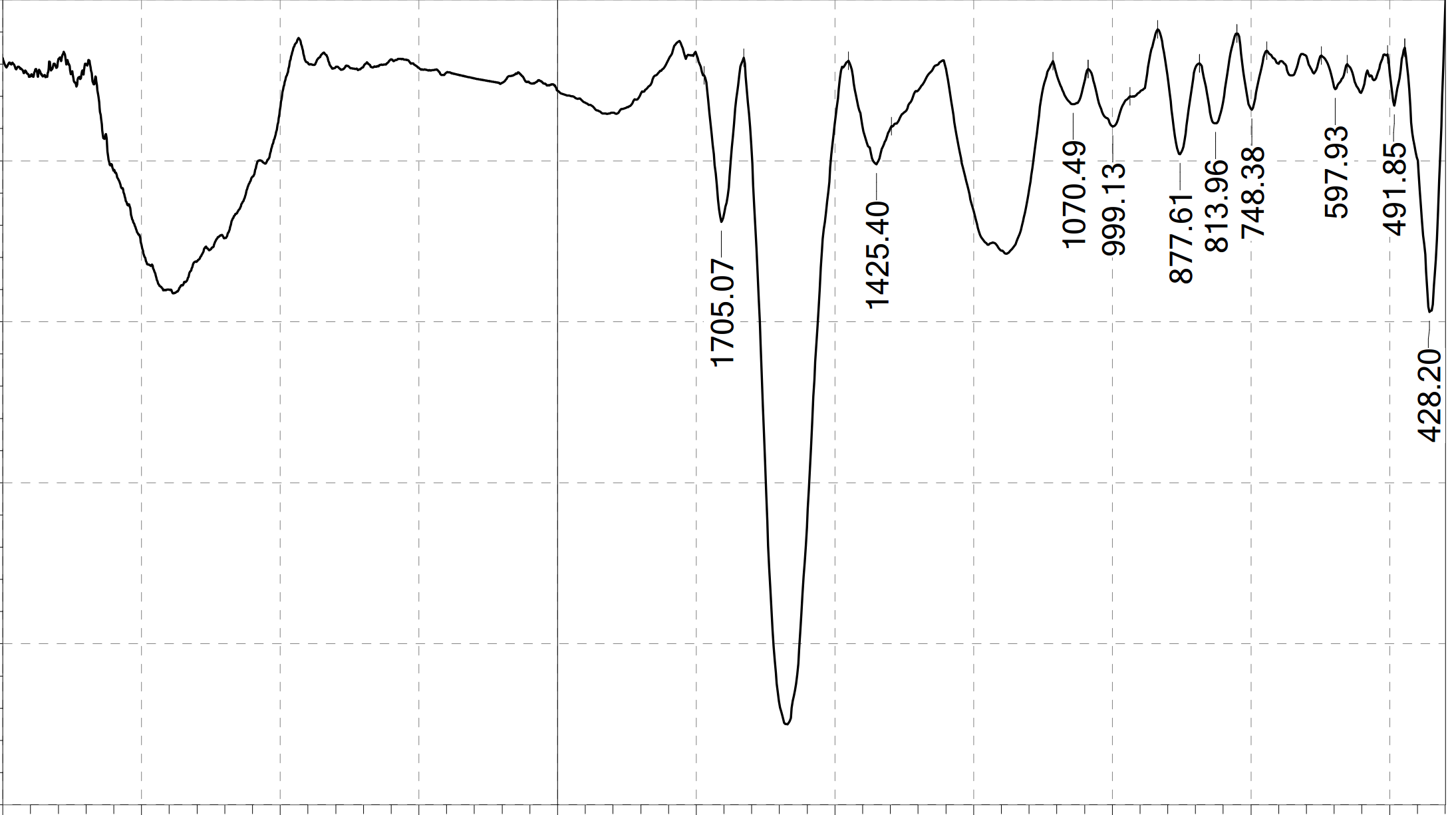
en&2