
oxygen-containing ester polymer or oligomer, possibly hydroxy-terminated
ดูรายงานด้านบน ใช้ความคิดเห็นด้านล่างหากคุณต้องการพูดคุยติดตามผล
oxygen-containing ester polymer or oligomer, possibly hydroxy-terminated
พารามิเตอร์ตัวอย่างและการวัด
ผลการระบุ
0%รูปแบบ FTIR สอดคล้องมากที่สุดกับวัสดุเอสเทอร์ที่มีออกซิเจน ซึ่งน่าจะเป็นสปีชีส์พอลิเมอร์หรือโอลิโกเมอร์มากกว่าไฮโดรคาร์บอนธรรมดา หลักฐานตัวอย่างที่แข็งแกร่งที่สุดคือบริเวณคาร์บอนิลที่ 1708 และ 1725 cm-1 ร่วมกับแถบการยืด C-O หลายแถบที่ 1055, 1098, 1165, 1178, 1240 และ 1285 cm-1 รวมถึง C-H อะลิฟาติกที่ 2935 cm-1 และบริเวณ O-H/N-H กว้างใกล้ 3373 cm-1 ผลการค้นหาอันดับแรกในคลังสเปกตรัมคือ Poly(caprolactone),monohydroxy terminated และรูปแบบผู้สมัครอันดับต้นๆ ที่กว้างกว่านั้นถูกครอบงำโดยพอลิเมอร์เอสเทอร์ที่มีออกซิเจน เช่น วัสดุประเภทไฮดรอกซีเอทิลเมทาคริเลตและโพลีเอสเทอร์ อย่างไรก็ตาม คุณภาพการจับคู่คลังสเปกตรัมนั้นอ่อนมาก และไม่มีหลักฐานโดยตรงหรือจากวรรณกรรมที่เกี่ยวข้องที่ยืนยันพอลิเมอร์ที่มีชื่อเฉพาะอย่างอิสระ ด้วยเหตุนี้ ข้อสรุปที่สนับสนุนได้มากที่สุดคือทิศทางที่กว้างกว่าของพอลิเมอร์หรือโอลิโกเมอร์เอสเทอร์ที่มีออกซิเจน ซึ่งอาจมีปลายหมู่ไฮดรอกซี แทนที่จะระบุเป็น Poly(caprolactone),monohydroxy terminated อย่างแน่นอน
การตีความโดยละเอียด
- การจับคู่คลังที่ดีที่สุด: Poly(caprolactone),monohydroxy terminated #65435 | match 0.0%
- แถบที่ 1708 และ 1725 cm-1 สนับสนุนหมู่คาร์บอนิลหนึ่งหมู่หรือมากกว่าในสภาพแวดล้อมคล้ายเอสเทอร์
- แถบที่ 1055, 1098, 1165, 1178, 1240 และ 1285 cm-1 สนับสนุนการสั่นยืด C-O หลายครั้งที่คาดหวังสำหรับโครงสร้างที่มีออกซิเจนคล้ายเอสเทอร์และอีเทอร์
- แถบที่ 3373 cm-1 สนับสนุนการมีหมู่ไฮดรอกซิลหรือความชื้นที่เกิดพันธะไฮโดรเจนที่เกี่ยวข้องกับวัสดุที่มีออกซิเจน
- รูปแบบคลังสเปกตรัมอันดับแรกประกอบด้วย Poly(caprolactone),monohydroxy terminated, Poly(2-hydroxyethyl methacrylate), poly(hexamethylene sebacate) และ poly(trimethylene succinate) ซึ่งทั้งหมดมีเคมีเอสเทอร์ที่มีออกซิเจนร่วมกัน
- ตัวอย่างแสดงลักษณะคาร์บอนิลคล้ายเอสเทอร์ที่แข็งแกร่งในบริเวณ 1708-1725 cm-1 ร่วมกับแถบ C-O ที่เป็นลักษณะเฉพาะหลายแถบตั้งแต่ 1055 ถึง 1285 cm-1
- แถบที่ 2935 cm-1 สนับสนุน C-H อะลิฟาติก ซึ่งเข้ากันได้กับโครงสร้างหลักของโพลีเอสเทอร์หรือเมทาคริเลตที่มีส่วนของอัลคิล
- แถบกว้างที่ 3373 cm-1 บ่งชี้ถึงไฮดรอกซิลและอาจมีความชื้นหรือการมีส่วนร่วมของ N-H ที่อ่อน; ในบริบทนี้สอดคล้องกับวัสดุที่มีออกซิเจนและหมู่ไฮดรอกซี
- ในบรรดาผู้สมัครคลังสเปกตรัมชั้นนำ เคมีที่เกิดซ้ำคือวัสดุอินทรีย์ที่อุดมด้วยออกซิเจน โดยเฉพาะพอลิเมอร์ที่มีเอสเทอร์และสารประกอบที่มีออกซิเจนที่เกี่ยวข้อง
- ผลการค้นหาคลังสเปกตรัมที่ดีที่สุดมีความคล้ายคลึงที่รายงานเป็นศูนย์ ดังนั้นการจับคู่ที่มีชื่อจึงไม่แข็งแกร่งพอสำหรับการระบุระดับเอนทิตีที่แน่นอน
- รายการพีคที่สังเกตไม่ได้ให้รูปแบบการระบุที่ไม่ซ้ำกันที่แยกพอลิแคโปรแลกโตนออกจากพอลิเมอร์หรือโอลิโกเมอร์เอสเทอร์ที่มีออกซิเจนอื่นๆ ในชุดผู้สมัครอันดับต้นๆ ได้อย่างชัดเจน
- ยังคงไม่แน่ชัดว่าตัวอย่างเป็นพอลิแคโปรแลกโตนโดยเฉพาะ พอลิเมอร์ที่มีฐานเป็นไฮดรอกซีเอทิลเมทาคริเลต โพลีเอสเทอร์อะลิฟาติกอื่น หรือโอลิโกเมอร์ที่มีออกซิเจนที่เกี่ยวข้อง
- แถบกว้างที่ 3373 cm-1 อาจสะท้อนหมู่ไฮดรอกซิลปลายสาย น้ำที่ถูกดูดซับ หรือการมีส่วนร่วมของพันธะไฮโดรเจนอื่น
- บริเวณคาร์บอนิลที่แยกเป็นสองส่วนที่ 1708 และ 1725 cm-1 อาจบ่งชี้ถึงสภาพแวดล้อมคาร์บอนิลมากกว่าหนึ่งแห่ง ผลกระทบจากความเป็นผลึก หรือของผสม แต่หลักฐานปัจจุบันไม่สามารถแยกแยะความเป็นไปได้เหล่านี้
การเปรียบเทียบคลังข้อมูล
ผลการค้นหาคลัง — 15 อันดับแรก
| อันดับ | การจับคู่ % | สารประกอบ | SMILES | หมายเลขสเปกตรัม | การดำเนินการ |
|---|---|---|---|---|---|
| กำลังโหลดผู้สมัครคลังข้อมูล... | |||||
การวิเคราะห์พีค
★ = การกำหนดที่สนับสนุนโดยวรรณกรรม| # | เลขคลื่น (cm⁻¹) | การดูดกลืน | การกำหนด | การอ้างอิง | สถานะการกำหนดพีค | |
|---|---|---|---|---|---|---|
| 1 | · | 1725 | 1.00 | - | - | - |
| 2 | · | 1165 | 0.94 | - | - | - |
| 3 | · | 1178 | 0.90 | - | - | - |
| 4 | · | 1708 | 0.48 | - | - | - |
| 5 | · | 718 | 0.44 | - | - | - |
| 6 | · | 1240 | 0.33 | - | - | - |
| 7 | · | 3373 | 0.30 | - | - | - |
| 8 | · | 1055 | 0.29 | - | - | - |
| 9 | · | 1098 | 0.27 | - | - | - |
| 10 | · | 960 | 0.21 | - | - | - |
| 11 | · | 1285 | 0.20 | - | - | - |
| 12 | · | 1362 | 0.18 | - | - | - |
| 13 | · | 2935 | 0.16 | - | - | - |
| 14 | · | 1462 | 0.13 | - | - | - |
ภาคผนวก — สเปกตรัมดิบ

ความคิดเห็นและหลักฐานเพิ่มเติม
ใช้พื้นที่นี้เพื่อดำเนินการตีความต่อ ถามคำถาม หรือเพิ่มหลักฐานการตรวจสอบเพิ่มเติม
This is the FTIR analysis result of a jpeg file uploaded by a user with IP 39.XX.XXX.109 The original image is shown below.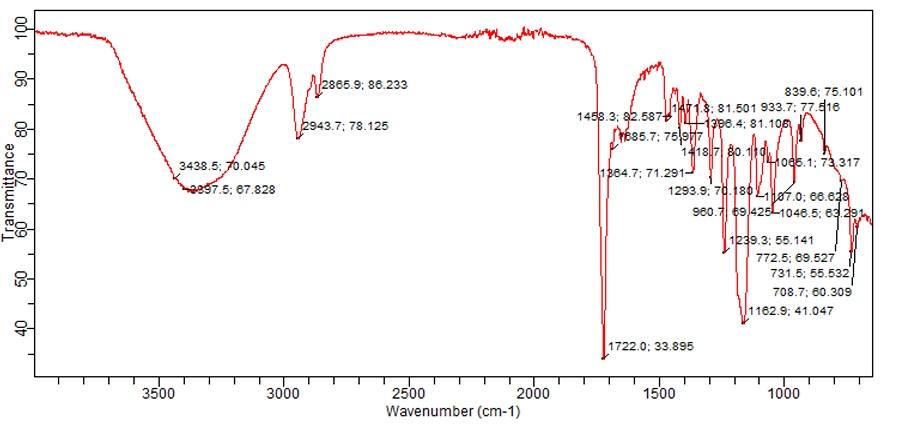
en&2