
oxygen-containing ester polymer or oligomer, possibly hydroxy-terminated
Zobacz raport powyżej. Użyj komentarzy poniżej, jeśli potrzebujesz dalszej dyskusji.
oxygen-containing ester polymer or oligomer, possibly hydroxy-terminated
Parametry próbki i pomiaru
Wynik identyfikacji
0%Wzór FTIR jest najbardziej zgodny z materiałem estrowym zawierającym tlen, prawdopodobnie gatunkiem polimerowym lub oligomerycznym, a nie prostym węglowodorem. Najsilniejszym dowodem próbki jest obszar karbonylowy przy 1708 i 1725 cm-1 wraz z wieloma pasmami rozciągania C-O przy 1055, 1098, 1165, 1178, 1240 i 1285 cm-1, plus alifatyczne C-H przy 2935 cm-1 i szeroki obszar O-H/N-H w pobliżu 3373 cm-1. Najlepszym dopasowaniem z biblioteki jest Poly(caprolactone),monohydroxy terminated, a szerszy wzór wśród najlepszych kandydatów jest zdominowany przez utlenione polimestry, takie jak hydroksyetylometakrylan i polimestry. Jednak jakość dopasowania bibliotecznego jest bardzo słaba i żadne bezpośrednie ani pokrewne dowody literaturowe niezależnie nie potwierdzają konkretnego nazwanego polimeru. Z tego powodu najbardziej uzasadnionym wnioskiem jest kierunek szerszego polimeru lub oligomeru estrowego zawierającego tlen, z możliwym zakończeniem hydroksylowym, a nie stanowcze przypisanie do Poly(caprolactone),monohydroxy terminated.
Szczegółowa interpretacja
- Najlepsze dopasowanie biblioteki: Poly(caprolactone),monohydroxy terminated #65435 | match 0.0%
- Pasma przy 1708 i 1725 cm-1 potwierdzają jedną lub więcej grup karbonylowych w środowisku podobnym do estrowego.
- Pasma przy 1055, 1098, 1165, 1178, 1240 i 1285 cm-1 potwierdzają wiele drgań rozciągających C-O oczekiwanych dla utlenionych struktur podobnych do estrowych i eterowych.
- Pasma przy 3373 cm-1 potwierdza obecność grup hydroksylowych lub wilgoci związanej wiązaniami wodorowymi z materiałem zawierającym tlen.
- Najlepszy wzór z biblioteki obejmuje Poly(caprolactone),monohydroxy terminated, Poly(2-hydroxyethyl methacrylate), poly(hexamethylene sebacate) i poly(trimethylene succinate), które wszystkie mają chemię utlenionych estrów.
- Próbka wykazuje silny sygnał karbonylowy podobny do estrowego w zakresie 1708-1725 cm-1 wraz z kilkoma charakterystycznymi pasmami C-O od 1055 do 1285 cm-1.
- Pasma przy 2935 cm-1 potwierdza alifatyczne C-H, co jest zgodne z poliestrowymi lub metakrylowymi szkieletami zawierającymi segmenty alkilowe.
- Szerokie pasmo przy 3373 cm-1 wskazuje na hydroksyl i ewentualnie wilgoć lub słaby wkład N-H; w tym kontekście jest zgodne z materiałem utlenionym zawierającym grupy hydroksylowe.
- Wśród wiodących kandydatów z biblioteki powtarzającą się chemią jest materiał organiczny bogaty w tlen, szczególnie polimery zawierające estry i pokrewne związki utlenione.
- Najlepsze dopasowanie z biblioteki ma zerowe podobieństwo, więc samo nazwane dopasowanie nie jest wystarczająco silne do pewnej identyfikacji na poziomie jednostki.
- Obserwowana lista pików nie dostarcza unikalnego wzoru identyfikującego, który wyraźnie oddziela polikaprolakton od innych polimerów lub oligomerów estrowych zawierających tlen w zbiorze najlepszych kandydatów.
- Pozostaje niepewne, czy próbka jest konkretnie polikaprolaktonem, polimerem na bazie hydroksyetylometakrylanu, innym alifatycznym poliestrem czy pokrewnym utlenionym oligomerem.
- Szerokie pasmo 3373 cm-1 może odzwierciedlać końcowe grupy hydroksylowe, zaabsorbowaną wodę lub inny wkład wiązań wodorowych.
- Rozszczepiony obszar karbonylowy przy 1708 i 1725 cm-1 może wskazywać na więcej niż jedno środowisko karbonylowe, efekty krystaliczności lub mieszaninę, ale obecne dowody nie rozróżniają tych możliwości.
Porównanie bibliotek
Wyniki wyszukiwania w bibliotece — 15 najlepszych kandydatów
| Ranga | Dopasowanie % | Związek | SMILES | Nr widma | Akcja |
|---|---|---|---|---|---|
| Ładowanie kandydatów biblioteki... | |||||
Analiza pików
★ = Przypisanie poparte literaturą| # | Liczba falowa (cm⁻¹) | Absorbancja | Przypisanie | Cytowanie | Status przypisania | |
|---|---|---|---|---|---|---|
| 1 | · | 1725 | 1.00 | - | - | - |
| 2 | · | 1165 | 0.94 | - | - | - |
| 3 | · | 1178 | 0.90 | - | - | - |
| 4 | · | 1708 | 0.48 | - | - | - |
| 5 | · | 718 | 0.44 | - | - | - |
| 6 | · | 1240 | 0.33 | - | - | - |
| 7 | · | 3373 | 0.30 | - | - | - |
| 8 | · | 1055 | 0.29 | - | - | - |
| 9 | · | 1098 | 0.27 | - | - | - |
| 10 | · | 960 | 0.21 | - | - | - |
| 11 | · | 1285 | 0.20 | - | - | - |
| 12 | · | 1362 | 0.18 | - | - | - |
| 13 | · | 2935 | 0.16 | - | - | - |
| 14 | · | 1462 | 0.13 | - | - | - |
Załącznik — Spektrum surowe

Komentarze i dowody uzupełniające
Użyj tego obszaru, aby kontynuować interpretację, zadawać pytania lub dodać dodatkowe dowody weryfikacyjne.
This is the FTIR analysis result of a jpeg file uploaded by a user with IP 39.XX.XXX.109 The original image is shown below.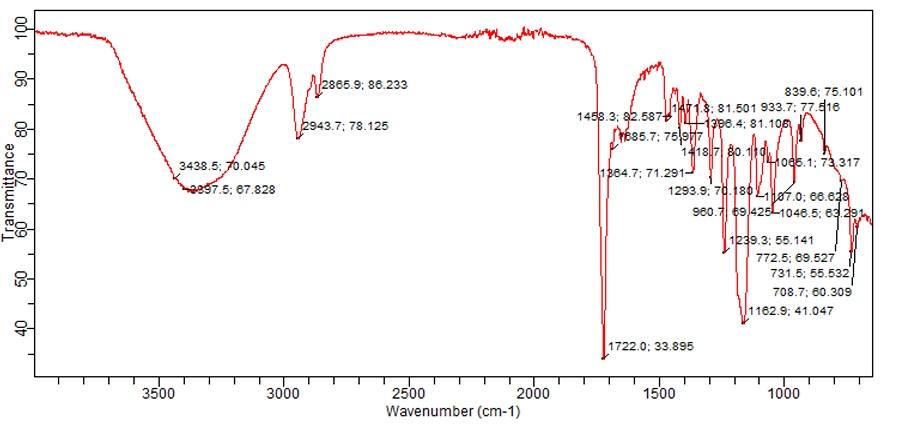
en&2