
RESULTATSIDE
nitrile-containing organic material
Se rapporten ovenfor. Brug kommentarerne nedenfor, hvis du har brug for opfølgende diskussion.
FTIR-analyserapport
nitrile-containing organic material
Prøve- og måleparametre
Rapport nr.
20250303165235906639022
Dato
2025-03-04 01:59:32
Spektralområde (cm⁻¹)
[(650, 4000)]
Baseline
AsLS baselinekorrektion
Biblioteksmatch
0%
Identifikationsresultat
0%Den nuværende FTIR-evidens er for begrænset til en pålidelig sammensætningsniveau-tildeling. Bibliotekets top hit er prop-2-enenitril, men alle listede match har nul lighed, og ingen direkte eller relateret litteraturstøtte indsnævrer resultatet. Den mest kemisk understøttelige konklusion er derfor et bredt nitrilholdigt organisk materiale, baseret hovedsageligt på den svage bibliotekskonsensus mod nitriltræk snarere end på karakteristiske bånd demonstreret i denne prøve.
Detaljeret fortolkning
- Bedste biblioteksmatch: prop-2-enenitril #38765 | match 0.0%
- Bibliotekskonsensus bemærker 'nitril / methyl' som den primære tilbagevendende kemi blandt de førende kandidater.
- Gentagen forekomst af poly(acrylonitril:butadien)-kandidater er i overensstemmelse med nitrilholdige organiske materialer.
- Det øverste bibliotekslabel tilgængeligt til navngivning er prop-2-enenitril, men dette fungerer her kun som det nærmeste bibliotekslabel, ikke som en sikker identifikation.
- Kun to prøvebånd er tilgængelige ved 670 og 982 cm-1, hvilket er utilstrækkeligt til en sikker identifikation af et specifikt materiale.
- Top-15 biblioteksmønsteret viser gentagne nitrilrelaterede kandidater, herunder prop-2-enenitril og flere poly(acrylonitril:butadien)-indgange, hvilket giver et svagt retningsgivende spor mod nitrilholdig organisk kemi.
- Den brugerrettede materialeretning holdes bredere end det øverste biblioteksnavn, fordi genfindingskonfidensen er lav, og evidenspakken indeholder ingen direkte topbaseret bekræftelse af en nitrilstrækningsbånd.
- Alle rapporterede biblioteksligheder er 0,0, så genfindingen giver ikke et stærkt spektralt match.
- Prøven viser ikke et rapporteret karakteristisk nitrilstrækningsbånd i det sædvanlige område ~2210-2260 cm-1 inden for den nuværende evidenspakke, så en snæver nitril-tildeling forbliver ubegrundet.
- De to observerede bånd ved 670 og 982 cm-1 er ikke tilstrækkeligt karakteristiske i sig selv til at adskille en lille nitril, en nitrilholdig polymer eller et urelateret materiale med tilfældige lavbølgetalskarakteristika.
- Mulig methyl- eller umættet kulbrintekarakter foreslået af nogle bibliotekskandidater er ikke direkte bekræftet af den medfølgende top liste.
- Da den tilgængelige evidens er sparsom og har lavt match, bør den nuværende konklusion behandles som en bred materialeretning snarere end en enhedsidentifikation.
Bibliotekssammenligning
Biblioteksspektrum vises her.
Bibliotekssøgningsresultater — top 15 kandidater
| Rang | Match % | Forbindelse | SMILES | Spektrum nr. | Handling |
|---|---|---|---|---|---|
| Indlæser bibliotekskandidater... | |||||
Peak-analyse
★ = Litteraturunderstøttet tildelingBilag — Råspektrum

Diskussion
Kommentarer og opfølgende beviser
Brug dette område til at fortsætte fortolkningen, stille spørgsmål eller tilføje yderligere verificeringsbeviser.
This is the FTIR analysis result of a pdf file uploaded by a user with IP 39.XX.XX.205. The original image is shown below.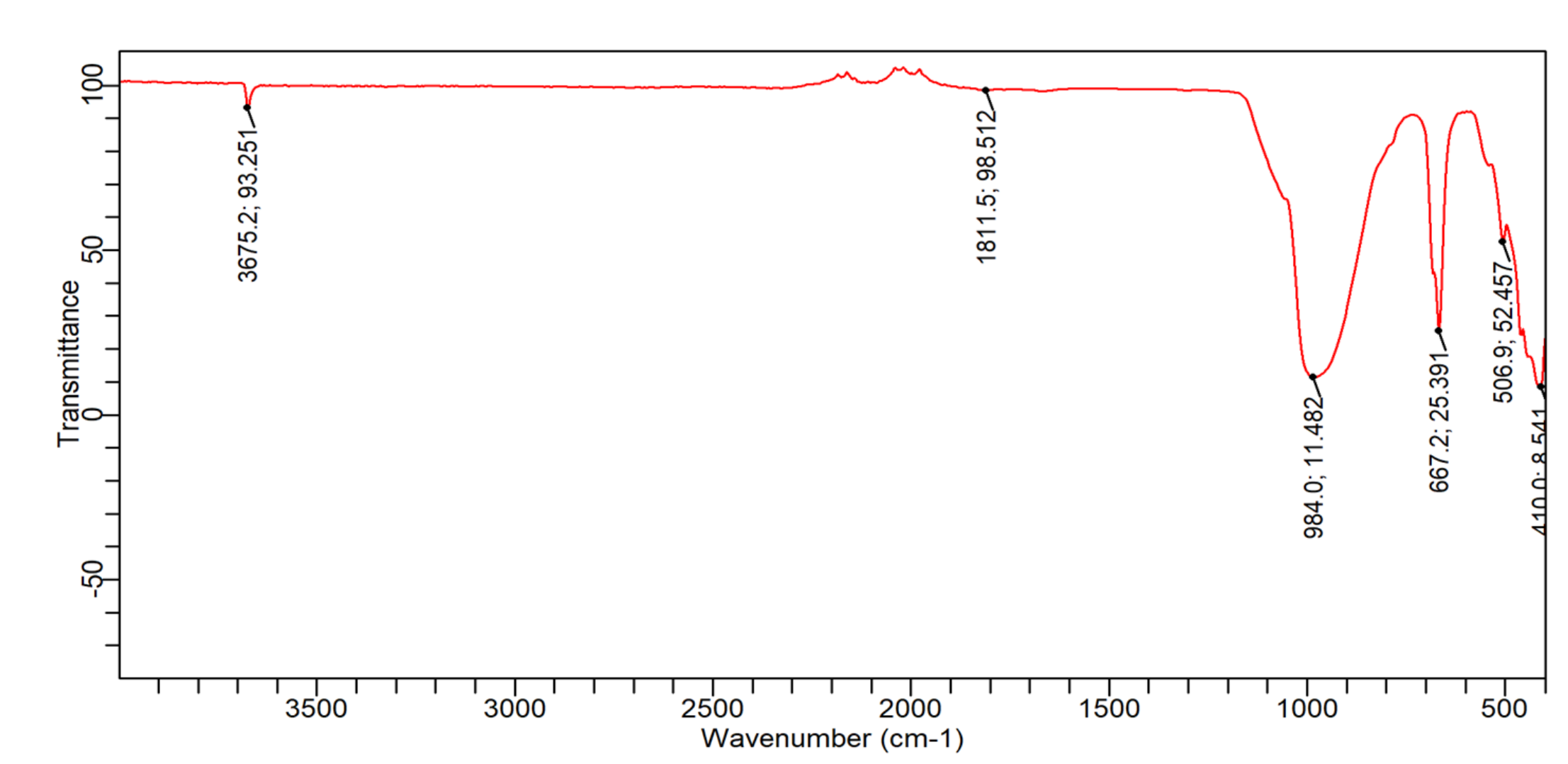 .
.
en&2The sample seems more like titanium dioxide, but currently there is no standard spectrogram of carbon dioxide in the website database.