
HALAMAN KEPUTUSAN
nitrogen-containing organic material with possible nitrile and N-H functionality
Lihat laporan di atas. Gunakan komen di bawah jika anda memerlukan perbincangan lanjut.
Laporan Analisis FTIR
nitrogen-containing organic material with possible nitrile and N-H functionality
Parameter Sampel & Pengukuran
Laporan No.
20250220165008564245896
Tarikh
2025-02-21 08:33:29
Julat Spektrum (cm⁻¹)
[(650, 4000)]
Garisan dasar
Pembetulan garis dasar AsLS
Padanan perpustakaan
0%
Keputusan Pengenalan
0%Bukti FTIR semasa tidak menyokong pengenalpastian yang kukuh sebagai Asid borik walaupun entri perpustakaan itu muncul pertama, kerana kualiti padanan perpustakaan pada dasarnya tidak wujud dan jalur yang diperhatikan bukan ciri spektrum asid borik ringkas. Sebaliknya, sampel lebih berhati-hati diterangkan sebagai bahan organik yang mengandungi nitrogen, dengan kemungkinan kuat kefungsian nitril dan sekurang-kurangnya satu kumpulan yang mengandungi N-H atau O-H terikat hidrogen.
Tafsiran terperinci
- Padanan perpustakaan teratas: Asid borik #35827 | match 0.0%
- Bukti FTIR semasa tidak menyokong pengenalpastian yang kukuh sebagai Asid borik walaupun entri perpustakaan itu muncul pertama, kerana kualiti padanan perpustakaan pada dasarnya tidak wujud dan jalur yang diperhatikan bukan ciri spektrum asid borik ringkas. Sebaliknya, sampel lebih berhati-hati diterangkan sebagai bahan organik yang mengandungi nitrogen, dengan kemungkinan kuat kefungsian nitril dan sekurang-kurangnya satu kumpulan yang mengandungi N-H atau O-H terikat hidrogen.
- Jalur 2260 cm-1 menyokong penugasan kawasan nitril.
- Jalur 3466 dan 3163 cm-1 menyokong kehadiran regangan N-H dan/atau O-H terikat hidrogen.
- Konsensus perpustakaan menyebut methyl / n h, yang sekurang-kurangnya secara amnya konsisten dengan bahan organik yang mengandungi nitrogen.
- Beberapa calon perpustakaan terkemuka mengandungi motif organik yang membawa nitrogen atau karbonil, yang secara arahannya konsisten dengan spektrum seperti bukan mineral yang diperhatikan.
- Spektrum yang diperhatikan ditakrifkan di sini oleh jalur berhampiran 3466 dan 3163 cm-1, ciri kuat berhampiran 2260 cm-1, dan jalur tambahan berhampiran 1448 dan 866 cm-1.
- Jalur berhampiran 2260 cm-1 paling konsisten dengan penyerapan kawasan nitril dan tidak dijangka menyokong penugasan asid borik.
- Jalur pada 3466 dan 3163 cm-1 konsisten dengan regangan N-H atau regangan O-H terikat hidrogen, yang lebih bersetuju dengan arah organik yang mengandungi nitrogen daripada penugasan asid borik tak organik ringkas.
- Corak perpustakaan Top-15 sangat bercampur dan berkualiti rendah, termasuk asid borik, garam asetat, polimer yang mengandungi amida, asetamida, dan entri polimer yang mengandungi nitril, jadi ia hanya menyokong arah organik yang mengandungi heteroatom yang luas dan bukannya sebatian tertentu.
- Antara petunjuk perpustakaan yang lebih luas, kemunculan berulang bahan yang mengandungi amida atau nitrogen lebih serasi dengan jalur gelombang tinggi yang diperhatikan daripada padanan asid borik yang bersih.
- Padanan perpustakaan terkemuka Asid borik mempunyai persamaan 0.000, jadi perolehan tidak memberikan sokongan pengenalpastian positif.
- Jalur kuat 2260 cm-1 adalah had utama untuk kesimpulan asid borik dan sebaliknya menunjuk ke arah kelas fungsian yang berbeza.
- Calon perpustakaan Top-15 tidak konsisten secara kimia antara satu sama lain, yang menghadkan keyakinan dalam penugasan bahan yang sempit.
- Senarai puncak yang ada adalah jarang, jadi kehadiran atau ketiadaan jalur pasangan utama untuk nitril, amida, borat, atau karboksilat tidak dapat diperiksa sepenuhnya.
- Jalur gelombang tinggi boleh mencerminkan sumbangan N-H, O-H, atau terikat hidrogen campuran, jadi kefungsian heteroatom tidak diselesaikan secara unik.
- Tanpa struktur kawasan cap jari yang lebih jelas, sampel tidak boleh disempitkan dengan pasti kepada nitril, amida, polimer, garam, atau molekul kecil tertentu.
Perbandingan Perpustakaan
Spektrum perpustakaan akan muncul di sini.
Keputusan Carian Perpustakaan — 15 Calon Teratas
| Kedudukan | Padanan % | Sebatian | SMILES | No. Spektrum | Tindakan |
|---|---|---|---|---|---|
| Memuatkan calon perpustakaan... | |||||
Analisis Puncak
★ = Tugasan disokong literaturLampiran — Spektrum Mentah

Perbincangan
Komen dan bukti lanjutan
Gunakan kawasan ini untuk meneruskan tafsiran, bertanya soalan, atau menambah bukti pengesahan tambahan.
This is the FTIR analysis result of a JPG file uploaded by a user with IP 99.X.XXX.92. The original image is shown below.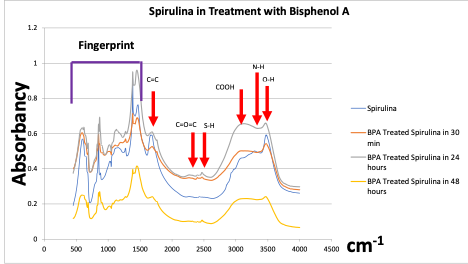
en&2