
long-chain aliphatic hydrocarbon material with carbonyl and hydroxyl/amine-type functionality
Tingnan ang ulat sa itaas. Gamitin ang mga komento sa ibaba kung kailangan mo ng karagdagang pag-uusap.
long-chain aliphatic hydrocarbon material with carbonyl and hydroxyl/amine-type functionality
Mga Parameter ng Sample at Pagsukat
Resulta ng Pagkilala
0%Ang library top hit ay 1-Bromodocosane, ngunit ang match quality ay epektibong wala at ang sample spectrum ay naglalaman ng mga bands na hindi pare-pareho sa isang simpleng bromoalkane lamang. Ang naobserbahang malakas na aliphatic C-H stretching region (2913, 2851 cm-1) at methylene-related bands kabilang ang 1464 at 720 cm-1 ay sumusuporta sa isang long-chain hydrocarbon component. Gayunpaman, ang malinaw na band sa 1748 cm-1 ay nagpapahiwatig ng isang carbonyl group, at ang broad/paired absorption malapit sa 3272-3321 cm-1 ay nagpapahiwatig ng hydroxyl at/o amine-type functionality, na malawakang nagpapalawak ng chemically supportable conclusion na lampas sa named top hit ng library. Batay sa kasalukuyang ebidensya, ang sample ay mas mainam na ilarawan bilang isang long-chain aliphatic organic material na naglalaman ng karagdagang carbonyl-bearing at hydrogen-bonding functional group kaysa sa tiyak na italaga bilang 1-Bromodocosane
Detalyadong interpretasyon
- Nangungunang tugma ng aklatan: 1-Bromodocosane #114 | match 0.0%
- Ang library top hit ay 1-Bromodocosane, ngunit ang match quality ay epektibong wala at ang sample spectrum ay naglalaman ng mga bands na hindi pare-pareho sa isang simpleng bromoalkane lamang. Ang naobserbahang malakas na aliphatic C-H stretching region (2913, 2851 cm-1) at methylene-related bands kabilang ang 1464 at 720 cm-1 ay sumusuporta sa isang long-chain hydrocarbon component. Gayunpaman, ang malinaw na band sa 1748 cm-1 ay nagpapahiwatig ng isang carbonyl group, at ang broad/paired absorption malapit sa 3272-3321 cm-1 ay nagpapahiwatig ng hydroxyl at/o amine-type functionality, na malawakang nagpapalawak ng chemically supportable conclusion na lampas sa named top hit ng library. Batay sa kasalukuyang ebidensya, ang sample ay mas mainam na ilarawan bilang isang long-chain aliphatic organic material na naglalaman ng karagdagang carbonyl-bearing at hydrogen-bonding functional group kaysa sa tiyak na italaga bilang 1-Bromodocosane.
- Ang 2913 at 2851 cm-1 ay mga katangiang aliphatic C-H stretching bands mula sa mahahabang methylene-rich chains.
- Ang 1464 cm-1 at 720 cm-1 ay pare-pareho sa methylene deformation at rocking sa extended long-chain aliphatic materials.
- Ang 1748 cm-1 ay sumusuporta sa isang carbonyl-bearing component na hindi maipaliwanag ng plain saturated hydrocarbon lamang.
- Ang 3272-3321 cm-1 ay sumusuporta sa hydroxyl at/o amine-type hydrogen-bonding functionality.
- Ang mga nangungunang library candidate ay halos long-chain aliphatics, sulfur-linked aliphatics, fatty-chain amides/alcohols, at polyethylene-like materials, na nagpapahiwatig ng isang karaniwang hydrocarbon-chain motif.
- Ang sample ay nagpapakita ng mga katangiang long-chain aliphatic bands sa 2913 at 2851 cm-1 kasama ng methylene rocking band malapit sa 720 cm-1, na pare-pareho sa extended -(CH2)n- content.
- Ang isang malakas na band sa 1748 cm-1 ay sumusuporta sa presensya ng isang carbonyl-containing group tulad ng ester, acid derivative, o kaugnay na oxygenated function.
- Ang mga absorption sa 3272 at 3321 cm-1 ay nagpapahiwatig ng hydrogen-bonding functionality, na pinaka-makatwirang hydroxyl at/o N-H containing groups.
- Ang Top-15 library pattern ay pinangungunahan ng long-chain aliphatic compounds at polyethylene-like entries, na sumusuporta sa isang hydrocarbon-rich matrix, ngunit ang mga nakuha na match ay hindi nagbibigay ng isang kapani-paniwalang narrow compound-level identification.
- Walang direktang reference match o kaugnay na literatura match ang nakuha upang independiyenteng kumpirmahin ang isang tiyak na named material.
- Ang library top hit, 1-Bromodocosane, ay isang simpleng long-chain bromoalkane at hindi naipapaliwanag ang naobserbahang 1748 cm-1 carbonyl band.
- Ang 1-Bromodocosane ay hindi rin naipapaliwanag ang 3272-3321 cm-1 hydrogen-bonding absorption region.
- Lahat ng nakalista na library similarities ay 0.000, kaya ang retrieval ay hindi sumusuporta sa isang maaasahang entity-level identification.
- Ang library consensus text na nagmumungkahi ng oxygen heterocycle / n eq o ay hindi direktang sinusuportahan ng partikular na naobserbahang peak pattern nang sapat upang bigyang-katwiran ang mas makitid na direksyon.
- Ang spectrum ay sumusuporta sa isang hydrocarbon-rich material na may karagdagang functionalization, ngunit hindi ito natatanging nakikilala sa pagitan ng ester-, alcohol-, amide-, acid-, o mixed-component long-chain organics.
- Ang isang halogenated assignment ay nananatiling hindi kumpirmado dahil walang sample-specific bromine band evidence na ibinigay dito.
- Ang kasalukuyang ebidensya ay hindi matukoy kung ang sample ay isang solong compound, isang additive-containing material, o isang mixture.
Paghahambing ng Library
Mga Resulta ng Paghahanap sa Library — Nangungunang 15 na Kandidato
| Ranggo | Itugma ang % | Compound | SMILES | Blg. ng Spectrum | Aksyon |
|---|---|---|---|---|---|
| Naglo-load ng mga kandidato sa library... | |||||
Pagsusuri ng Peak
★ = Takdang suportado ng literaturaAppendix — Hilaw na Spectrum

Mga komento at sumunod na ebidensya
Gamitin ang lugar na ito upang ipagpatuloy ang interpretasyon, magtanong, o magdagdag ng dagdag na ebidensya ng pagpapatunay.
This is the FTIR analysis result of a PDF file uploaded by a user with IP 217.xxx.xxx.79 . The original image is shown below. Due to the peak height threshold setting, some weak peaks were not included in the analysis and will be supplemented later.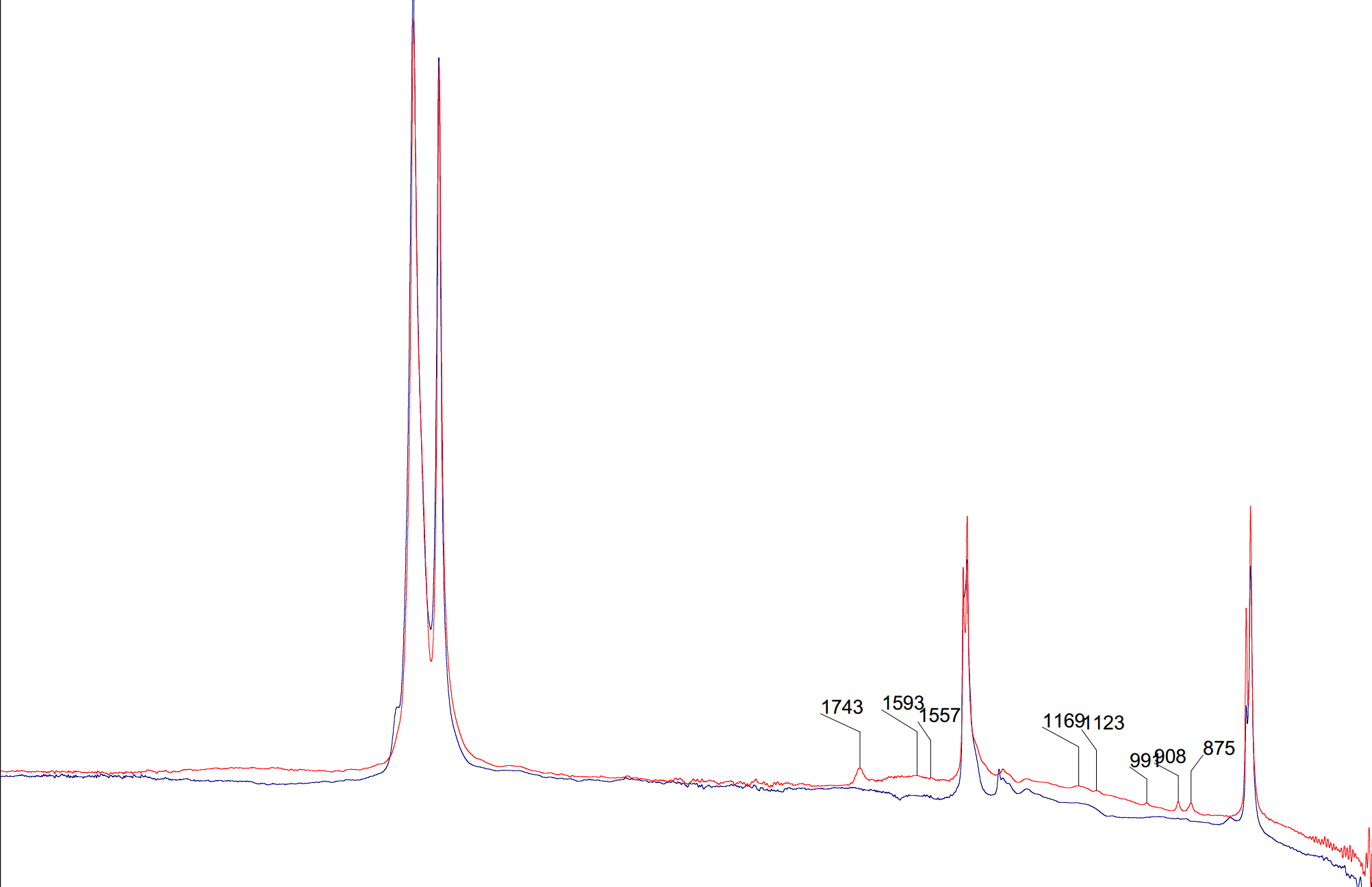
en&2