
結果頁面
methyl-substituted siloxane or other oxygen-containing methyl-rich material
請查看上方報告。如果需要後續討論,請使用下方的評論。
FTIR 分析報告
methyl-substituted siloxane or other oxygen-containing methyl-rich material
樣本與測量參數
報告編號
20241213142727225688126
日期
2024-12-13 12:32:03
光譜範圍 (cm⁻¹)
[(650, 4000)]
基線
AsLS基線校正
資料庫比對
0%
鑑定結果
0%觀察到的 FTIR 模式最符合富甲基含氧材料,矽氧烷類的解釋是合理的,因為樣品以 1024、1049 和 1083 cm⁻¹ 的強烈波段以及 1258 和 1270 cm⁻¹ 的甲基區域波段和 795 和 806 cm⁻¹ 的低波數特徵為主。然而,譜庫結果置信度低,且沒有直接或相關的文獻證據獨立確認特定的頂部命中化合物,因此數據僅支持一個廣泛的材料方向,而非確定的化合物層級鑑定。
詳細解讀
- 最佳庫匹配: 2,2,4,4,6,6,8,8-八甲基-1,3,5,7,2,4,6,8-四氧四矽氧烷 #68221 | 匹配度 0.0%
- 頂部參考譜庫比對返回 2,2,4,4,6,6,8,8-八甲基-1,3,5,7,2,4,6,8-四氧四矽氧烷作為最接近的命名匹配。
- 樣品包含強烈的 1024、1049 和 1083 cm⁻¹ 波段群,支持含氧主鏈。
- 1258 和 1270 cm⁻¹ 的波段支持大量的甲基取代。
- 795 和 806 cm⁻¹ 的波段與矽氧烷類指紋特徵相容。
- 譜庫共識本身指向富甲基化學。
- 光譜由 795、806、1024、1049、1083、1258 和 1270 cm⁻¹ 的波段定義,顯示由甲基相關和含氧振動主導的緊湊指紋模式。
- 最強的結構線索是 1024-1083 cm⁻¹ 附近的群集,與突出的單鍵含氧骨架一致,並與矽氧烷類 Si-O-Si 伸縮行為相容。
- 1258 和 1270 cm⁻¹ 的配對波段支持豐富的甲基取代,這也與譜庫共識中指出的富甲基特徵一致。
- 795 和 806 cm⁻¹ 的低波數雙峰特徵也與取代的矽氧材料相容,儘管它們本身不足以證明確切的環狀矽氧烷譜庫命中。
- 在頂部 15 個譜庫列表中,唯一重複的化學連貫主題是富甲基、弱特徵、非羰基指紋化學;在這些候選項中,含矽氧烷的條目重複出現,但整體匹配品質實際上不具區分性。
- 所有報告的譜庫相似度均為 0.000,因此檢索結果無法提供可靠的區分性匹配。
- 前 15 個候選集化學成分混雜,包括腈類、鹵代烴和其他不相關化合物,這限制了狹義鑑定的置信度。
- 在指紋區域之外未報告支持峰以確認獨特的分子歸屬。
- 目前的數據無法可靠地區分特定的環狀矽氧烷與更廣泛的甲基取代矽氧烷材料。
- 由於光譜片段狹窄且缺乏文獻支持,僅憑現有證據無法排除其他富甲基含氧材料。
- 當前證據足以確定一個廣泛的材料方向,但不足以進行明確的實體層級鑑定。
資料庫比對
資料庫光譜將顯示於此。
資料庫搜尋結果 — 前15名候選
| 排名 | 匹配% | 化合物 | SMILES | 光譜編號 | 動作 |
|---|---|---|---|---|---|
| 正在載入資料庫候選... | |||||
波峰分析
★ = 文獻支持的分配附錄 — 原始光譜

討論
評論與後續證據
使用此區域繼續解讀、提問或新增額外驗證證據。
This is the search result for the file with the extension .JEPG uploaded by user 5:xx.xx.229 raw image: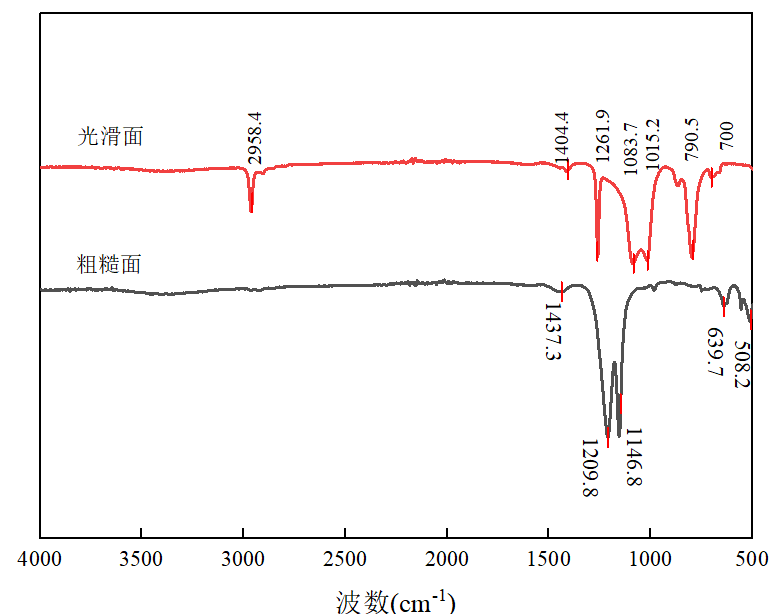
en&2