
methyl-substituted siloxane or other oxygen-containing methyl-rich material
Bekijk het rapport hierboven. Gebruik de opmerkingen hieronder als u een vervolggesprek nodig heeft.
methyl-substituted siloxane or other oxygen-containing methyl-rich material
Monster- en meetparameters
Identificatieresultaat
0%Het waargenomen FTIR-patroon is het meest consistent met een methylrijk zuurstofhoudend materiaal, waarbij een siloxaan-type interpretatie plausibel is omdat het monster wordt gedomineerd door sterke banden op 1024, 1049 en 1083 cm⁻¹ samen met methyl-regiobanden op 1258 en 1270 cm⁻¹ en laagfrequente kenmerken op 795 en 806 cm⁻¹. Echter, het bibliotheekresultaat heeft een lage betrouwbaarheid en geen direct of gerelateerd literatuurbewijs bevestigt onafhankelijk de specifieke top-hitverbinding, dus de gegevens ondersteunen slechts een bredere materiaalrichting in plaats van een stevige identificatie op verbindingsniveau.
Gedetailleerde interpretatie
- Beste bibliotheekovereenkomst: 2,2,4,4,6,6,8,8-octamethyl-1,3,5,7,2,4,6,8-tetraoxatetrasilocane #68221 | overeenkomst 0.0%
- Top referentie bibliotheek vergelijking retourneert 2,2,4,4,6,6,8,8-octamethyl-1,3,5,7,2,4,6,8-tetraoxatetrasilocaan als de dichtstbijzijnde benoemde overeenkomst.
- Het monster bevat een sterke 1024, 1049, en 1083 cm⁻¹ bandencluster, wat een zuurstofhoudende ruggengraat ondersteunt.
- Banden op 1258 en 1270 cm⁻¹ ondersteunen aanzienlijke methylsubstitutie.
- Banden op 795 en 806 cm⁻¹ zijn compatibel met siloxaan-type vingerafdrukkenmerken.
- De bibliotheekconsensus zelf wijst op methylrijke chemie.
- Het spectrum wordt gedefinieerd door banden op 795, 806, 1024, 1049, 1083, 1258 en 1270 cm⁻¹, wat wijst op een compact vingerafdrukpatroon gedomineerd door methyl-gerelateerde en zuurstofhoudende vibraties.
- De sterkste structurele aanwijzing is het cluster nabij 1024-1083 cm⁻¹, dat consistent is met een prominent enkelvoudig-zuurstofhoudend raamwerk en compatibel is met siloxaan-type Si-O-Si-rekgedrag.
- De gepaarde banden op 1258 en 1270 cm⁻¹ ondersteunen overvloedige methylsubstitutie, wat ook consistent is met het methylrijke karakter opgemerkt in de bibliotheekconsensus.
- De doublet-achtige laagfrequente kenmerken op 795 en 806 cm⁻¹ zijn ook compatibel met gesubstitueerde silicium-zuurstofmaterialen, hoewel ze op zichzelf niet voldoende zijn om de exacte cyclische siloxaan bibliotheekhit te bewijzen.
- In de top-15 bibliotheeklijst is het enige herhaalde chemisch coherente motief methylrijke, zwak gekenmerkte, niet-carbonyl vingerafdrukchemie; onder die kandidaten komen siloxaan-bevattende vermeldingen terug, maar de algehele overeenkomstkwaliteit blijft effectief niet-discriminerend.
- Alle gerapporteerde bibliotheekovereenkomsten zijn 0.000, dus de terugvinding biedt geen betrouwbare discriminerende overeenkomst.
- De top-15 kandidaatset is chemisch gemengd, inclusief nitrillen, gehalogeneerde koolwaterstoffen en andere niet-gerelateerde verbindingen, wat het vertrouwen in een smalle identificatie beperkt.
- Er zijn geen ondersteunende pieken gerapporteerd buiten het vingerafdrukgebied om een unieke moleculaire toewijzing te bevestigen.
- De huidige gegevens maken geen veilig onderscheid tussen een specifiek cyclisch siloxaan en een breder methyl-gesubstitueerd siloxaanmateriaal.
- Omdat het spectrumfragment smal is en literatuurondersteuning ontbreekt, kunnen andere methylrijke zuurstofhoudende materialen niet alleen op basis van het huidige bewijs worden uitgesloten.
- Het huidige bewijs is voldoende voor een brede materiaalrichting, maar niet voor een definitieve identificatie op entiteitsniveau.
Bibliotheekvergelijking
Bibliotheekzoekresultaten — Top 15 kandidaten
| Rang | Match % | Samengesteld | SMILES | Spectrum nr. | Actie |
|---|---|---|---|---|---|
| Bibliotheekkandidaten laden... | |||||
Piekanalyse
★ = Door literatuur ondersteunde toewijzingBijlage — Ruw spectrum

Opmerkingen en vervolgbewijs
Gebruik dit gebied om de interpretatie voort te zetten, vragen te stellen of extra verificatiebewijs toe te voegen.
This is the search result for the file with the extension .JEPG uploaded by user 5:xx.xx.229 raw image: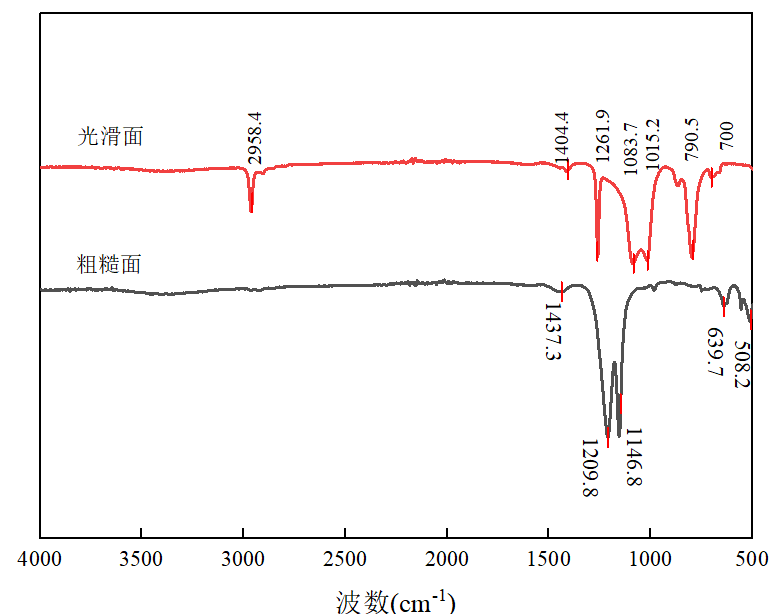
en&2