
결과 페이지
methyl-substituted siloxane or other oxygen-containing methyl-rich material
위의 보고서를 보세요. 후속 논의가 필요하면 아래 댓글을 사용하세요.
FTIR 분석 보고서
methyl-substituted siloxane or other oxygen-containing methyl-rich material
샘플 및 측정 매개변수
보고서 번호
20241213142727225688126
날짜
2024-12-13 12:32:03
스펙트럼 범위 (cm⁻¹)
[(650, 4000)]
베이스라인
AsLS 베이스라인 보정
라이브러리 매치
0%
식별 결과
0%관찰된 FTIR 패턴은 메틸이 풍부한 산소 함유 물질과 가장 일치하며, 실록산 유형 해석이 가능합니다. 시료는 1024, 1049, 1083 cm⁻¹의 강한 밴드와 1258, 1270 cm⁻¹의 메틸 영역 밴드, 795, 806 cm⁻¹의 저파수 특징이 지배적이기 때문입니다. 그러나 라이브러리 결과의 신뢰도가 낮고, 특정 최상위 히트 화합물을 독립적으로 확인하는 직접적 또는 관련 문헌 증거가 없습니다. 따라서 데이터는 확실한 화합물 수준 식별보다는 확장된 물질 방향만을 지지합니다.
상세 해석
- 최고 라이브러리 일치: 2,2,4,4,6,6,8,8-옥타메틸-1,3,5,7,2,4,6,8-테트라옥사테트라실록산 #68221 | 일치 0.0%
- 최상위 참조 라이브러리 비교 결과, 2,2,4,4,6,6,8,8-옥타메틸-1,3,5,7,2,4,6,8-테트라옥사테트라실록산이 가장 가까운 명명된 일치 항목입니다.
- 시료는 1024, 1049, 1083 cm⁻¹의 강한 밴드 클러스터를 포함하며, 이는 산소 함유 골격을 지지합니다.
- 1258 및 1270 cm⁻¹의 밴드는 상당한 메틸 치환을 지지합니다.
- 795 및 806 cm⁻¹의 밴드는 실록산 유형 지문 특징과 일치합니다.
- 라이브러리 합의 자체는 메틸이 풍부한 화학을 가리킵니다.
- 스펙트럼은 795, 806, 1024, 1049, 1083, 1258, 1270 cm⁻¹의 밴드로 정의되며, 이는 메틸 관련 및 산소 함유 진동이 지배하는 컴팩트한 지문 패턴을 나타냅니다.
- 가장 강력한 구조적 단서는 1024-1083 cm⁻¹ 근처의 클러스터로, 이는 현저한 단일 결합 산소 함유 프레임워크와 일치하며 실록산 유형의 Si-O-Si 신축 거동과 호환됩니다.
- 1258 및 1270 cm⁻¹의 쌍을 이루는 밴드는 풍부한 메틸 치환을 지지하며, 이는 라이브러리 합의에서 언급된 메틸이 풍부한 특성과 일치합니다.
- 795 및 806 cm⁻¹의 이중선 같은 저파수 특징은 치환된 규소-산소 재료와도 호환되지만, 그 자체만으로 정확한 사이클릭 실록산 라이브러리 히트를 증명하기에는 충분하지 않습니다.
- 상위 15개 라이브러리 목록에서 반복되는 화학적으로 일관된 모티프는 메틸이 풍부하고 특징이 약하며 비카르보닐 지문 화학입니다. 해당 후보 중 실록산 함유 항목이 반복되지만 전체 일치 품질은 효과적으로 식별 불가능한 상태입니다.
- 보고된 모든 라이브러리 유사도는 0.000이므로 검색은 신뢰할 수 있는 식별 일치를 제공하지 않습니다.
- 상위 15개 후보 세트는 니트릴, 할로겐화 탄화수소 및 기타 관련 없는 화합물을 포함하여 화학적으로 혼합되어 있어 좁은 식별에 대한 신뢰도를 제한합니다.
- 지문 영역 외부에서 고유한 분자 할당을 확인하는 지지 피크가 보고되지 않았습니다.
- 현재 데이터는 특정 사이클릭 실록산과 더 넓은 메틸 치환 실록산 물질을 안전하게 구별하지 못합니다.
- 스펙트럼 발췌 부분이 좁고 문헌 지원이 없기 때문에 현재 증거만으로는 다른 메틸이 풍부한 산소 함유 물질을 배제할 수 없습니다.
- 현재 증거는 광범위한 물질 방향에는 충분하지만, 확정적인 개체 수준 식별에는 충분하지 않습니다.
라이브러리 비교
라이브러리 스펙트럼이 여기에 표시됩니다.
라이브러리 검색 결과 — 상위 15개 후보
| 순위 | 일치 % | 화합물 | SMILES | 스펙트럼 번호 | 작업 |
|---|---|---|---|---|---|
| 라이브러리 후보 로딩 중... | |||||
피크 분석
★ = 문헌 지원 할당부록 — 원시 스펙트럼

토론
댓글 및 후속 증거
이 영역을 사용하여 해석을 계속하거나 질문을 하거나 추가 검증 증거를 추가하십시오.
This is the search result for the file with the extension .JEPG uploaded by user 5:xx.xx.229 raw image: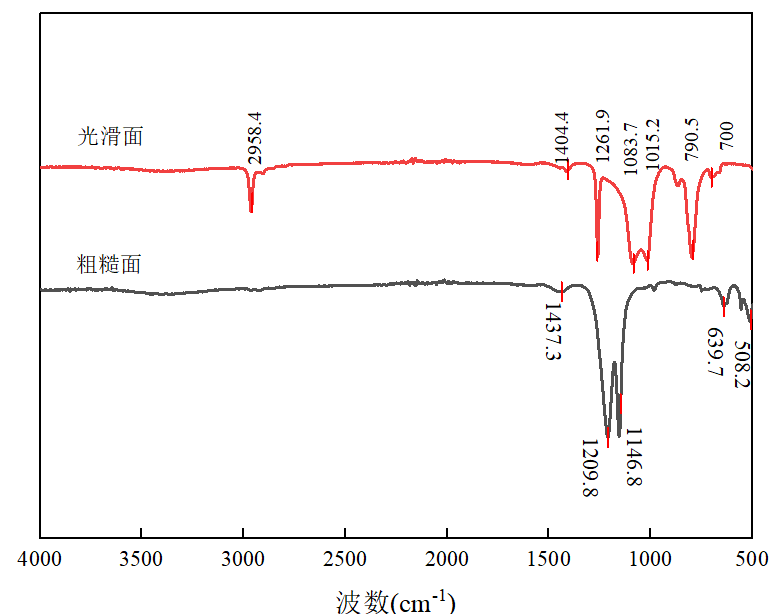
en&2