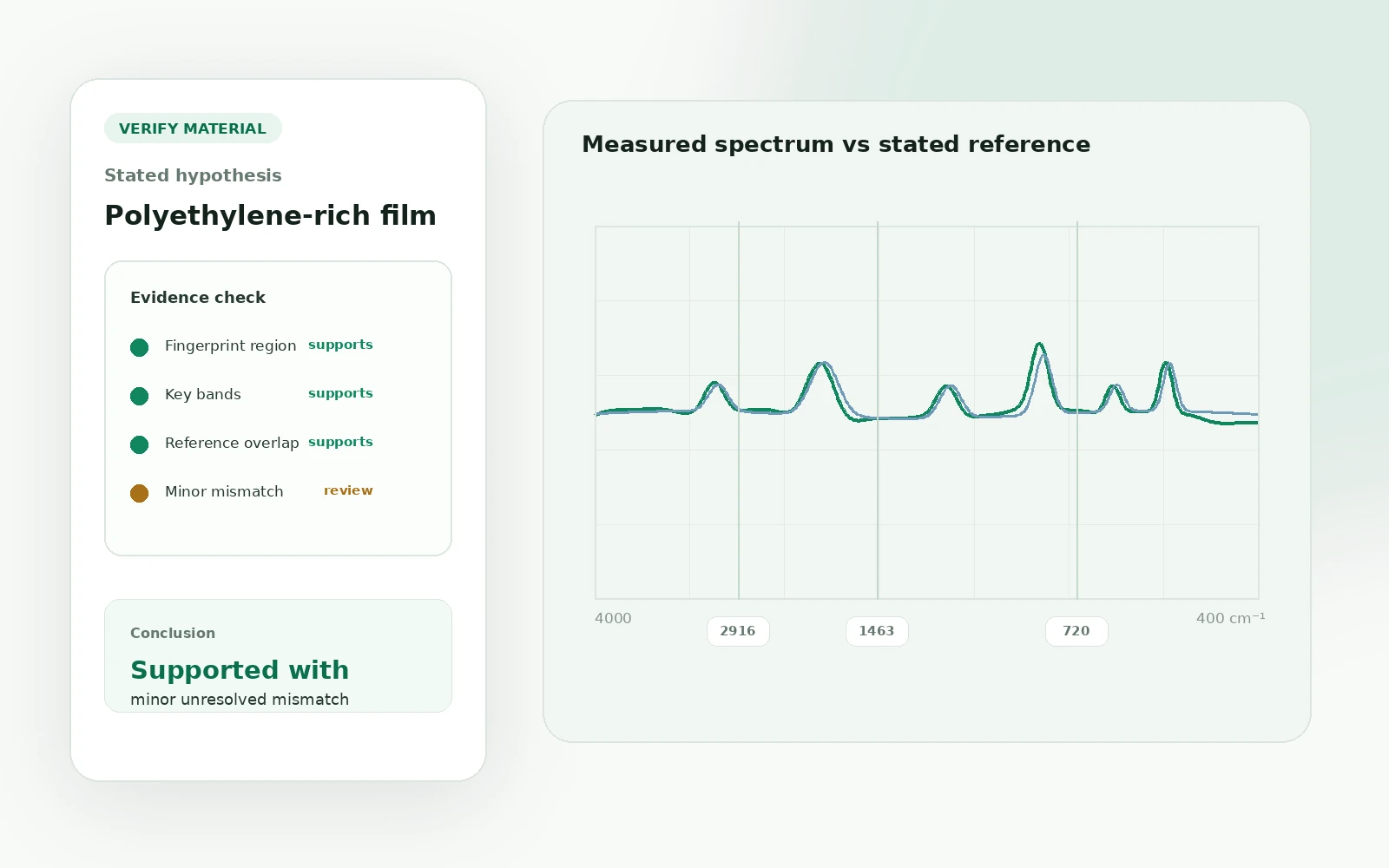
Use the workflow when you maintain authenticated origin references for a relevant protein, fat/oil or mixed-product matrix and need an additional FTIR screening layer around routine incoming-material control.
Origin-sensitive material screening
Use your qualified origin references to triage incoming materials before confirmatory testing.
For laboratories handling origin-sensitive ingredients, compare an incoming FTIR spectrum with qualified porcine and non-porcine reference batches from the relevant matrix. Use the result to prioritize investigation and confirmation — not as halal certification, species identification or a legal determination.

Screen a new batch against the patterns already observed in your qualified porcine and non-porcine cohorts, then inspect the regions driving an atypical result before deciding what confirmation is needed.
Use a repeatable pre-screen to prioritize samples, preserve a dated comparison history and give QA, suppliers or customers a traceable reason for follow-up instead of relying on visual judgement alone.
Important limitation:This workflow is a comparative FTIR pre-screen only. Critical origin or halal decisions should be confirmed with the validated orthogonal method required by your laboratory, customer, certification body or applicable procedure.
Qualified reference cohorts
Compare like with like using reference batches you already trust.
Build matrix-appropriate reference cohorts from qualified historical batches and record the relevant source information. The workbench evaluates the incoming spectrum against those cohorts rather than treating a public-library identity match as proof of origin.
- Protein-based, fat/oil-based or mixed-product reference sets
- Qualified non-porcine and porcine comparison groups
- Matrix and source context retained with the reference batches
- Batch records kept with the comparison history
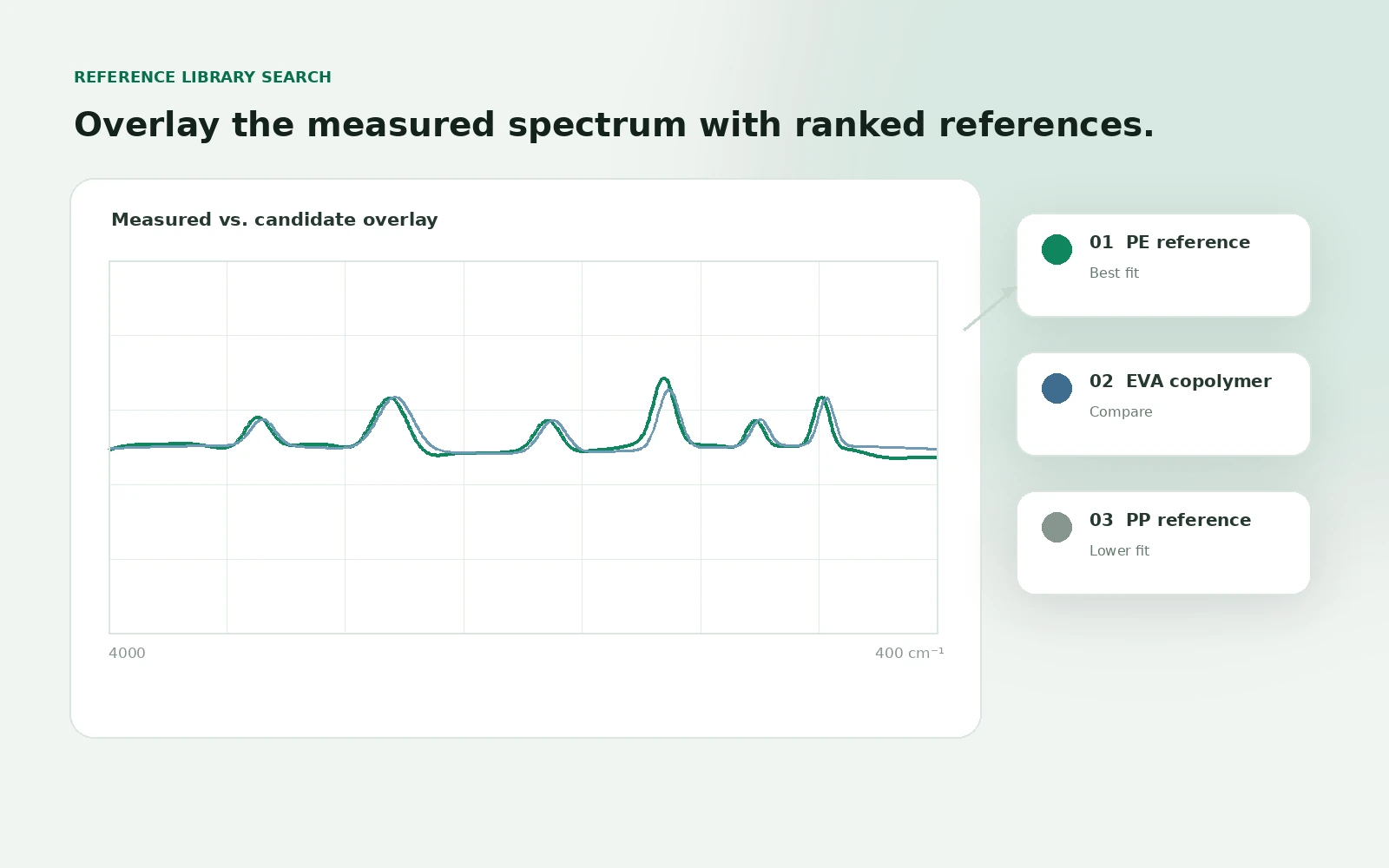
Inspect the signal
See which reference pattern is closer and where the spectra differ.
Review the comparison result together with the spectral overlay, important band differences and multivariate evidence when enough qualified references are available. A reviewer can then decide whether the sample is routine, needs investigation or should move to confirmatory testing.
- Similarity-based comparison with qualified reference cohorts
- Spectral overlay and peak-level differences
- Multivariate evidence when the reference set supports it
- No species-identification or certification claim