
СТРАНИЦА ЗА РЕЗУЛТАТИ

hydrogen-bonded hydroxyl- or water-containing oxygenated material

Прегледайте доклада по-горе. Използвайте коментарите по-долу, ако имате нужда от последваща дискусия.

Номер на резултат: 20250602100534731586195 Собственик: publicuser Коментари: 1
  • Translating report into български. English is shown for now.
FTIR ANALYSIS REPORT

FTIR Spectrum Analysis Report

No.: 20250602100534731586195 Date: 2025-06-02 02:08:04 Reported by: FTIR.fun Contact: [email protected]

Download a professional, formatted PDF of this analysis.

Top15

Similarity-ranked Top-15 library comparison

Choose matching result groups:
Library spectrum will appear here.
Library spectrum Interactive sample curve Move the pointer to show the vertical guide line.
Top 15 candidates

Reference library candidates

Rank Match % Compound Name Formula / SMILES Library preview Action
Reference candidates load with this Top-15 workbench.

Based on the library matches and evidence above.

Conclusion

hydrogen-bonded hydroxyl- or water-containing oxygenated material

General assessment
-
#68115 Initial rank 1 Current rank 1 Library lead match 0.0%
Conclusion
  1. The measured bands fall in a characteristic region for O-H stretching.
  2. The repeated closely spaced peaks suggest hydrogen-bonding environments or physically adsorbed water in an oxygen-containing sample.
  3. A broad oxygenated-material direction is consistent with the limited observed evidence and avoids overclaiming a specific compound.
Main limitation

The proposed library entity Sn COMPOUNDS DI(1-BUTYL)TIN(IV): OXALATE is not supported by identifying companion bands such as oxalate/carboxylate-region absorptions or aliphatic C-H features from butyl groups.

Evidence & interpretation
Evidence

Key evidence

Съвпадение по библиотечен водещ
Sn COMPOUNDS DI(1-BUTYL)TIN(IV): OXALATE #68115 | match 0.0%
Посока на материала
hydrogen-bonded hydroxyl- or water-containing oxygenated material The current FTIR evidence does not support a reliable compound-level identification. The spectrum information provided is dominated by a narrow cluster of bands at 3398-3472 cm⁻¹, which is most consistent with O-H stretching from hydrogen-bonded hydroxyl groups and/or absorbed water. Although the nearest library hit is Sn COMPOUNDS DI(1-BUTYL)TIN(IV): OXALATE, the library match quality is effectively non-discriminating, there are no reported fingerprint-region supporting peaks, and no direct or related literature evidence confirms an organotin oxalate assignment. A broader oxygenated material direction is therefore the most chemically supportable conclusion from the present evidence.
Support

Evidence supporting the conclusion

Only sample-relevant statements that support the present conclusion are shown here.

  1. The measured bands fall in a characteristic region for O-H stretching.
  2. The repeated closely spaced peaks suggest hydrogen-bonding environments or physically adsorbed water in an oxygen-containing sample.
  3. A broad oxygenated-material direction is consistent with the limited observed evidence and avoids overclaiming a specific compound.
  4. Observed bands are limited to 3398, 3434, 3443, 3450, and 3472 cm⁻¹, all within the O-H/N-H stretching region.
  5. This clustered high-wavenumber pattern is more consistent with hydrogen-bonded hydroxyl functionality and/or moisture than with a specific named compound.
  6. The top library candidate is retained only as the nearest database entry, but all listed candidate similarities are 0.000, so the retrieval does not provide meaningful selective support.
  7. No fingerprint-region absorptions are reported for oxalate, butyl groups, Sn-O, carbonyl, aromatic, or other defining structural motifs.
Limitations

Evidence that limits the conclusion

  • The proposed library entity Sn COMPOUNDS DI(1-BUTYL)TIN(IV): OXALATE is not supported by identifying companion bands such as oxalate/carboxylate-region absorptions or aliphatic C-H features from butyl groups.
  • The Top-15 library pattern is chemically inconsistent and includes unrelated candidates, which limits its value for specific identification.
  • The sample evidence is confined to the 3400 cm⁻¹ region, so required fingerprint-region confirmation for any narrow assignment is missing.
  • The present peak list alone cannot distinguish structural hydroxyl groups from adsorbed water.
  • N-H-containing materials also absorb in this region, but no corroborating bands are provided.
  • If the sample is inorganic, organometallic, or hydrated, decisive low-wavenumber metal-ligand and fingerprint absorptions are needed before a firmer conclusion can be made.
Recommendation

Suggested next verification

  • Recollect the full FTIR spectrum over the fingerprint region, especially 1800-400 cm⁻¹, to check for carbonyl/carboxylate, C-O, metal-oxygen, and hydrocarbon bands.
  • Dry the sample and rerun FTIR to determine whether the 3398-3472 cm⁻¹ features decrease, which would indicate adsorbed moisture.
  • If an organotin assignment is still suspected, compare specifically against authenticated organotin oxalate reference spectra and look for Sn-O and oxalate-related absorptions in the lower-wavenumber region.
  • If enough material is available, use complementary elemental analysis such as XRF, ICP-OES, or EDS to test for tin before accepting any tin-containing library match.
Peak analysis

Detected peaks and interpretation

★ = Literature-supported peak assignment.

Index Characteristic Wavenumber Absorbance Evidence One-line interpretation Citation Confidence
1 · 3450 1.00 - - - -
2 · 3472 0.61 - - - -
3 · 3443 0.60 - - - -
4 · 3434 0.57 - - - -
5 · 3398 0.40 - - - -
Appendix

Sample information and raw spectrum

Original uploaded spectrum for reference and verification.

Baseline correction method: Asymmetric Least Squares Smoothing

The wavelength range for analysis(cm-1): [(650, 4000)]

Raw spectrum without baseline correction or other processing:

Sample spectrum image
Дискусия

Коментари и последващи доказателства

Използвайте тази област, за да продължите интерпретацията, задавайте въпроси или добавяйте допълнителни доказателства за проверка.

The above shows the FTIR analysis results of a jpg file uploaded by a user from Brazil . The original image is displayed below.
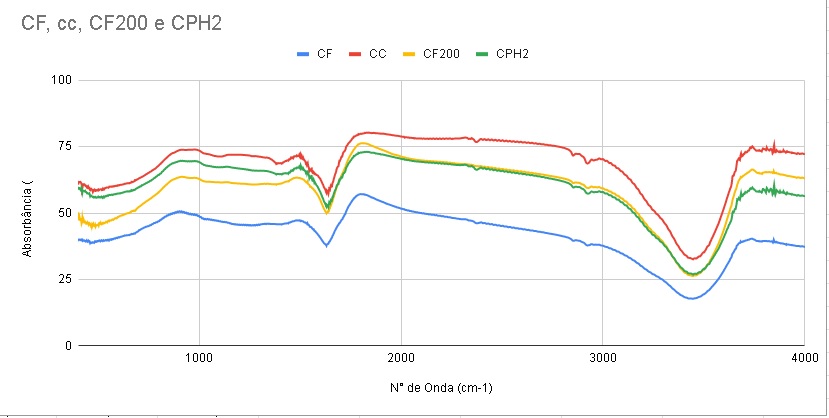
20250601184125696344780.jpgCSV FILE:20250601184125696344780.CSV

en&2
Подаване на заявка Формуляр